
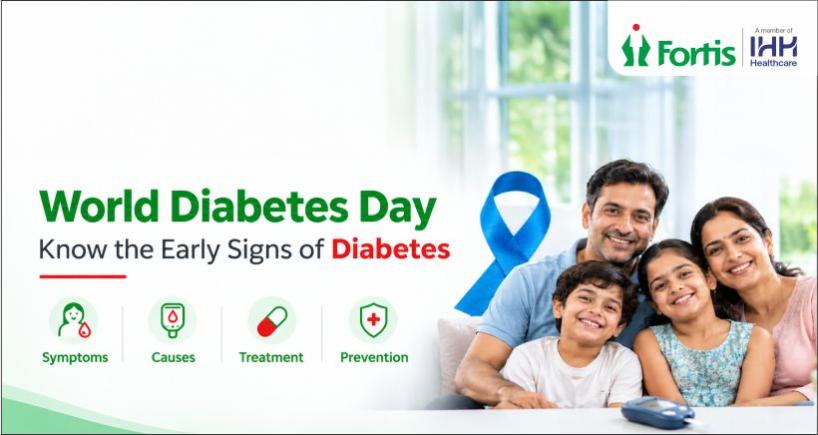


World Diabetes Day 2026 - Know the Early Signs of Diabetes
World Diabetes Day is observed every year on 14 November. The 2026 theme, “Early action on diabetes”, highlights early detection, timely care and reducing the risk of type 2 diabetes. WHO reports that more than 40% of people living with diabetes worldwide are undiagnosed.
Type 2 diabetes can develop gradually, sometimes with few or no noticeable symptoms. Knowing the warning signs and discussing appropriate testing with a healthcare professional can help people access care earlier.
What is diabetes?
Diabetes is a long-term condition in which the body does not produce enough insulin or cannot use it effectively. Insulin helps regulate glucose (sugar) in the blood. Persistently high blood glucose can damage the heart, blood vessels, eyes, kidneys and nerves.
The main forms are type 1, type 2 and gestational diabetes, which develops during pregnancy. Type 1 diabetes requires insulin. Type 2 is the most common form and is influenced by genetic and lifestyle factors. Gestational diabetes requires appropriate testing during pregnancy.
Early signs and symptoms of diabetes
Common symptoms include:
- Unusual thirst.
- Frequent urination, including at night.
- Tiredness or low energy.
- Blurred vision.
- Unexplained weight loss.
Some people with type 2 diabetes have mild symptoms or none for years. Feeling well does not rule it out. Symptoms alone cannot confirm diabetes; a medical assessment and appropriate blood tests are needed.
Who should consider a diabetes check?
Risk of type 2 diabetes may be higher in people with a family history, excess body weight, low physical activity or a previous history of gestational diabetes. Other personal health factors may also matter.
Do not wait for symptoms if you are concerned. Ask a healthcare professional whether screening is appropriate for you and when to repeat it. Having a risk factor does not mean you definitely have diabetes.
How is diabetes diagnosed?
Doctors use blood tests. Depending on symptoms and medical history, these may include:
- Fasting plasma glucose: measures blood glucose after an overnight fast.
- HbA1c: estimates average blood glucose over about three months.
- Oral glucose tolerance test (OGTT): checks the body’s response to a measured glucose drink.
- Random blood glucose: may be used when symptoms are present and fasting is not practical.
A clinician interprets the results and may repeat a test before confirming a diagnosis. The most suitable test can vary, including during pregnancy or when certain blood conditions may affect HbA1c accuracy. Do not diagnose yourself from a home glucose reading alone.
Can type 2 diabetes be prevented or delayed?
Healthy habits can lower the risk of type 2 diabetes or delay its onset, although they cannot prevent every case. Helpful steps include:
- Aim for a healthy, sustainable body weight.
- Build regular activity into your week. WHO recommends at least 150 minutes of moderate activity each week for adults.
- Choose balanced meals and limit excess added sugar and saturated fat.
- Avoid tobacco and attend recommended health checks.
These steps support type 2 diabetes risk reduction. They do not prevent type 1 diabetes. Anyone already diagnosed should continue prescribed treatment and follow their clinician’s advice.
When should you seek urgent medical help?
Arrange a medical assessment for persistent thirst, frequent urination, unexplained weight loss, tiredness or blurred vision.
Seek emergency care for repeated vomiting, severe abdominal pain, unusually deep or rapid breathing, fruity-smelling breath, marked drowsiness or confusion. These may indicate diabetic ketoacidosis, a life-threatening emergency that can sometimes be the first sign of diabetes.
Diabetes and endocrinology care at Fortis Hospital Manesar
Fortis Hospital Manesar’s official endocrinology page describes care for type 1, type 2 and gestational diabetes. The current doctor listing includes Dr. Anu Mathew, Consultant – Endocrinology. People in Manesar and Gurugram can review the service and doctor pages and contact the hospital to confirm consultation availability.
Early action is not about fear or blame. It is about recognising possible signs, getting appropriate tests and receiving respectful, ongoing support.
Categories
Clear allMeet the doctor

- Diabetology/Endocrinology | Endocrinology
-
 10 Years
-
 1000
Related Blogs
View all





FAQs
What are the early warning signs and symptoms of diabetes?
Common early signs of diabetes include excessive thirst, frequent urination, increased hunger, unexplained weight loss, tiredness and blurred vision. Some people with type 2 diabetes may not experience noticeable symptoms for several years. Medical testing is important for confirming the condition.

Keep track of your appointments, get updates & more!

