
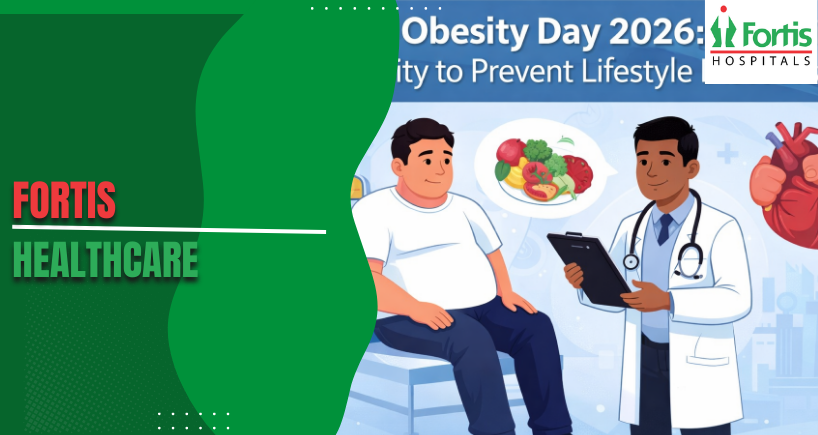


World Obesity Day 2026: Managing Obesity To Prevent Lifestyle Diseases
Obesity doesn’t happen with one clear event; instead it builds up over years because of poor sleep, jobs where people don’t move much, eating when stressed, and food readily available which tends to be bad for you. By the time most people ask for help, the effects on their body chemistry will have been growing for ten years, or even longer.
World Obesity Day 2026 comes at a time when rates of obesity around the world are at a level that doctors see as a second big public health problem, in addition to infectious diseases. Seeing obesity as a long-lasting, complicated illness – and not a personal weakness – has altered the way medicine deals with it, and this has really affected how well people do.
What Obesity Does to the Body Over Time
Too much fat in the body – especially visceral fat around organs in the stomach – is chemically active. It lets out substances which cause inflammation, interferes with how insulin works, increases free fatty acids in the blood, and causes problems with the lining of blood vessels. All of these together speed up the development of illnesses which would normally take many years to develop.
Visceral fat is more of a threat than the fat under the skin. Two people with the same BMI can have very different risks to their health, depending on where their body fat is. A waist measurement of over 90 centimetres for men, and over 80 centimetres for women, is used with BMI to show this risk in a clinical check-up.
Lifestyle Diseases and Obesity: The Direct Connections
The link between lifestyle diseases and obesity is the same in all groups of people, and has been shown by research over many years. The danger of getting type 2 diabetes goes up a lot as BMI increases, and losing even five to ten percent of body weight makes measurable improvements in blood sugar when fasting, how well insulin works, and HbA1c in people who have diabetes or are pre-diabetic.
High blood pressure, obstructive sleep apnoea, non-alcoholic fatty liver disease, polycystic ovary syndrome, and arthritis in joints that take your weight are all more common – and more serious – in people who are obese. The effect isn’t just added together, but multiplied: each extra illness caused by being overweight increases the risk of cardiovascular and metabolic problems, more than the sum of each illness on its own.
Why Conventional Advice Often Falls Short
Telling someone to eat less and do more exercise isn’t wrong, but it isn’t the whole story. Things which keep obesity going include hormonal control of hunger and feeling full, a genetic tendency to store fat, the quality of sleep and its effect on hormones controlling hunger, the side effects of medicines, mental health, being able to afford healthy food, and the local environment affecting physical activity.
Obesity Management while ignoring these causes gives short-term results that don’t last. The body reacts to cutting calories by reducing its metabolic rate and increasing hunger hormones – a natural reaction which explains why putting weight back on after dieting is the usual result, not the exception. Good treatment takes account of these body reactions, rather than seeing them as a sign of a lack of effort.
Medical and Surgical Approaches to Weight Management
Medical treatment of obesity has greatly increased. GLP-1 receptor agonists cause large and lasting weight loss in clinical tests, and also improve cardiovascular and metabolic results. These medicines work by reducing appetite, slowing down the stomach emptying, and improving insulin secretion – dealing with several of the things which keep obesity going at the same time.
Obesity Management through bariatric surgery gives the most lasting weight loss which can currently be achieved. Roux-en-Y gastric bypass and sleeve gastrectomy both give big improvements to body chemistry which go beyond the effects of weight loss on its own. Type 2 diabetes going into remission after bariatric surgery is a well-known result which happens in some patients before they have lost much weight.
The Role of Physical Activity Beyond Calorie Burning
Exercise isn’t mainly a way to lose weight, but it is an important part of metabolic health and keeping weight off. Physical activity improves how well insulin works, reduces visceral fat even without changes in weight on scales, improves cardiovascular fitness, supports mental health, and reduces lifestyle diseases and obesity-related inflammatory markers regardless of body weight.
Weight management programmes bring together hormone specialists, bariatric surgeons, dietitians, physiotherapists, and psychologists to deal with obesity through well-planned care involving many specialists, rather than separate treatments.
Exercise is not primarily a weight loss tool, but it is an essential component of metabolic health and weight maintenance. Physical activity improves insulin sensitivity, reduces visceral fat selectively even without scale weight changes, improves cardiovascular fitness, supports mental health, and reduces lifestyle diseases and obesity-related inflammatory markers independently of body weight.
Mental Health and Obesity: An Inseparable Relationship
Depression and anxiety are both more common in people with obesity, and are themselves causes of weight gain through their effects on appetite control, physical activity, sleep, and eating for pleasure. Dealing with obesity without dealing with any mental health problems at the same time will predictably give limited results.
Patterns of food addiction, emotional eating, and binge eating disorder are recognised clinical problems which need psychological help as well as dietary and medical treatment. Cognitive behavioural methods aimed at eating behaviour produce real improvements in keeping to a diet, and reduce the emotional cycles of relapse which often undo lasting progress in obesity management.
Children, Families, and the Intergenerational Pattern
Childhood obesity is likely to continue into adulthood in most cases. Children brought up in households with regular access to healthy food, regular physical activity as a family habit, and little screen time have much lower risks of obesity than those whose early environment makes being still and eating food which is high in energy but low in nutrients normal.
Dealing with obesity at family level gives better results than only dealing with one child. What parents eat, what food is bought for the household, and parents showing physical activity are more powerful influences on children’s eating behaviour than individual teaching programmes in school.
On World Obesity Day 2026: Moving Toward Systemic Solutions
The themes of World Obesity Day 2026 draw attention to general and structural causes, rather than only blaming individuals. Food labelling, restrictions on marketing of highly-processed foods aimed at children, city planning which supports active transport, and redesigning healthcare systems to include preventative care are all ways of making changes at population level which individual changes in behaviour on their own cannot achieve.
Categories
Clear allRelated Blogs
View all







Keep track of your appointments, get updates & more!

