
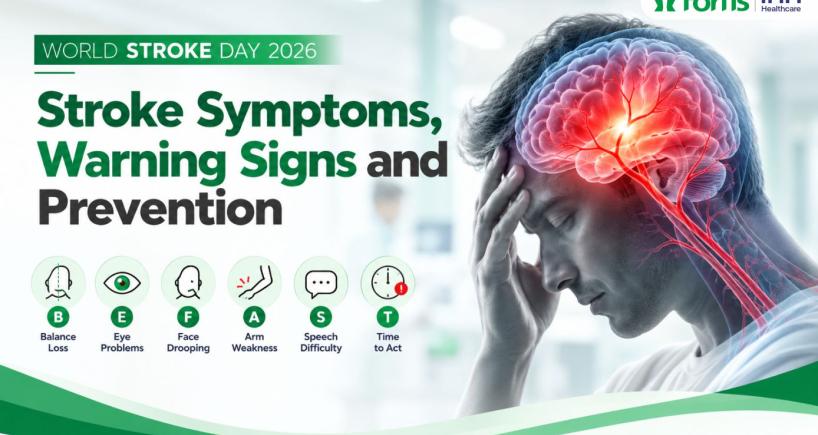


World Stroke Day 2026 - Stroke Symptoms and Warning Signs and Prevention
A stroke can happen suddenly and affect a person's ability to speak, move, see or think clearly. Recognising the warning signs and seeking emergency medical care immediately can help reduce the risk of serious brain damage.
World Stroke Day is observed every year on 29 October. The World Stroke Organization's 2026 campaign, "Every Minute Counts," highlights the importance of recognising stroke symptoms and acting FAST. Understanding the warning signs can help individuals and families respond quickly when a medical emergency occurs.
What is a Stroke?
A stroke occurs when the blood supply to part of the brain is interrupted, either because a blood vessel becomes blocked or because a blood vessel ruptures and causes bleeding. Without adequate blood flow and oxygen, brain cells can become damaged.
There are three important terms to understand:
- Ischaemic stroke: Occurs when a blood clot or another blockage interrupts blood flow to the brain.
- Haemorrhagic stroke: Occurs when a blood vessel ruptures and causes bleeding in or around the brain.
- Transient ischaemic attack (TIA): Causes temporary stroke-like symptoms due to a brief interruption in blood flow. Symptoms may disappear, but urgent medical assessment is still necessary.
These conditions require different approaches to treatment. Symptoms alone cannot determine the type of stroke, which is why immediate medical evaluation is essential.
What are the warning signs of a Stroke?
Stroke symptoms generally begin suddenly. The B.E. F.A.S.T. method can help you recognise common warning signs.
B.E. F.A.S.T. stroke warning signs
- B . Balance: Sudden dizziness, loss of balance, difficulty walking or problems with coordination.
- E . Eyes: Sudden blurred vision, double vision or loss of vision.
- F . Face: One side of the face may droop or feel numb. The person's smile may appear uneven.
- A . Arms: One arm may become weak or numb, or drift downward when both arms are raised.
- S . Speech: Speech may become slurred or difficult to understand. The person may also have difficulty understanding others.
- T . Time: Call emergency services immediately if you notice any of these warning signs.
Other possible symptoms include sudden weakness or numbness on one side of the body, confusion or a severe headache without a known cause.
Do not wait for all the symptoms to appear. Even one sudden warning sign can indicate a stroke. Seek emergency help immediately rather than waiting for the symptoms to improve.
What should you do if someone is having a Stroke?
Knowing what to do during a suspected stroke can make a critical difference.
- Call emergency services immediately. Reach out to nearest hospital.
- Note the time symptoms started. If the exact time is unknown, note when the person was last seen without symptoms. This information can help doctors assess treatment options.
- Arrange urgent emergency assessment. Follow the dispatcher's guidance and use emergency transport where available. Do not delay care to arrange a routine consultation.
- Do not give food, drinks or medicines unless directed by an emergency medical professional. Stroke can affect swallowing, and some medicines may be inappropriate before the stroke type is known.
- Do not ignore symptoms that disappear. Temporary improvement may indicate a transient ischaemic attack (TIA), which also requires urgent assessment.
Avoid attempting to diagnose or treat a stroke at home. Time-sensitive medical evaluation is important even when symptoms seem mild.
How is a stroke diagnosed and treated?
Doctors assess the patient's symptoms, medical history and neurological function. Emergency brain imaging, such as a CT scan or MRI, helps identify the type of stroke and guides treatment decisions.
Treatment depends on the cause, the time since symptoms began, imaging findings and the patient's overall health.
For selected patients with an ischaemic stroke, treatment may include clot-dissolving medicines or a catheter-based procedure called mechanical thrombectomy to remove a clot. Haemorrhagic strokes require different management, which may involve controlling bleeding and blood pressure, intensive care or surgery in appropriate cases.
Not every patient is eligible for every treatment. This is why suspected stroke requires immediate emergency assessment rather than waiting for a specialist appointment.
What causes a stroke, and who is at Risk?
Several factors can increase the risk of a stroke. Some can be managed through medical care and lifestyle changes, while others cannot be changed.
Important risk factors include:
- High blood pressure: A major modifiable risk factor for stroke.
- Diabetes and high cholesterol: Can contribute to damage affecting blood vessels.
- Tobacco use: Smoking increases cardiovascular and stroke risk.
- Heart conditions: Atrial fibrillation and certain other heart conditions can increase the risk of blood clots.
- Physical inactivity and excess body weight: Can contribute to other stroke risk factors.
- Unhealthy dietary habits: A diet high in salt and unhealthy fats can affect blood pressure and cardiovascular health.
- Age and medical history: Risk generally increases with age, and a previous stroke or TIA can increase future risk.
Having one or more risk factors does not mean a stroke will definitely occur. However, understanding your individual risk can help you take appropriate preventive steps with a healthcare professional.
How can you reduce your risk of Stroke?
Although not every stroke can be prevented, managing important risk factors can help lower the likelihood of one.
1. Monitor Your Blood Pressure
Get your blood pressure checked regularly. If it is high, follow your clinician's advice regarding lifestyle changes, monitoring and prescribed treatment.
2. Manage Diabetes and Cholesterol
Attend recommended health check-ups and follow the treatment plan recommended by your healthcare professional. Good control of these conditions can help reduce cardiovascular risk.
3. Avoid Tobacco
Avoid smoking and other tobacco products. Reducing exposure to second-hand smoke is also beneficial.
4. Follow a Balanced Diet
Include vegetables, fruits, whole grains and other nutritious foods. Limit excess salt, saturated fats and highly processed foods as part of a balanced eating pattern.
5. Stay Physically Active
Engage in regular physical activity suited to your health and abilities. Adults who can exercise safely should generally aim for at least 150 minutes of moderate-intensity physical activity per week.
6. Take Care of your Heart Health
Discuss conditions such as atrial fibrillation with your healthcare professional, especially if you have other cardiovascular risk factors. Take prescribed medicines as directed and never stop treatment without medical advice.
Preventive steps can reduce risk, but they cannot eliminate it entirely. Seek personalised advice based on your age, medical history and individual health needs.
Stroke Awareness and Emergency Care at Fortis Hospital Manesar, Gurugram
World Stroke Day is a reminder that stroke awareness must translate into timely action. Recognising the warning signs, understanding risk factors and knowing when to seek emergency help are important for individuals and families.
Fortis Hospital Manesar, Gurugram provides 24/7 emergency and trauma care, according to its official hospital information. The hospital's neurology service page provides additional information about its neurological services and medical team.
For neurological consultation and specialist information, you can explore the profile of Dr. Sankalp Surya Mohan, Senior Consultant Neurology at Fortis Hospital Manesar, Gurugram. You can also view the neurology doctors listed at Fortis Hospital Manesar for further information about the medical team.
For general service information, visit:
The availability of a particular stroke treatment or procedure should be confirmed directly with the hospital. If a stroke is suspected, do not wait to book an appointment or check a website. Call 112 in India and seek emergency assistance immediately.
Conclusion
World Stroke Day 2026 reinforces a critical message: recognise the signs of stroke, act quickly and manage the risk factors you can change.
Learning B.E. F.A.S.T. can help you recognise potential warning signs, but it does not replace professional medical assessment. If you suspect a stroke, every minute matters. Call emergency services immediately and seek urgent care.
Categories
Clear allMeet the doctor

- Neurology | Neurology
-
 16 Years
-
 1200
Related Blogs
View all

Quick Enquiry Form
FAQs
What are the early warning signs of a Stroke?
The early warning signs of a stroke include sudden facial drooping, arm weakness, difficulty speaking, vision changes or loss of balance. Remember B.E. F.A.S.T. to recognise common warning signs. If you notice any sudden symptoms, seek emergency medical help immediately.
Can stroke symptoms disappear and still be dangerous?
Yes. Stroke-like symptoms that disappear after a short time may indicate a transient ischaemic attack (TIA). A TIA requires urgent medical assessment because it can be a warning sign of a future stroke.
Can a stroke happen to younger adults?
Yes. Although stroke risk generally increases with age, younger adults can also experience a stroke. Underlying medical conditions and risk factors, including high blood pressure, diabetes and certain heart conditions, can contribute to stroke risk.
How can I reduce my risk of stroke?
You can help reduce your risk of stroke by managing blood pressure, diabetes and cholesterol, avoiding tobacco, maintaining regular physical activity and following a balanced diet. Follow your healthcare professional's advice regarding medical conditions and prescribed medicines.
Where can I find neurology and stroke care in Manesar, Gurugram?
Fortis Hospital Manesar, Gurugram, lists neurology and neurosciences services, including stroke care, along with a 24/7 emergency facility. Visit the Neurology service page at Fortis Hospital Manesar for service information. If a stroke is suspected, call +91 73000 73888 us immediately rather than waiting for a routine appointment.

Keep track of your appointments, get updates & more!

