

CENTRE OF EXCELLENCE FOR ROBOTIC SURGERY
Fortis Hospital Mohali | da Vinci Xi Robotic Surgery Program
TECHNOLOGY delivers precision, only in the hands of an EXPERT.
Behind every robotic surgery at Fortis Mohali is a surgeon whose years at the console turn advanced technology into precise, patient-centred care.
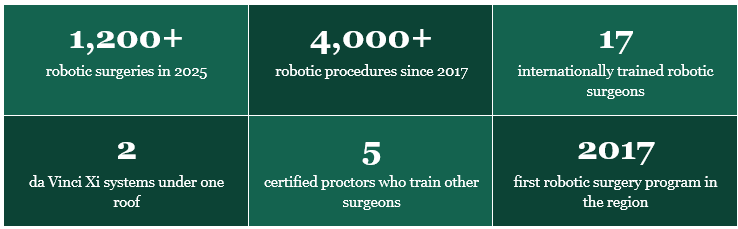
Over 1,200 da Vinci robotic surgeries in 2025 — the second-highest volume in India, as certified by Intuitive®, makers of the da Vinci Xi surgical system.
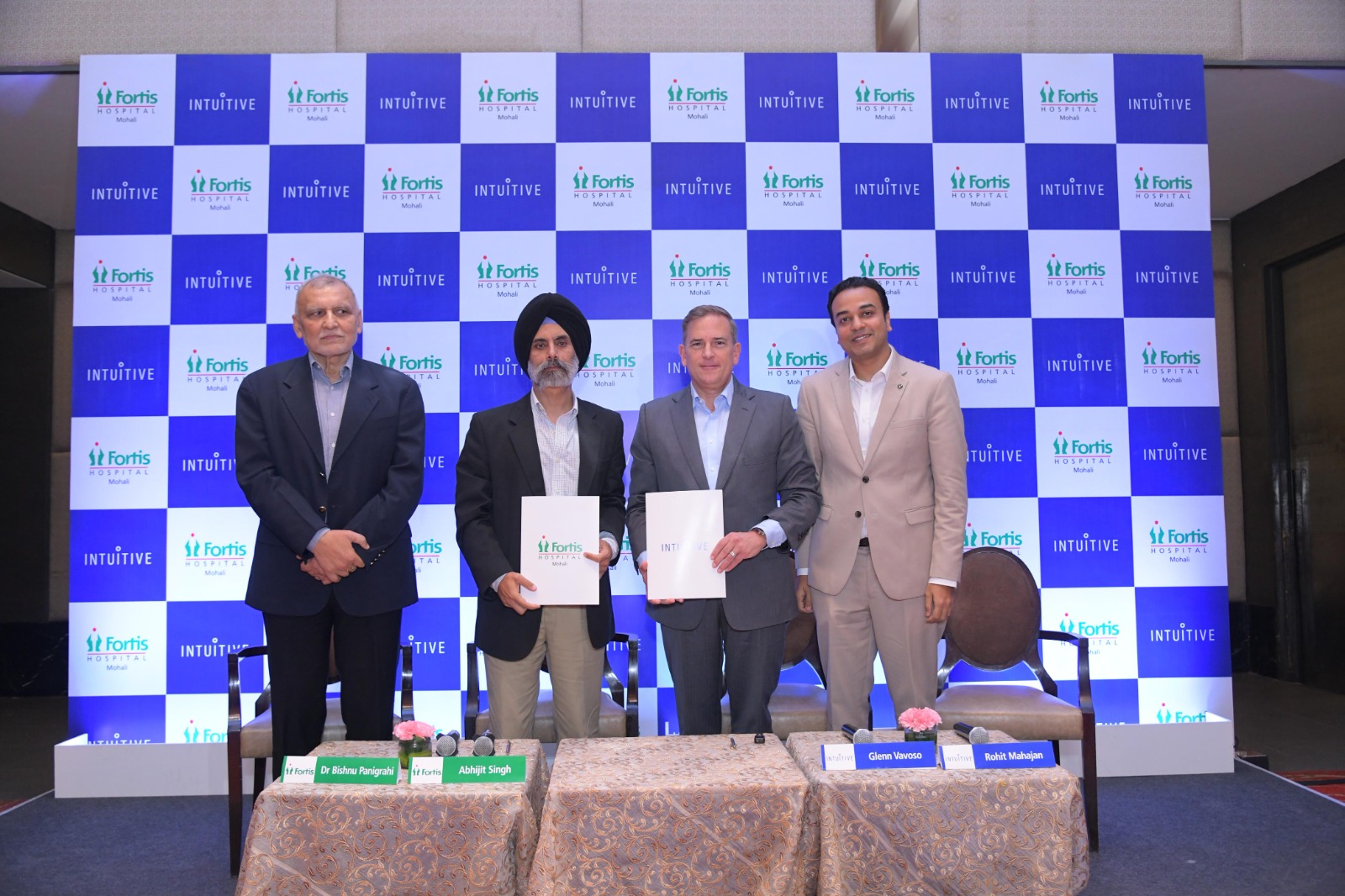
India’s second — and first non-metro — Total Program Observation (TPO) site, designated by Intuitive in 2026.
Key Highlights
- First in the region to introduce da Vinci robotic surgery (2017)
- First in the region to run two da Vinci Xi systems concurrently
- 5 Certified Proctors — expert surgeons who train other surgeons in robotic technique
- 8 surgeons TR300-trained (advanced training, 300+ robotic procedures) and 1 surgeon TR500-trained (500+ robotic procedures)
- Six surgical specialties — gynaecology, urology, surgical oncology, ENT/head & neck, general & GI, and breast & endocrine surgery — plus robotic kidney transplant
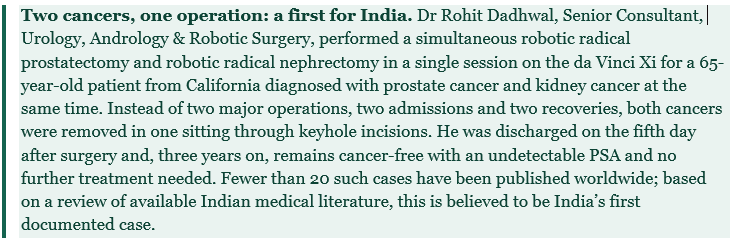
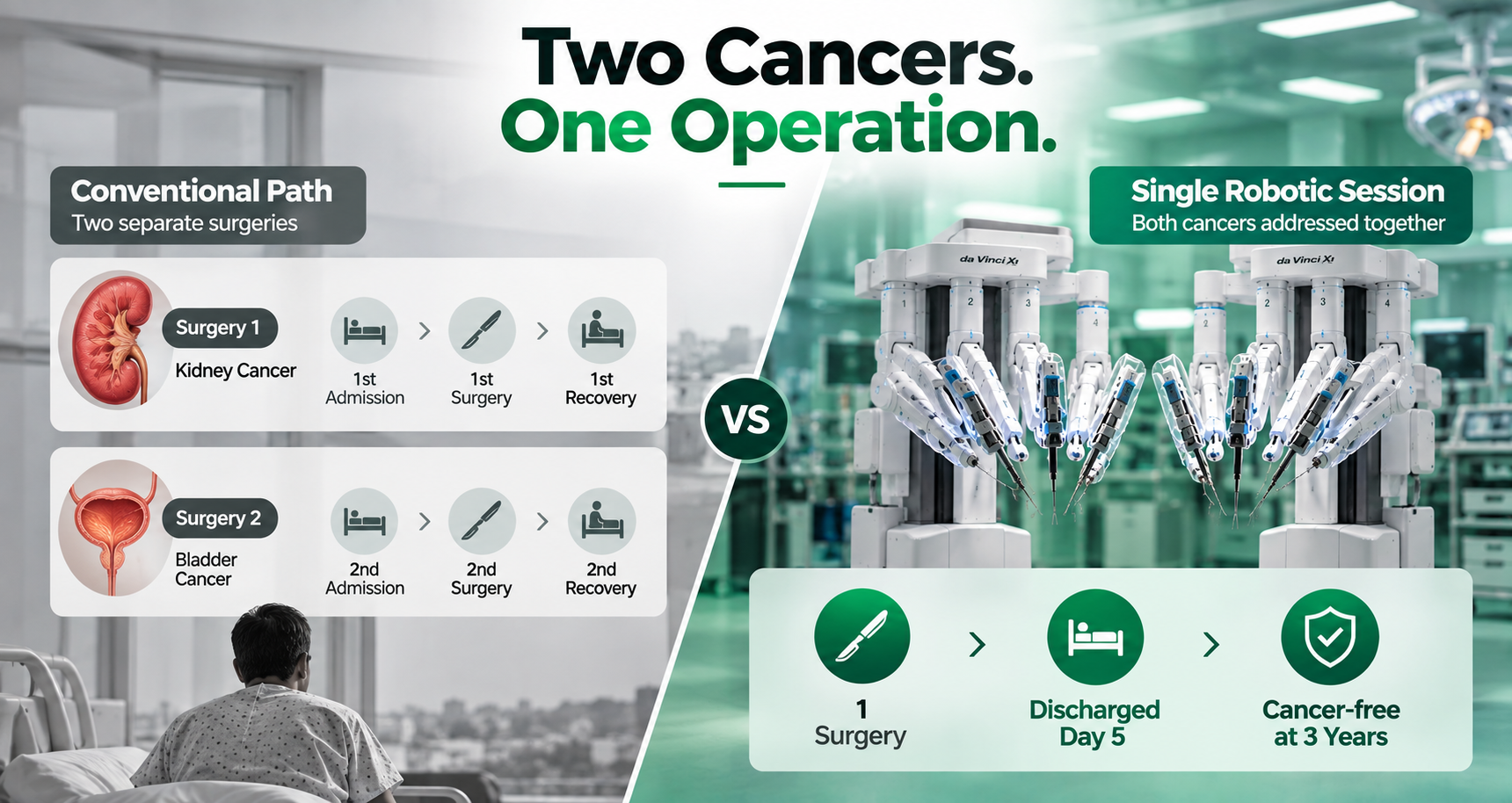
- India’s first documented simultaneous robotic surgery for prostate and kidney cancer — both cancers removed in a single sitting
- Robotic pelvic floor reconstruction — a high-volume program of mesh-based prolapse repair performed through the abdomen, not the vagina
Robotic Surgery at Fortis Hospital, Mohali
INTRODUCTION
Centre of Excellence for Robotic Surgery
At Fortis Hospital Mohali, robotic surgery is defined by the expertise behind the console. We introduced da Vinci robotic surgery to the region in 2017, when it was still a new idea for most patients in India. Nine years on, two da Vinci Xi Surgical Systems support soft-tissue surgery across gynaecology, urology, surgical oncology, ENT/head & neck, general & GI, breast & endocrine and transplant surgery — delivered by 17 internationally trained surgeons who have together performed more than 4,000 robotic procedures.
That experience has allowed our teams to:
Refine complex robotic techniques across multiple specialties
Build standardised protocols for case selection, surgery and recovery
Train other surgeons as Intuitive-certified proctors
Serve as a reference site where other hospitals observe how a complete robotic program runs
What robotic surgery can mean for patients, compared with open surgery
Smaller incisions and less visible scarring
Less pain and blood loss
A shorter hospital stay and earlier mobility
Lower risk of wound infection
Better chances of preserving continence, sexual function, speech, swallowing and organ function, depending on the procedure
Precise dissection around tumours, nerves and blood vessels
Benefits vary by patient and procedure. Your surgeon will explain what to expect in your case.
RECOGNISED BY INTUITIVE
India’s Second Total Program Observation (TPO) Site
In July 2026, Intuitive — the maker of the da Vinci system — designated Fortis Mohali as India’s second, and first non-metro, Total Program Observation (TPO) site. The designation was formalised through an MOU signed on 9 July 2026 in the presence of Glenn Vavoso, Senior Vice President, Intuitive APAC, and Rohitt Mahajan, Vice President & General Manager, Intuitive India.
As a TPO site, Fortis Mohali hosts surgical teams from other hospitals who come to observe how an established robotic program runs end to end — from patient selection and theatre workflow to team coordination and post-operative care.
For patients, it is independent recognition of the systems, training and teamwork behind every robotic surgery performed here.
Follow our robotic surgery program — surgeon insights, milestones and patient stories — on LinkedIn: Fortis Mohali Robotics
OUR TECHNOLOGY
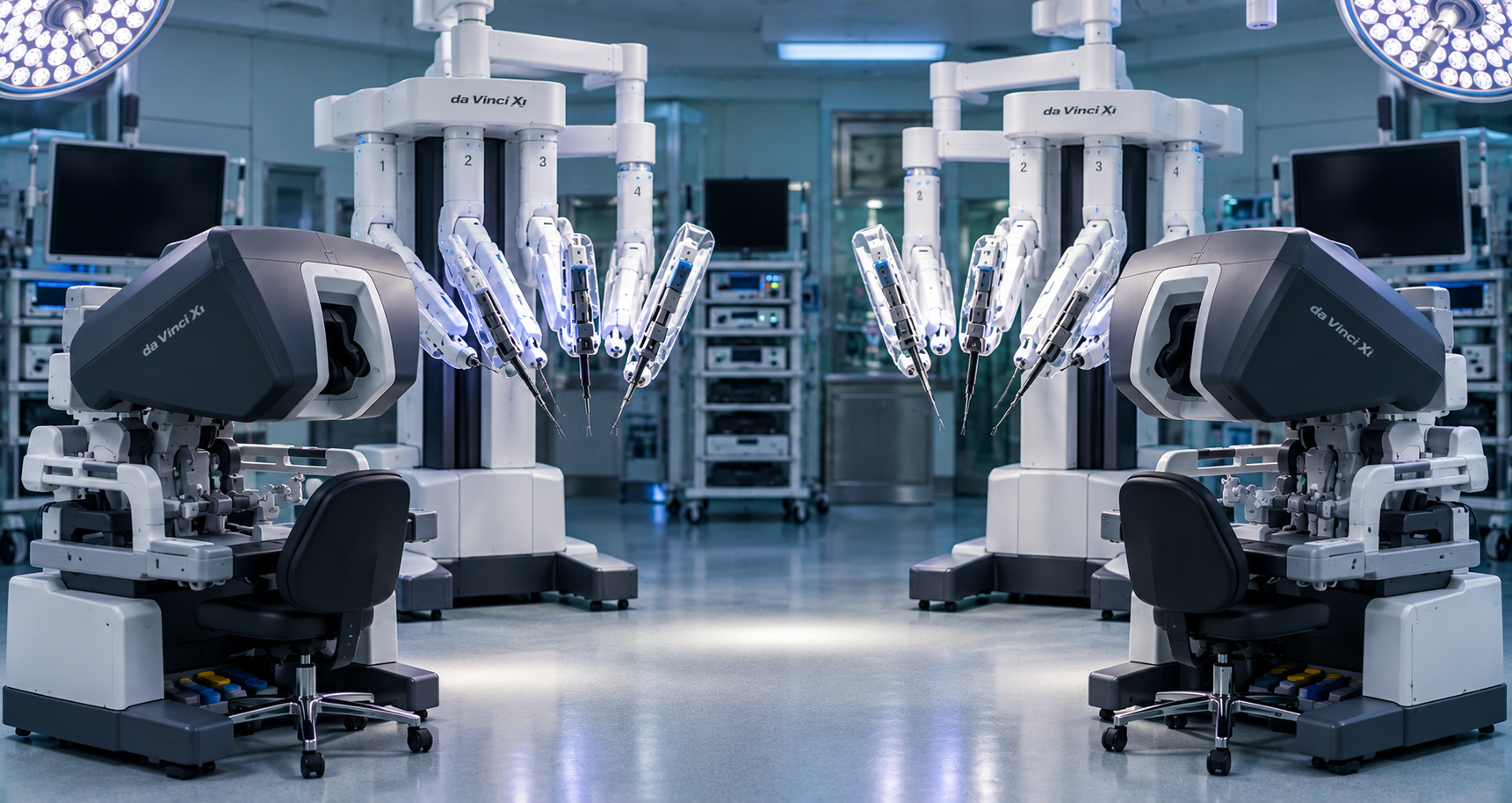
Two da Vinci Xi Robotic Surgical Systems Under One Roof
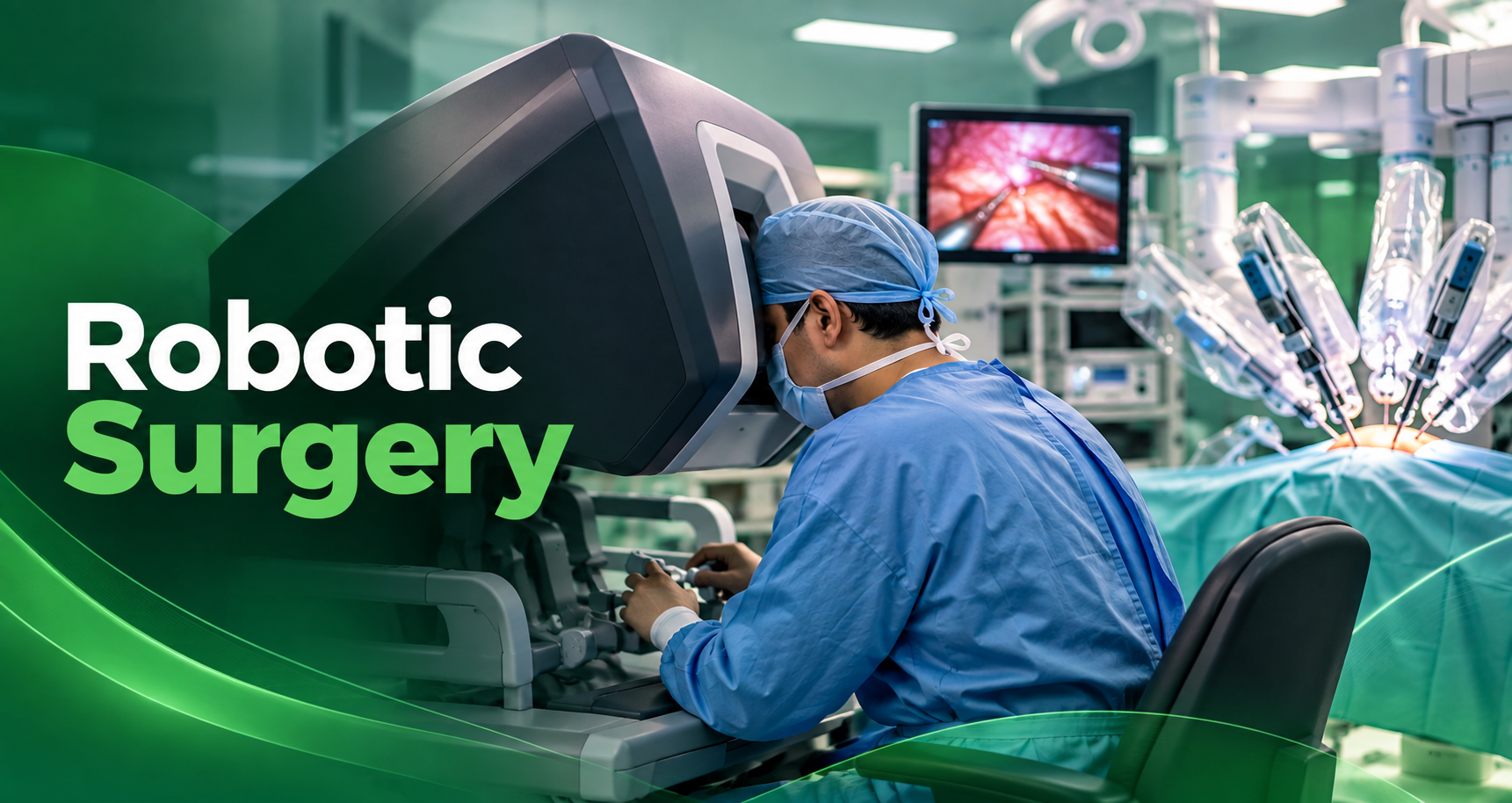
The da Vinci Xi is a robotic-assisted surgical system. The surgeon sits at a console a few feet from the patient and controls every movement of the instruments; the system translates the surgeon’s hand movements into smaller, precise movements inside the body. The robot does not operate on its own.
Applications: Gynaecology, Urology, Surgical Oncology, ENT (Head & Neck), General & GI Surgery, Breast & Endocrine Surgery, Transplant Surgery
Key capabilities
3D high-definition vision, up to 10x magnification — a detailed view of nerves, vessels and tissue planes
Tremor filtration — filters out natural hand tremor for steadier, finer movements
Wristed instruments — bend and rotate with a range of motion greater than the human wrist
Precise suturing in deep or narrow spaces — such as the pelvis, behind the pubic bone and the upper abdomen
Better protection of nerves, vessels and organs — helping minimise damage to surrounding tissue
Running two systems concurrently — a first in the region — lets us schedule complex cases without long waits and keep robotic capacity available across specialties.
ROBOTIC SPECIALTIES & CONDITIONS TREATED
A. Robotic Gynaecology (Women’s Health)
For complex gynaecological conditions, robotic surgery allows precise dissection deep in the pelvis — helping surgeons remove disease while protecting the uterus, ovaries, bladder, bowel and nerves. It is particularly valuable for fertility-sparing surgery, severe endometriosis and pelvic floor reconstruction with mesh.
Benign conditions
Uterine fibroids — Robotic Myomectomy
Multiple or large fibroids — Robotic Myomectomy with multilayer uterine reconstruction
Adenomyosis — Robotic Hysterectomy, or uterus-preserving Robotic Adenomyomectomy
Endometriosis (Stage III/IV) — Robotic Excision
Ovarian cysts — Robotic Cystectomy / Oophorectomy
Ovarian torsion — Robotic Detorsion with ovarian preservation
Ectopic pregnancy — Robotic Ectopic Surgery
Pelvic adhesions — Robotic Adhesiolysis
Tubal disease — Robotic Salpingectomy / Salpingo-oophorectomy
Pelvic Organ Prolapse & Robotic Mesh Surgery
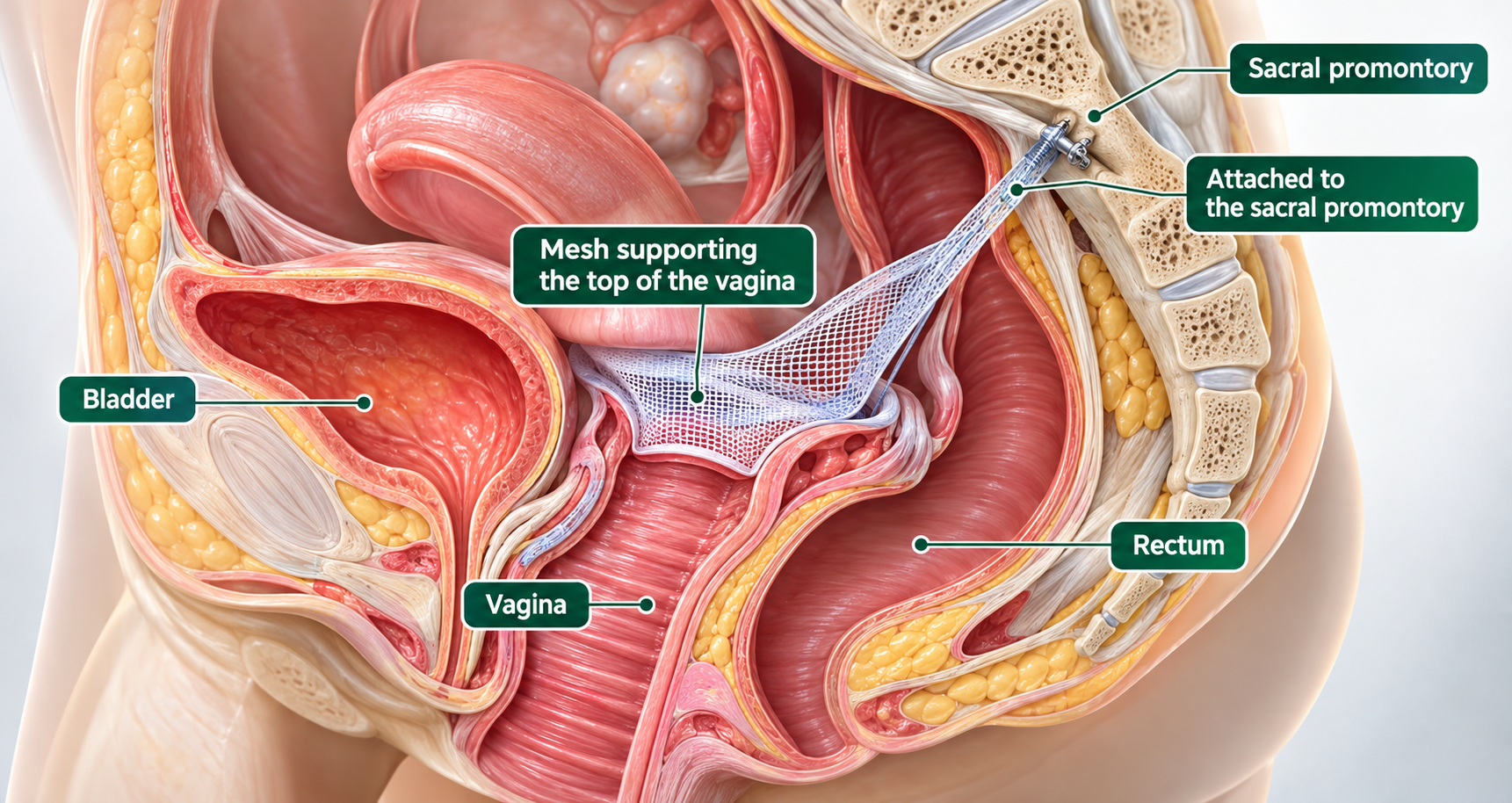
Pelvic organ prolapse happens when the muscles and ligaments supporting the uterus, bladder, bowel or top of the vagina weaken — often after childbirth, with age or after menopause — and these organs descend into or beyond the vagina. Women may notice a bulge or heaviness, urinary leakage, difficulty emptying the bladder or bowel, or discomfort during intercourse.
In robotic mesh surgery, the surgeon lifts the prolapsed organs back to their natural position and holds them there with a lightweight, medical-grade synthetic mesh, fixed to a strong anchor point — usually the ligament over the sacrum (tailbone) — through small keyhole incisions in the abdomen. Robotic precision helps with the fine dissection and secure suturing this deep pelvic repair requires.

Our robotic mesh procedures
- Vaginal vault prolapse (after hysterectomy) — Robotic Sacrocolpopexy with mesh
- Uterine prolapse, uterus-preserving — Robotic Sacrohysteropexy with mesh
- Uterine prolapse, with hysterectomy — Robotic Supracervical Hysterectomy with Sacrocervicopexy (mesh fixed to the preserved cervix)
- Uterine or vault prolapse where sacral access is difficult — Robotic Pectopexy (mesh fixed to the pectineal ligament on the pelvic side wall)
- Anterior and apical prolapse — Robotic Lateral Suspension with mesh
- Multi-compartment prolapse (uterus or vault, bladder and rectum) — Robotic comprehensive pelvic floor reconstruction, including combined Sacrocolpopexy with Ventral Mesh Rectopexy alongside our colorectal surgeons
- Prolapse with urinary leakage — Robotic Sacrocolpopexy with a continence procedure in the same sitting, where indicated
Who may benefit
Women with prolapse that affects daily life, prolapse that has returned after a previous repair, vault prolapse after hysterectomy, and sexually active women who wish to preserve vaginal length and function.

Gynaecological cancers
- Uterine (endometrial) cancer — Robotic Hysterectomy with surgical staging
- Cervical cancer — Robotic Radical Hysterectomy in carefully selected early-stage cases, after tumour board review; open surgery remains the recommended approach for many patients
- Ovarian cancer — Robotic Staging and Robotic Cytoreductive Surgery in selected cases
- Complex gynaecological cancers — Robotic Debulking in selected cases
Fertility-preserving surgery
For young women with fibroids, endometriosis, ovarian cysts or early cervical cancer, robotic precision helps surgeons remove disease while preserving healthy ovarian tissue and the structure of the uterus.
Fertility-sparing Myomectomy — removing fibroids while preserving the uterus for future pregnancy
Endometriosis excision with ovarian preservation — removing disease while protecting ovarian reserve
Ovarian Cystectomy with tissue preservation — removing cysts while retaining as much healthy ovarian tissue as possible
Ovarian Detorsion in girls and young women — saving a twisted ovary that might otherwise be lost
Adenomyomectomy — removing adenomyosis while maintaining the structure of the uterus
Robotic Radical Trachelectomy — for selected early cervical cancers, removing the cervix while preserving the uterus
Advantages
Fertility protection — fine, magnified dissection helps protect reproductive organs and ovarian reserve
Minimal visible scarring — small incisions, often at the navel and below the bikini line
Fewer adhesions than open surgery — lowering the risk of scar tissue that can affect fertility
Faster return to routine — most women resume normal activities within 2–3 weeks
Durable prolapse repair — mesh placed through the abdomen restores natural anatomy
Preserved vaginal length and function — an important consideration in prolapse surgery for sexually active women
B. Robotic Urology (Kidney, Prostate & Bladder)
Many urological operations take place in tight spaces close to the nerves that control continence and sexual function. Robotic magnification and wristed instruments help surgeons remove disease while protecting these structures and saving healthy kidney tissue.
Conditions & robotic procedures
Prostate cancer — Robotic Radical Prostatectomy
Kidney cancer — Robotic Partial Nephrectomy (transperitoneal or retroperitoneal approach) / Tumour Enucleation / Radical Nephrectomy
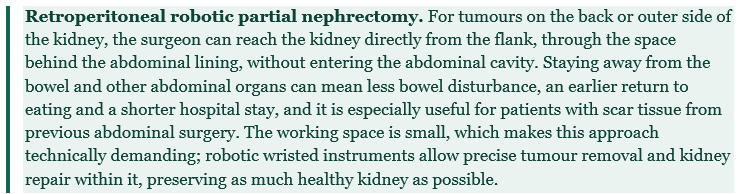
Kidney tumours on the back or side of the kidney — Robotic Retroperitoneal Partial Nephrectomy
Renal masses — Robotic Tumour Resection
Prostate and kidney cancer diagnosed together — Simultaneous Robotic Radical Prostatectomy and Radical Nephrectomy in a single sitting
Bladder cancer — Robotic Radical Cystectomy, including intracorporeal neobladder formation
Kidney failure — Robotic Kidney Transplant
PUJ obstruction — Robotic Pyeloplasty
Ureteric strictures — Robotic Ureteric Reimplantation
Adrenal tumours — Robotic Adrenalectomy
IVC tumour thrombus — Robotic IVC Thrombectomy
Advantages
Nerve-sparing techniques that help preserve sexual and urinary function
Precise tumour margins while saving healthy kidney tissue
Retroperitoneal access for suitable kidney tumours, avoiding the abdominal cavity
Combined procedures in one sitting for selected patients with more than one condition
Lower blood loss and a shorter hospital stay than open surgery
Earlier catheter removal and recovery
C. Robotic ENT & Head & Neck Surgery
For tumours of the throat, voice box and neck, robotic surgery reaches areas that are difficult to access conventionally — often through the mouth — avoiding large incisions in the face and neck.
Head & neck oncology
Oropharyngeal tumours — TORS (Trans-Oral Robotic Surgery) for tumours of the tonsil, base of tongue and posterior pharyngeal wall
Supraglottic tumours — Robotic Supraglottic Laryngectomy (the extent depends on tumour location)
Thyroid cancer (selected cases) — Robotic Thyroidectomy via BABA, RABIT or retroauricular approaches
Deep neck space tumours — Robotic access and resection
Neck metastases — Robotic Neck Dissection via robotic infraclavicular approach (RIA), to remove lymph nodes for cancer control
Robotic sleep surgery
Obstructive sleep apnoea — Robot-assisted Uvulopalatopharyngoplasty (UPPP), reshaping the soft palate and uvula to open the airway
Base-of-tongue obstruction — Robot-assisted Base of Tongue Reduction, removing excess tissue that blocks the airway during sleep
Benign head & neck conditions
Salivary gland disorders — Robotic Submandibular Gland Excision via infraclavicular approach, avoiding a visible neck scar
Advantages
No external facial scars — access through the mouth or small, hidden incisions
Better chances of preserving speech and swallowing
Reduced need for a temporary tracheostomy in many patients
Faster return to eating and a shorter hospital stay — many patients eat normally within days
Access to deep spaces that are difficult to reach with conventional instruments
Precise tissue reduction for sleep apnoea with less trauma to surrounding tissue
D. Robotic Onco-Surgery (Chest, Abdomen & Pelvis)
For many cancers of the chest, abdomen and pelvis, robotic surgery pairs the thoroughness of open surgery with the recovery benefits of keyhole surgery, giving surgeons a magnified 3D view for precise tumour removal and lymph node dissection. Each case is planned with our multidisciplinary cancer team.
Oesophageal cancer
Robotic Oesophagectomy with cervical oesophagogastric anastomosis — removal of the oesophagus with reconstruction
Gastric (stomach) cancer
Robotic Total Gastrectomy with D2 Lymphadenectomy and Roux-en-Y Oesophago-jejunostomy — complete stomach removal with thorough lymph node clearance
Robotic Distal/Partial Gastrectomy with D2 Lymphadenectomy — removal of the lower stomach with lymph node clearance
Liver and bile duct cancers
Robotic Left Lateral Segmentectomy — precise removal of a liver segment
Robotic Wedge Resection of Liver — targeted removal of liver tumours
Robotic Bile Duct Excision with Roux-en-Y Hepatico-jejunostomy — bile duct surgery with reconstruction
Pancreatic cancer
Robotic Whipple’s Procedure (Pancreaticoduodenectomy) — the standard operation for tumours of the pancreatic head
Robotic Distal Pancreatectomy with Splenectomy — for tumours of the pancreatic body and tail
Colorectal cancer
Robotic Right Hemicolectomy — right colon cancer
Robotic Transverse Colectomy — transverse colon cancer
Robotic Left Hemicolectomy — left colon cancer
Robotic Anterior Resection — upper rectal cancer
Robotic Low Anterior Resection (LAR) with Total Mesorectal Excision (TME) — lower rectal cancer with sphincter preservation
Robotic Abdominoperineal Resection (APR) — very low rectal cancers
Robotic Total Proctocolectomy with Ileostomy — removal of the colon and rectum
Robotic Restorative Proctocolectomy with Ileal Pouch-Anal Anastomosis (IPAA) — sphincter-preserving removal of the colon and rectum
Robotic cytoreductive surgery
Cytoreductive surgery aims to remove all visible tumour from the abdomen and pelvis, which is central to treating cancers that have spread within the abdominal cavity. In selected patients — particularly those with limited-volume disease or a good response to chemotherapy — this can be performed robotically, with a magnified view of the peritoneal surfaces and a faster recovery, so that further treatment can begin sooner. Suitability is decided by our multidisciplinary tumour board.
Advanced ovarian cancer — Robotic Interval Cytoreductive Surgery after chemotherapy, in selected patients
Limited peritoneal spread from colorectal, appendiceal or other abdominal cancers — Robotic Cytoreductive Surgery in selected patients
Localised recurrence of gynaecological or abdominal cancers — Robotic Secondary Cytoreduction
Robotic surgery for gynaecological and urological cancers is also listed under Robotic Gynaecology and Robotic Urology above.

Advantages
Thorough lymph node dissection for accurate staging and cancer clearance
Magnified view of the peritoneal surfaces in cytoreductive surgery, helping identify and remove small tumour deposits
Clear visualisation to help achieve tumour-free margins
Magnified view for complex HPB (hepato-pancreato-biliary) surgery deep in the abdomen
Precise suturing for pancreatic, biliary and bowel reconstruction
Faster recovery than open surgery, so chemotherapy or radiotherapy, when needed, can often start sooner
Function preservation — for example, sphincter preservation in low rectal cancer
Recovery benefits that matter for older and higher-risk patients
E. Robotic General & GI Surgery
Conditions & robotic procedures
Inguinal hernia — Robotic Hernioplasty
Ventral/umbilical hernia — Robotic Mesh Repair
Recurrent hernia — Robotic Redo Repair
Gallbladder disease — Robotic Cholecystectomy
Obesity — Robotic Sleeve Gastrectomy / Gastric Bypass
Metabolic syndrome — Robotic Gastric Bypass
GERD — Robotic Fundoplication
Achalasia — Robotic Heller Myotomy
Diaphragmatic hernia — Robotic Repair
Advantages
Same-day or next-day discharge in selected cases
Precise suturing in deep spaces, such as around the food pipe and diaphragm
Secure mesh placement for durable hernia repair
Faster recovery with fewer wound complications than open surgery
Precision for complex bariatric and metabolic procedures
F. Robotic Breast & Endocrine Surgery
Robotic techniques allow breast and endocrine operations through small incisions hidden in the armpit, behind the ear or under the breast — combining complete treatment with better cosmetic results.
Breast surgery
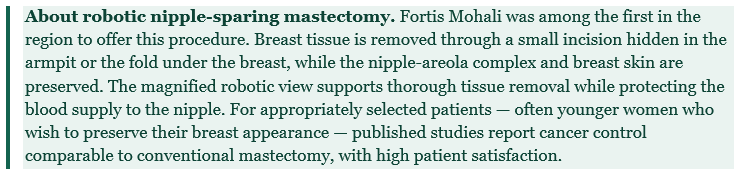
Breast cancer — Robotic Nipple-Sparing Mastectomy (removing breast tissue while preserving the nipple and breast skin for reconstruction)
Breast cancer with reconstruction — Robotic Mastectomy with Immediate Reconstruction
Thyroid surgery
Thyroid cancer — Robotic Thyroidectomy (total or partial, without a neck scar)
Thyroid nodules/goitre — Robotic Thyroidectomy
Graves’ disease — Robotic Total Thyroidectomy
Parathyroid surgery
Hyperparathyroidism — Robotic Parathyroidectomy (removing overactive glands that regulate calcium)
Parathyroid adenoma — Robotic Parathyroid Adenoma Excision
Adrenal surgery
Adrenal tumours — Robotic Adrenalectomy (removing adrenal tumours that may disturb hormone balance)
Phaeochromocytoma — Robotic Adrenalectomy (removing an adrenaline-producing tumour)
Cushing’s syndrome — Robotic Adrenalectomy
Advantages
No visible neck or chest scars — incisions hidden in the armpit, behind the ear or in natural creases
Better cosmetic outcomes — especially important for younger patients
Nipple preservation in breast cancer — maintaining natural breast appearance while treating the cancer
Less post-operative pain than open surgery
Faster return to normal activities — most patients resume work within 1–2 weeks
Magnified 3D view — helps identify and protect the parathyroid glands and the recurrent laryngeal (voice) nerve
An advantage in patients with higher BMI — particularly in adrenal surgery
About Fortis Hospital, Mohali
PATIENT BENEFITS OF ROBOTIC SURGERY
Why Choose Robotic Surgery at Fortis Mohali?
Compared with open surgery, robotic surgery can offer:
Smaller incisions and minimal scars — better cosmetic results
Less pain and less need for strong painkillers — a more comfortable recovery
Lower blood loss and infection risk
Shorter hospital stay — home sooner
Better functional outcomes — helping preserve continence, sexual function, speech and mobility
Precision in cancer surgery — magnified vision for tumour removal and lymph node dissection
Faster return to work and daily life
WHY FORTIS MOHALI?
One of India’s Highest-Volume da Vinci Programs
Since 2017, Fortis Mohali has performed more than 4,000 robotic procedures. In 2025 alone, we performed over 1,200 da Vinci robotic surgeries — the second-highest volume in India, as certified by Intuitive. In 2026, Intuitive designated Fortis Mohali as India’s second Total Program Observation site. Our distinction lies not only in volume but in breadth: complex cancer resections, fertility-preserving and pelvic floor surgery, scarless endocrine surgery, advanced urology, head and neck oncology and intricate GI reconstruction — delivered by internationally trained surgeons working together across specialties.
What this means for you
Surgeon experience — 17 internationally trained robotic surgeons, including 5 certified proctors who train other surgeons
Complex firsts — including India’s first documented simultaneous robotic surgery for prostate and kidney cancer
Volume that supports outcomes — published research links higher surgical volume with lower complication rates for many complex procedures
Two robots, shorter waits — capacity to schedule complex cases promptly
Team-based care — surgeons, anaesthesiologists, oncologists, critical care and nursing teams working to shared protocols
Quality you can verify — JCI-accredited since 2007 and NABH-accredited
Regional leadership
First in the region to introduce da Vinci robotic surgery (2017), and first to run two da Vinci systems concurrently.
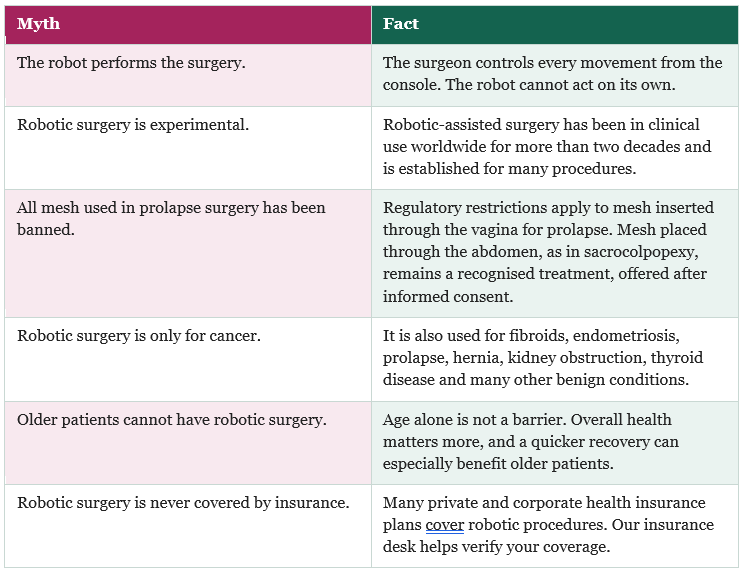
MYTH VS FACT
FINAL CALL TO ACTION
Precision of robotics. Expertise of experience.
Experience matters. Volume matters. Expertise matters.
Talk to our robotic surgery team about whether robotic surgery is right for you. At Fortis Mohali, you are cared for by one of India’s highest-volume da Vinci programs — where advanced technology is guided by years of surgical experience.
CONTACT INFORMATION
Phone: +91 72728 72728
Location: Fortis Hospital Mohali, Sector 62, Phase VIII, Sahibzada Ajit Singh Nagar (Mohali), Punjab 160062


Our Team of Experts
View all Dr. Swapna MisraSenior Director Obstetrics & Gynaecology
 Dr. Dharmender AggarwalSenior Consultant Urology
 Dr. Rudra Prasad DoleyDirector General Surgery
 Dr. Iqbal SinghAdditional Director General Surgery
 Dr. Rohit DadhwalConsultant Urology
 Dr. Dr Ashok Gupta & Team .Team ENT
 Mr. Dr. Atul S Joshi and TeamTeam General Surgery
 Dr. Divya AwasthiAdditional Director Obstetrics & Gynaecology
 Dr. Jitender RohilaSenior Consultant GI Surgical Oncology
 Dr. Naval BansalSenior Consultant Breast and Endocrine Surgery
 Dr. Kuldeep ThakurConsultant Head and Neck Oncology
 Dr. Vitish SinglaConsultant Gi, Minimal Access & Bariatric Surgery
FAQs
Does the robot perform the surgery?
No. The robot does not make decisions. It is 100% controlled by the surgeon. The da Vinci Xi system is a sophisticated tool that translates the surgeon's hand movements into precise micro-movements of the robotic instruments. Think of it as an advanced surgical instrument, not an autonomous machine.
Is robotic surgery safe?
Yes. It is FDA-approved and often safer than traditional open surgery due to smaller incisions, less blood loss, and lower complication rates. Our extensive experience with over 3000 procedures further enhances safety. Multiple international studies have demonstrated comparable or superior safety profiles for robotic procedures compared to conventional approaches.
How does robotic surgery compare to laparoscopic surgery?
While both are minimally invasive, robotic surgery offers several advantages: 3D high-definition vision (vs. 2D in standard laparoscopy), wristed instruments with 360-degree rotation (vs. rigid instruments), tremor filtration, and enhanced precision in complex anatomical spaces. For intricate procedures requiring fine dissection and suturing, robotics provides superior control.
What are the disadvantages or limitations of robotic surgery?
The main limitations include: lack of tactile feedback (compensated by visual cues and experience), slightly longer setup time, higher initial costs, and the learning curve for surgeons. However, at high-volume centers like Fortis Mohali, these limitations are minimized through surgical expertise and efficiency.
Can robotic surgery fail or have complications?
Like all surgical procedures, robotic surgery carries potential risks including bleeding, infection, or injury to surrounding structures. However, complication rates are generally lower than open surgery. At Fortis Mohali, our high-volume experience and internationally trained team further reduce risk through standardized protocols and expertise.
How long does robotic surgery take?
The surgical duration is comparable to conventional surgery, though complex reconstructions may take slightly longer due to the precision steps involved. Typical procedures range from 2-6 hours depending on complexity. The benefits of reduced trauma and faster recovery outweigh any additional time.
How soon can patients resume normal activities?
Most patients resume daily activities within days to weeks depending on the procedure type. Many return to work within 2-3 weeks, compared to 6-8 weeks with traditional open surgery. Specific timelines:
• Light activities: 3-7 days
• Driving: 1-2 weeks (when off pain medications)
• Work (desk job): 2-3 weeks
• Exercise/heavy lifting: 4-6 weeks
What is the typical hospital stay after robotic surgery?
Most robotic procedures require 1-3 days of hospitalization, compared to 5-7 days for equivalent open surgeries. Some minor procedures may even allow same-day discharge. The shorter stay reduces infection risk and overall healthcare costs.
When can I return to exercise or sports?
Light walking is encouraged from the day after surgery. Moderate exercise usually resumes at 3–4 weeks and full activity at 6–8 weeks. Your surgeon will give you personalised guidance.
Is robotic surgery more expensive?
It may cost more upfront because of the technology involved. A shorter hospital stay, fewer wound complications and a quicker return to work can offset part of this cost for many patients.
Is robotic surgery covered by insurance?
Many private and corporate insurance plans, including mediclaim policies, cover robotic procedures. CGHS and ECHS beneficiaries may opt for robotic surgery by paying the applicable differential. International insurance is accepted for overseas patients. Our insurance desk helps with verification and approvals.
Do you accept international patients and insurance?
Yes. Fortis Mohali regularly treats international patients and works with major international insurers. We also help with visas, accommodation and post-operative care coordination.
Who is a good candidate for robotic surgery?
Patients who need cancer surgery, urological or gynaecological procedures, or complex pelvic and abdominal operations where precision, minimal scarring and faster recovery matter. Good candidates typically have:
▪ A condition suited to a minimally invasive approach
▪ Reasonable overall health
▪ No contraindication to general anaesthesia
Your surgeon will assess your individual case during consultation.
Am I too old for robotic surgery?
Age alone is not a barrier. We regularly perform robotic procedures for patients in their 70s and 80s. Overall health, organ function and the ability to tolerate anaesthesia matter more — and the minimally invasive approach often suits older patients who may recover poorly from open surgery.
Can robotic surgery be performed on patients with obesity?
Yes. Robotic surgery can offer particular advantages for patients with a higher BMI, where open surgery would need larger incisions and carries more wound complications. We routinely operate on patients with a BMI above 30–35.
Is robotic surgery suitable for cancer?
Yes, for many cancers. Robotic surgery is an accepted option in international guidelines for cancers such as prostate, kidney, endometrial and colorectal cancer, where published studies show cancer control comparable to open surgery with faster recovery. For some cancers, including certain cervical cancers, open surgery may be recommended instead. Your surgeon and our tumour board will advise on the best approach for you.
Can advanced cancers that have spread in the abdomen be treated robotically?
In selected patients, yes. Robotic cytoreductive surgery can remove visible tumour deposits in patients with limited-volume spread or a good response to chemotherapy, such as some advanced ovarian cancers. Many patients with extensive disease still need open surgery. Our tumour board reviews each case to recommend the safest and most effective approach.
Can I have two operations at the same time?
Sometimes. In selected patients, surgeons can combine two robotic procedures in one sitting — for example, Fortis Mohali has performed a simultaneous robotic prostatectomy and nephrectomy for a patient with both prostate and kidney cancer. Whether this is safe for you depends on your overall health and the procedures involved.
What makes Fortis Mohali different from other centers?
• Volume Leadership – One of India's largest da Vinci programs with 3000+ procedures
• Dual Robot Capability – First in the region with two operational da Vinci Xi systems
• Multidisciplinary Team – 17 internationally trained surgeons across all major specialties
• 8+ Years of Excellence – Consistent track record since program inception
• Comprehensive Care – From complex oncology to advanced reconstructive procedures
What is the success rate of robotic surgery at Fortis Mohali?
Success rates vary by procedure but are comparable to or better than international benchmarks. For example, our robotic prostatectomy has >95% cancer control rates with excellent functional outcomes. We maintain transparent outcome tracking and participate in national quality registries.
Is Fortis Mohali accredited by international healthcare organizations?
Yes. Fortis Mohali is JCI (Joint Commission International) accredited – the gold standard for healthcare quality worldwide. We are one of the very few hospitals in India to receive this prestigious accreditation in 2007 and have maintained it continuously for over 17 years, demonstrating sustained excellence in patient safety, clinical care, and quality management.
Fortis Mohali is the only hospital in the region with JCI accreditation, ensuring that international patients receive care that meets or exceeds standards found in leading hospitals worldwide. JCI accreditation validates our:
• Patient safety protocols and infection control measures
• Clinical excellence and evidence-based practices
• Medication management and documentation systems
• Continuous quality improvement programs
• International patient care standards
Additionally, we maintain NABH (National Accreditation Board for Hospitals) accreditation and regularly host international observers and maintain partnerships with leading global medical centers.
Do you provide services for international patients?
Yes. Our international patient services team helps with visa invitation letters, airport transfers, accommodation, interpreters, medical record translation, treatment planning and post-discharge care coordination.
How do I get my medical records for travel?
We provide discharge summaries, operative notes, pathology reports and imaging in English. Digital copies can be emailed for follow-up with your doctors at home.