
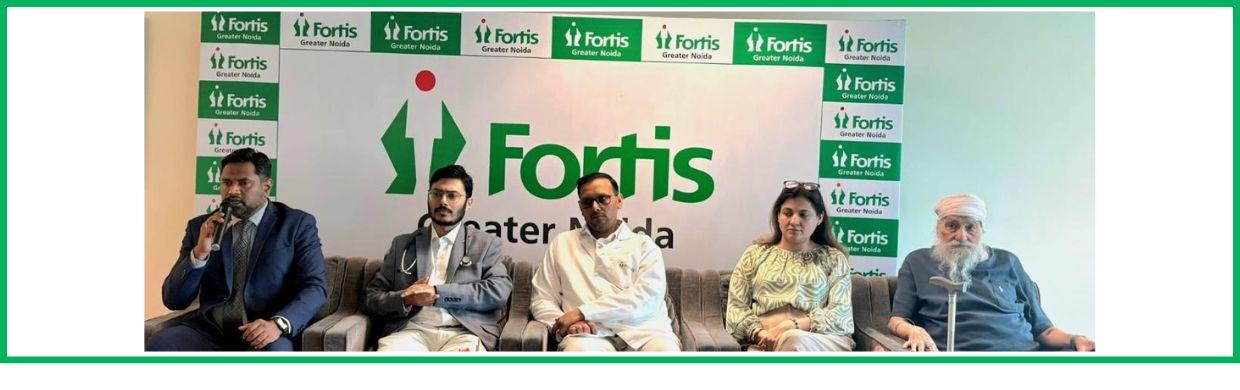


Fortis Greater Noida Successfully Performs High-Risk TAVR on 80-Year-Old Patient with Rare Aortic Calcification
Among the first complex TAVR procedure in the Greater Noida region, using advanced valve technology
Doctors at Fortis Hospital Greater Noida have successfully treated an 80-year-old patient with a critical and life-threatening heart valve condition, complicated by extensive calcium buildup in the aortic valve and major blood vessels. The patient’s arteries were severely hardened, risking blood flow to the heart exceptionally challenging and placing him at high risk of sudden cardiac death. Despite these complexities, the medical team performed a minimally invasive Transcatheter Aortic Valve Replacement (TAVR) - a procedure that replaces a diseased aortic valve without open-heart surgery. This case stands out as one of the first highly complex TAVR procedures in the Greater Noida region, carried out using advanced valve technology, marking an important step forward in delivering cutting-edge cardiac care to high-risk elderly patients.
The elderly patient, who was managing multiple chronic conditions - including diabetes, hypertension, thyroid disorder, and COPD, had been experiencing progressively worsening chest pain and breathlessness in recent weeks. His health had declined to the point where even short walks became difficult, significantly affecting his daily activities.
Initial diagnostic investigations including ECG, 2D echocardiography, and a CT aortogram revealed severe narrowing of the aortic valve, a condition that critically restricted blood flow and placed him at immediate risk of life-threatening complications. This condition, known as aortic stenosis, can severely restrict the heart’s ability to pump blood effectively.
Given his advanced age and complex medical history, conventional open-heart surgery posed an extremely high risk. As a result, the medical team opted for Transcatheter Aortic Valve Replacement (TAVR) - a minimally invasive procedure in which a new valve is delivered via a catheter, avoiding the need for major surgery. Further imaging revealed extensive calcium deposits in the blood vessels and aorta, adding another layer of complexity to the procedure and making the intervention particularly challenging for the treating team.
The procedure was led by Dr. Shantanu Singhal, Consultant, Cardiology, along with Dr. Dheeraj Sharma, Senior Consultant, CVTS Surgery, Fortis Hospital Greater Noida. With careful planning and precise execution, the valve was successfully replaced in approximately one hour, resulting in a significant improvement in blood flow. The patient showed rapid recovery, remained stable after the procedure, and was discharged within two days without any major complications or the need for a permanent pacemaker.
Giving details of the case, Dr. Shantanu Singhal, Consultant, Cardiology, Fortis Hospital Greater Noida, said, “This was a highly challenging case given the patient’s age, multiple conditions and the extent of calcification. He was at a significant risk of sudden cardiac death, making timely intervention critical. Choosing a minimally invasive approach helped us manage the risk effectively.”
Dr. Dheeraj Sharma, Senior Consultant, Cardio Thoracic Vascular Surgery, Fortis Hospital Greater Noida, said, “The case was highly complex as replacing the aortic valve surgically would have been a very high risk procedure with high risk of perioperative neurological complications like stroke. Additionally, it was also risky due to heavily calcified ascending and arch of Aorta, but as CTVS surgeons, we were fully ready for any kind of complications which may have needed Open heart valve surgery. Careful planning and precise execution were essential to ensure a safe and successful outcome.”
Siddharth Nigam, Facility Director, Fortis Hospital Greater Noida, said, “This is among the first complex TAVR procedures in the Greater Noida region using advanced valve technology. Bringing such high-end cardiac interventions closer to patients reflects our focus on expanding access to specialised cardiac care and improving outcomes in critical cases.”

Keep track of your appointments, get updates & more!

