


Cochlear Implant Surgery in Mumbai
Cochlear Implant Surgery in Mumbai - Fortis Hospital, Mulund, Mumbai
If you have severe or profound hearing loss in one or both ears and your hearing aids no longer help, a cochlear implant may be an option. When you come to Fortis Hospital, Mulund, for cochlear implants, our hearing specialists are here to guide you every step of the way. Our Cochlear Implant Centre offers a comprehensive approach to cochlear implantation and rehabilitation, ensuring you get the results from your treatment. Each year, our experts perform hundreds of procedures on adults and children, utilising the latest technology and techniques, including robot-assisted cochlear implant surgery, to deliver the outcomes.
Read on to learn more about a cochlear implant, including how the device works, what the procedure entails, and more.
What is a Cochlear Implant?
A cochlear implant is a surgically implanted electronic device that provides a sense of sound to people with sensorineural hearing loss – a type of hearing loss caused by damage to the hair cells inside the inner ear (cochlea). Cochlear implants do not restore normal hearing, but they enhance your ability to understand speech and other sounds.
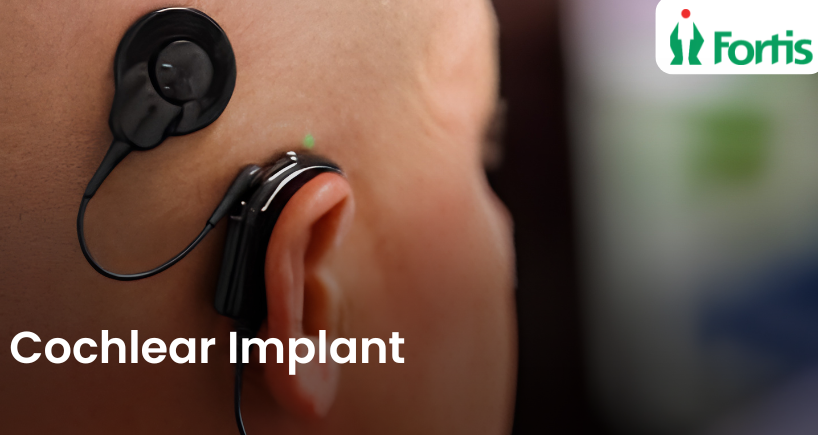
The implant consists of external and internal parts that work together by electrically stimulating the cochlear nerve:
- The external part that sits behind the ear consists of a microphone, processor, and transmitter
- The internal part, surgically placed under the skin, consists of electrodes and a receiver
The device offers significant improvement in hearing and quality of life to adults, children, and babies with severe to profound hearing loss.
How Does a Cochlear Implant Work?
A cochlear implant (unlike hearing aids, which make sounds louder) makes sounds clearer, making it easier for you to understand the conversation. It sends sounds directly to your hearing (auditory) nerve, bypassing the damaged parts of your ear.
The device works like this:
- You will wear a microphone and a sound processor, which captures the sounds picked up by the mic from the environment.
- The sound processor sends sound signals to the transmitter (attached to your scalp), which converts them into electrical impulses. The sound processor sends the impulses to the receiver (implanted under your skin).
- The electrodes (placed in the cochlea) collect the impulses from the receiver and send them to different parts of your auditory nerve. Your auditory nerve then sends the impulses to your brain, which identifies the impulses/signals as sounds.
A cochlear implant offers significant benefits to patients, although it does not provide sounds in the same way as natural hearing.
How Will You Receive a Cochlear Implant?
To get a cochlear implant, you’ll undergo surgery that usually takes 2-4 hours.
Before your surgery, the cochlear implant team at Fortis Hospital, Mulund, will perform a comprehensive evaluation to ensure this treatment is safe and the decent choice for you. Your evaluation includes a physical exam, hearing tests, and MRI or CT scans of the ears and head.
- During the procedure, you’ll be given general anaesthesia so you’re asleep and you feel no pain.
- Your surgeon will make a small incision behind the ear.
- A small hole is made in the mastoid to insert the implant electrodes into the cochlea.
- The internal receiver is then placed under the skin behind your ear.
- The cuts are closed, and you’ll be moved to a recovery area, where you’ll be monitored closely as the anaesthesia wears off.
Cochlear implantation is typically an outpatient procedure, so most patients can go home the day of surgery. About one week after surgery, you’ll have a follow-up with your surgeon to check how your incisions heal.
About one month after surgery, and once the healing is complete, your care team will activate the cochlear implant. An audiologist will programme the device to ensure you’re hearing as well as you can.
Rehabilitation and Care
A cochlear implant requires ongoing care, which involves monitoring your hearing and device programming through regular follow-ups with your doctor. You’ll need speech therapy and auditory rehabilitation to train your brain to understand new sounds and speech. This will improve your learning process and help you get the most out of this technology. You will, in fact, work with your audiologist and surgeon for the rest of your life for optimal hearing experience.
Potential Risks and Complications
Cochlear implants are a safe surgical procedure that offers benefits, such as improved hearing and better speech understanding. However, as with all surgeries, it carries some risks, including:
- Bleeding
- Swelling
- Infection at the implant site
- Dizziness
- Meningitis
- Ringing in the ears
- Numbness around the ear
- Facial paralysis
- Dry mouth
- Taste changes
- Balance problems
- Spinal fluid leakage
Conclusion
A cochlear implant can be life-changing for people with severe to profound hearing loss when hearing aids no longer provide benefits. If you or a family member needs cochlear implant surgery, enquire with one of our ENT doctors at Fortis Hospital, Mulund, today to start hearing better and live your life to the best.
_______________________________________________________________________________________________________
Fortis Hospital Mulund - Hospital for Cochlear Implantation in Mumbai
Fortis Hospital Mulund, Mumbai
Address: Mulund Goregaon Link Road, Mulund-West, Mumbai, 400078
Ph. 02268846143
Categories
Clear allMeet the doctor

- ENT | ENT (Ear, Nose and Throat)
-
 19 Years
-
 1500
1500
Related Blogs
View all








-
Explore More
Neurology Hospital in Mumbai Kidney Transplant Hospital in Mumbai Cancer Hospital in Mumbai Bone Marrow Transplant Hospital in Mumbai Heart Hospital in Mumbai Breast Cancer Hospital in Mumbai Mouth Cancer Hospital in Mumbai Anemia Hospital in Mumbai Heart Failure Treatment in Mumbai Emergency Hospital in Mumbai Radiation Therapy in Mumbai Eye Hospital in Mumbai Kidney Cancer Hospital in Mumbai
FAQs
Who is an ideal candidate for Cochlear Implant?
People with severe to profound sensorineural hearing loss who do not benefit from hearing aids are typically ideal candidates. Both adults and children, including infants, can be considered after a detailed evaluation
How is a Cochlear Implant different from a Hearing Aid?
Unlike Hearing Aids that amplify sounds, a Cochlear Implant bypasses damaged parts of the ear and directly stimulates the auditory nerve, helping you interpret sounds more clearly
Is Cochlear Implant surgery safe and how long does it take?
Yes, it is a well established surgery and a very safe procedure that takes generally 2-4 hours. Patients can usually go home the same day
When will I start hearing after the implant surgery?
The implant is usually activated about 3-4 weeks after surgery, once healing is complete. Hearing improvement happens gradually with device programming and therapy

Keep track of your appointments, get updates & more!

