Best Hematuria (Blood in Urine) treatment in Navi Mumbai
Urology

Best Hematuria (Blood in Urine) treatment in Navi Mumbai

Dr. Soumyan Dey Jul 03, 2026

Best Hematuria (Blood in Urine) treatment in Navi Mumbai

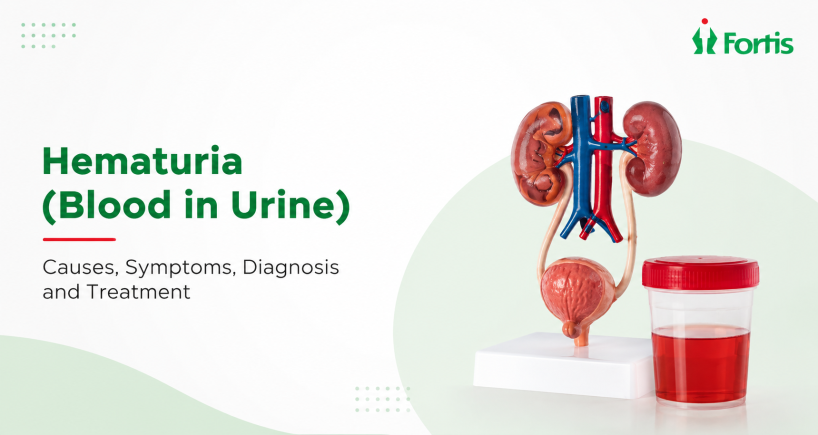
What is Hematuria (Blood in Urine)? Causes, When to Worry, Diagnosis and Treatment

Seeing blood in your urine is alarming. Hematuria means blood in the urine and it appears in two ways: 

  1. Gross hematuria (visible blood that makes urine red or brown) and 
  2. Microscopic hematuria (no visible blood, but red blood cells found on urine microscopy). If you or a family member notices blood in the toilet or in a urine sample, it’s important to evaluate why.

Gross vs. microscopic hematuria

  • Gross hematuria: You can see the blood. The urine looks red, pink or cola-colored. Gross hematuria is more worrisome because it may indicate significant bleeding from the urinary tract.
  • Microscopic hematuria: No visible discoloration, but the urine report shows red blood cells. This is detected on lab testing and can still signify important disease.


Is the urine really blood?

  • Some medications (for example, nitrofurantoin or rifampin) and highly concentrated urine can color urine without blood. Clinicians sometimes ask patients to show a photo of the toilet or bring the sample to confirm true hematuria.


Painless versus painful hematuria what it suggests

  • Painless gross hematuria: More concerning for malignancy. Painless bleeding from the urinary tract can be an early sign of bladder or renal (kidney) tumors and warrants prompt investigation.
  • Painful hematuria: Often associated with infection, kidney or ureteral stones, or inflammation. Pain or dysuria (burning with urination) suggests an inflammatory or obstructive cause.


Initial evaluation and diagnosis

  1. Urine test (urinalysis): Detects infection, red blood cells, white blood cells, or hematuria on microscopy. A urine culture helps identify urinary tract infection.
  2. Ultrasound (sonography): A noninvasive first-line imaging to look for stones, masses in the kidney, or bladder lesions. It helps guide next steps.
  3. Non-contrast CT KUB (kidneys-ureter-bladder): Best for confirming urinary stones.
  4. Contrast-enhanced CT: Preferred when a tumor is suspected to define the lesion and staging.
  5. Cystoscopy: Direct visualisation of the bladder; used to inspect and biopsy/remove bladder tumors.


Bladder cancer - early signs and red flags

  • Most common early sign: visible blood in the urine (often painless).
  • Other symptoms: increased urinary frequency, nocturia (especially new or worsening), intermittent bleeding that stops and recurs.
  • Advanced disease: bone pain, weight loss, anemia, or local spread causing pain — these are less common at initial presentation.


Prostate cancer: screening and symptoms

  • Symptoms: Often none in early stages. When present they can overlap with benign conditions urinary difficulty, weak stream, or retention. Advanced disease may cause bone pain or weakness from spinal involvement.
  • Screening: PSA testing plus digital rectal exam (DRE) are used. Routine screening commonly starts around age 40 for average-risk men and continues until about age 80; screening beyond age 80 is typically not recommended.
  • Higher risk: Men with a first-degree relative (father, brother, uncle) with prostate cancer should consider starting PSA screening earlier (around age 35).
  • If PSA is elevated or DRE is abnormal: prostate MRI (with PI-RADS scoring) and targeted biopsy are next steps. PI-RADS 3–5 increases suspicion for cancer and often prompts biopsy; PI-RADS 1–2 usually does not.


Large prostate (benign prostatic enlargement) - symptoms and treatment

  • Assessment: Symptom severity and objective measures, e.g., uroflowmetry, guide treatment decisions.
  • Medical therapy: Alpha-blockers are first-line for most symptomatic men. 5-alpha-reductase inhibitors (like dutasteride) may be added if symptoms persist but can cause sexual side effects.
  • When to operate: Persistent bothersome symptoms despite medication, recurrent urinary retention, recurrent infections, bladder stones, or hydronephrosis may warrant surgery.
     
  • Surgical options:
    • HoLEP (Holmium Laser Enucleation of the Prostate): Gold standard for large glands. It enucleates the adenoma en bloc, works for glands from 100 g to 300 g, typically with minimal bleeding, short hospitalization, and low long-term risk of incontinence when performed by experienced surgeons.
    • Robotic simple prostatectomy: Considered for very large median lobes; longer recovery and catheter time than HoLEP. Choice depends on anatomy and surgeon expertise.


Passing kidney stones without surgery

Many stones can pass spontaneously, especially those that reach the ureter.

  • Conservative management: Adequate hydration, medical expulsive therapy with alpha-blockers, and pain control.
  • Likelihood of spontaneous passage by size: ~90% for 4 mm stones, ~50% for 7 mm stones, and about 20% for 8 mm stones. The larger the stone, the less likely it will pass.
  • When to intervene: Ongoing severe pain, infection, impaired kidney function, or failure to pass after a reasonable observation period (commonly 3–4 weeks) suggests endoscopic removal.


Key takeaways for patients
 

  1. Don’t ignore visible blood in the urine. Painless gross hematuria requires urgent evaluation because it can be a sign of bladder or kidney cancer.
  2. Painful bleeding is often due to stones or infection; treat accordingly.
  3. Initial tests typically include urinalysis and ultrasound. CT or cystoscopy are used based on clinical suspicion.
  4. Individualized decisions about prostate cancer screening should be made; discuss family history and risks with your urologist.
  5. Large prostates often respond to medication; HoLEP is a durable surgical option when surgery is needed.
  6. Small kidney stones often pass with conservative care; larger stones may need intervention.

If you notice blood in your urine or have persistent urinary symptoms, see a urologist for appropriate testing and timely treatment.


Categories

Clear all

Meet the doctor

Dr. Soumyan  Dey
Dr. Soumyan Dey
| Fortis Vashi
  • Urology | Urology | Robotic Surgery | Uro-Oncology
  • Date 18 Years
  • INR 1800

Related Blogs

View all
Urinary Incontinence Urology
Urology

Urinary Incontinence Urology

Urinary Incontinence Urology Jul 05, 2021
Can Covid Affect Male Sexual Health?
Urology

Can Covid Affect Male Sexual Health?

Dr. Aman Gupta Aug 11, 2023
Menopause And Urine Infection
Urology

Menopause And Urine Infection

Dr. Aman Gupta Jun 18, 2021
Adult Circumcision: Myths And Facts!
Urology

Adult Circumcision: Debunking Facts and Myths | Fortis Health Connect Blogs

Dr. Aman Gupta May 10, 2024
beer and kidney stones
Urology

Is Beer Good for Kidney Stones ? - Myths Vs Facts | Fortis Healthcare

Dr. Aman Gupta Jul 02, 2024

Prostate Cancer
Urology

Prostate Cancer

Prostate Cancer Feb 14, 2020
How To Reduce Chances of Kidney Cancer?
Urology

How To Reduce Chances of Kidney Cancer?

Dr. Aman Gupta Oct 31, 2023
Arsenic In Drinking Water Is Linked To Increased Incidence of Bladder Cancer
Urology

Arsenic In Drinking Water Is Linked To Increased Incidence of Bladder Cancer

Dr. Raj Kalyan Gopala Krishna Jul 20, 2023
Calcium Supplements And Kidney Stones
Urology

Calcium Supplements And Kidney Stones

admin Apr 17, 2025
Sex And The City
Urology

Sex And The City

Sex And The City Apr 08, 2019

Quick Enquiry Form

FAQs

barqut

Keep track of your appointments, get updates & more!

app-store google-play
Request callback International Request callback Get an Estimate