
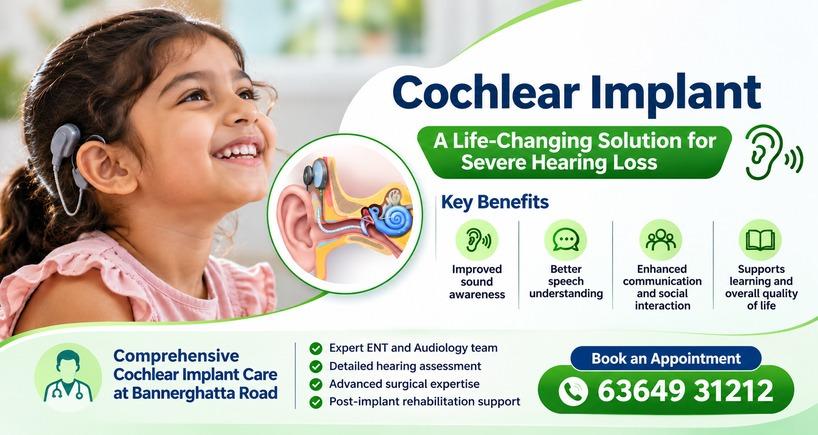


Cochlear Implant in Bangalore at Fortis Hospital Bannerghatta Road
Cochlear Implant: A Life-Changing Solution for People with Severe Hearing Loss
Introduction
Hearing plays an important role in communication, learning, social interaction and overall quality of life. However, individuals with severe to profound hearing loss may find it difficult to understand speech, communicate effectively or participate in everyday activities, even with conventional hearing aids.
Advances in medical technology have made it possible for many people with significant hearing loss to experience sound through a device known as a cochlear implant.
A cochlear implant is an advanced electronic medical device that helps provide a sense of sound by directly stimulating the auditory nerve. It can be a life-changing option for eligible children and adults who receive limited benefit from conventional hearing aids.
At Fortis Hospital, Bannerghatta Road, Bengaluru, individuals experiencing hearing difficulties can seek specialist evaluation to understand their hearing condition and explore appropriate treatment options.
What Is a Cochlear Implant?
A cochlear implant is an electronic device designed to help individuals with severe to profound sensorineural hearing loss who receive limited benefit from hearing aids.
Unlike conventional hearing aids, which amplify sound, cochlear implants bypass damaged parts of the inner ear and directly stimulate the auditory nerve using electrical signals.
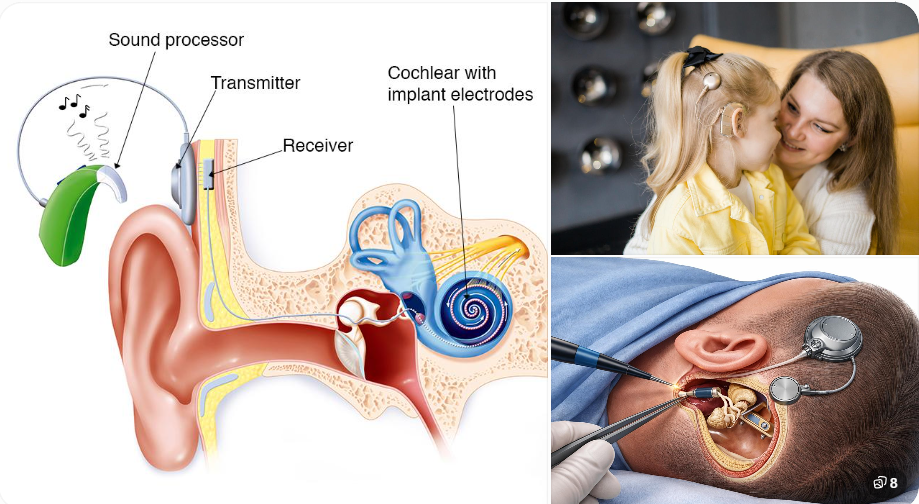
The device has two main components:
- External component: A sound processor worn behind the ear or on the body that captures sounds and converts them into digital signals.
- Internal component: A surgically implanted receiver and electrode array placed under the skin and inside the cochlea to deliver electrical stimulation.
These signals travel through the auditory nerve to the brain, where they are interpreted as sound.
Who Can Benefit from a Cochlear Implant?
Cochlear implants may benefit both children and adults with severe to profound sensorineural hearing loss.
Some individuals who may be considered for cochlear implantation include:
- Children born with severe or profound hearing loss.
- Children who do not develop adequate speech and language skills despite using hearing aids.
- Adults who have experienced progressive hearing loss.
- Individuals who have lost their hearing due to infections, genetic conditions or other medical causes.
- People who receive limited benefit from appropriately fitted hearing aids.
- Individuals who experience significant difficulty understanding speech despite using hearing devices.
Candidacy is determined through a comprehensive hearing assessment, medical evaluation and individualised clinical consultation.
How Does a Cochlear Implant Work?
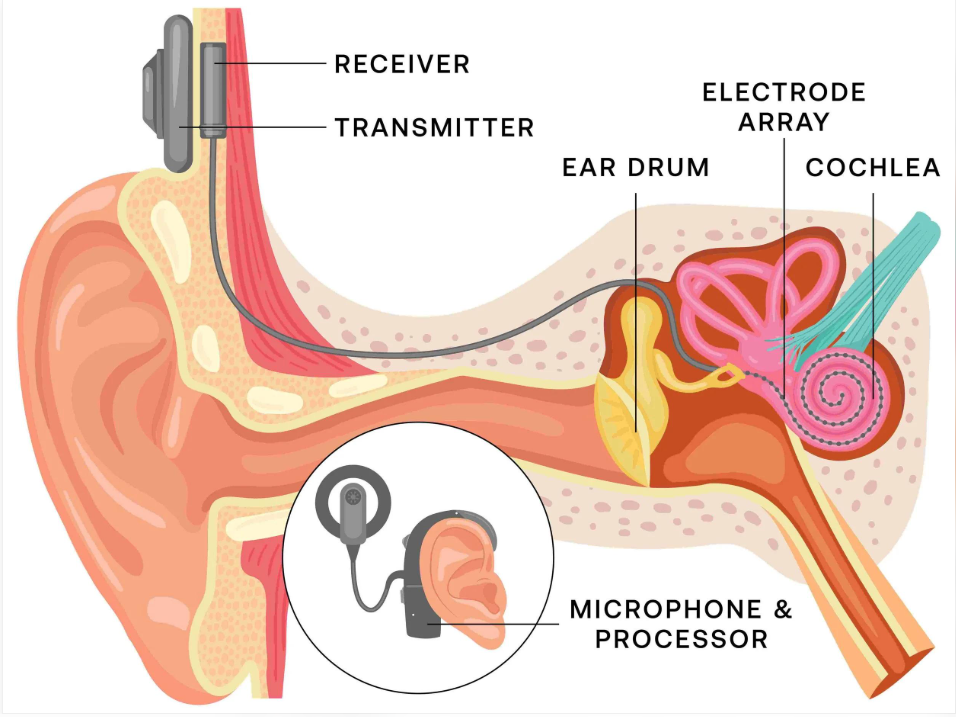
A cochlear implant works by converting sound into electrical signals that stimulate the auditory nerve. The process involves the following steps:
- Sound detection: The external microphone captures sounds from the surroundings.
- Sound processing: The speech processor converts sounds into digital information.
- Signal transmission: The processed signals are transmitted to the internal implant.
- Electrical stimulation: The electrode array inside the cochlea delivers electrical impulses to the auditory nerve.
- Sound interpretation: The auditory nerve carries these signals to the brain, which learns to interpret them as sound.
With practice, rehabilitation and regular device adjustments, recipients can gradually develop better listening and speech-understanding skills.
Cochlear Implant vs Hearing Aid: What Is the Difference?
Although both devices are designed to help people with hearing loss, they work differently.
Hearing Aid
Cochlear Implant
Amplifies sounds to make them louder.
Converts sounds into electrical signals.
Works through the existing hearing pathway.
Bypasses damaged sensory structures in the cochlea.
Suitable for many types of hearing loss, depending on severity.
Considered for eligible individuals with severe to profound hearing loss who receive limited benefit from hearing aids.
Does not require implantation surgery.
Requires a surgical procedure.
The choice between a hearing aid and a cochlear implant depends on the individual's hearing assessment and medical condition.
What Is the Cochlear Implant Procedure?
Cochlear implant surgery is performed by an ENT surgeon with specialised expertise in hearing implants.
The treatment journey generally involves the following stages:
1. Pre-operative assessment
The patient undergoes detailed hearing tests, audiological evaluation and medical examination. Imaging investigations such as CT or MRI may also be recommended to assess the inner ear and auditory pathways.
2. Surgical implantation
The procedure is generally performed under general anaesthesia. The surgeon places the internal implant beneath the skin behind the ear and carefully positions the electrode array inside the cochlea.
3. Recovery after surgery
The patient is monitored after the procedure and receives instructions regarding wound care, recovery and follow-up appointments.
4. Cochlear implant activation
After the surgical site has healed sufficiently, the external sound processor is fitted and activated by an audiologist. This is when the patient begins experiencing sound through the implant.
5. Auditory rehabilitation
The patient undergoes structured auditory and speech rehabilitation to learn how to recognise, understand and interpret sounds.
The timing and treatment plan may vary depending on the patient's health, surgical recovery and clinical requirements.
Why Is Early Cochlear Implantation Important for Children?

Hearing is essential for a child's speech, language, cognitive and social development. Children with significant hearing loss may experience difficulties in learning, communication and classroom participation if their condition is not identified and addressed early.
For children who are eligible for cochlear implantation, early evaluation and timely intervention can provide important opportunities for auditory and language development.
Some potential benefits include:
- Improved access to environmental sounds.
- Better opportunities to develop listening skills.
- Support for speech and language development.
- Improved communication and social interaction.
- Greater participation in educational activities.
Parents should not ignore signs of hearing difficulties in infants and young children. Early hearing screening, diagnosis and appropriate intervention are important for supporting developmental milestones.
What Are the Benefits of Cochlear Implants?
For individuals who are suitable candidates, cochlear implants may offer several benefits:
- Improved sound awareness: Helps individuals identify environmental sounds such as doorbells, alarms and voices.
- Better speech understanding: Can improve the ability to recognise spoken words and participate in conversations.
- Enhanced communication: Supports everyday communication with family members, friends and colleagues.
- Improved learning opportunities: Can support children's listening, speech and language development.
- Greater independence: Better access to sound can help individuals participate more confidently in daily activities.
- Improved quality of life: May help reduce communication barriers and improve social participation.
It is important to understand that outcomes differ from person to person. A cochlear implant does not restore normal hearing, and the results depend on several individual factors.
Are There Any Risks or Complications Associated with Cochlear Implant Surgery?
Like any surgical procedure, cochlear implantation carries certain risks. Although it is generally considered a well-established procedure, potential complications may include:
- Infection at the surgical site.
- Dizziness or balance-related problems.
- Changes in taste sensation.
- Facial nerve injury (rare).
- Device-related complications.
- Incomplete or variable hearing outcomes.
A detailed medical evaluation and discussion with the treating ENT specialist can help patients and families understand the potential risks, benefits and expected outcomes.
What Happens After Cochlear Implant Surgery?
Cochlear implantation is not a one-time treatment that ends with surgery. Post-operative care and rehabilitation are essential parts of the overall treatment journey.
Patients may require:
- Regular follow-up appointments.
- Sound processor programming and adjustments.
- Auditory training.
- Speech and language therapy, particularly for children.
- Ongoing monitoring of hearing and communication progress.
Consistent participation in rehabilitation can help patients make the best possible use of their cochlear implant.
When Should You Consult an ENT Specialist?
You should consider consulting an ENT specialist if you or your child experience:
- Difficulty hearing conversations even in quiet surroundings.
- Delayed speech and language development in children.
- Poor response to sounds or voices.
- Difficulty understanding speech despite using hearing aids.
- Progressive or sudden hearing difficulties.
- Limited improvement with conventional hearing devices.
Early diagnosis and appropriate treatment can help prevent hearing difficulties from affecting communication and everyday life.
Cochlear Implant Treatment at Fortis Hospital, Bannerghatta Road, Bengaluru
At Fortis Hospital, Bannerghatta Road, Bengaluru, patients experiencing hearing difficulties can seek consultation and guidance from the ENT team to understand their condition and explore suitable treatment options.
A comprehensive approach to hearing care involves:
- Detailed hearing assessment and diagnosis.
- Evaluation for cochlear implant suitability.
- Specialist consultation and treatment planning.
- Guidance on surgical options where indicated.
- Post-operative follow-up and rehabilitation planning.
If you or your child are experiencing significant hearing difficulties, seeking timely medical advice can be an important first step towards better communication and improved quality of life.
Take the first step towards better hearing. Consult an ENT specialist at Fortis Hospital, Bannerghatta Road, Bengaluru.
Frequently Asked Questions About Cochlear Implants
1. Is a cochlear implant better than a hearing aid?
Neither device is universally better. Hearing aids amplify sound, whereas cochlear implants bypass damaged sensory structures in the inner ear to stimulate the auditory nerve. The appropriate option depends on the individual's hearing condition.
2. At what age can a child receive a cochlear implant?
Eligible children may receive cochlear implants during infancy, depending on their hearing condition, clinical assessment and applicable medical guidelines. Early diagnosis and intervention are important.
3. Does cochlear implant surgery restore normal hearing?
No. A cochlear implant provides access to sound through electrical stimulation. The hearing experience is different from natural hearing, and rehabilitation is required to interpret sounds.
4. How long does it take to hear after cochlear implant surgery?
The external sound processor is generally activated after the surgical site has healed sufficiently. The exact timing is determined by the treating team. Learning to recognise and understand sounds takes additional time and practice.
5. Is cochlear implant surgery safe?
Cochlear implantation is an established surgical procedure. However, like other surgeries, it carries potential risks. Patients should discuss these with their ENT surgeon.
6. Do adults benefit from cochlear implants?
Yes. Adults with severe to profound hearing loss who receive limited benefit from hearing aids may be suitable candidates following a detailed evaluation.
7. Is speech therapy required after cochlear implant surgery?
Auditory rehabilitation is an important part of the treatment journey. Speech and language therapy may also be recommended depending on the patient's age, hearing history and communication needs.
Categories
Clear allMeet the doctor

- ENT | Cochlear Implant | ENT Oncology | ENT (Ear, Nose and Throat)
-
 19 Years
-
 1150
Related Blogs
View all








FAQs

Keep track of your appointments, get updates & more!

