
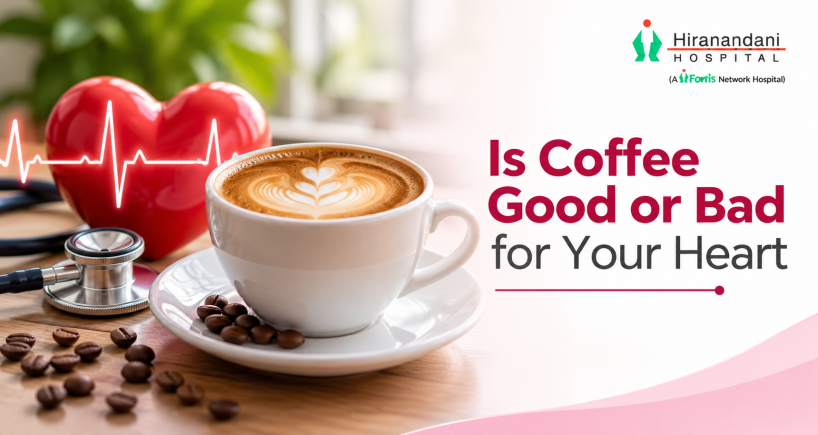


Is Coffee Good or Bad for Your Heart
Is Coffee Good or Bad for Your Heart?
A Cardiologist Explains the Latest Evidence
One question I frequently hear from patients with heart disease is: “Doctor, ab coffee completely band karni padegi kya?”
Not necessarily.
Coffee and caffeine have long had a complicated reputation in cardiovascular medicine. Patients with high blood pressure, palpitations or coronary artery disease are often worried that coffee may be harmful to their heart.
However, a new American Heart Association (AHA) scientific statement reviewing the available evidence on caffeine and cardiovascular disease provides a more nuanced picture. A recent JAMA Medical News article also highlighted the statement’s major findings.
How much caffeine is considered safe?
For most adults, caffeine consumption of up to approximately 400 mg per day, equivalent to roughly 3–5 standard 8-ounce cups of caffeinated coffee, is considered generally safe.
Moderate caffeine consumption has also been associated with lower risks of several cardiovascular and metabolic conditions, including coronary heart disease, stroke, heart failure, atrial fibrillation and type 2 diabetes.
However, this should not be interpreted as a recommendation that everyone should drink 3–5 cups of coffee every day.
Individual responses to caffeine can vary considerably.
Does coffee actually protect the heart?
This requires an important distinction.
Association does not necessarily mean causation.
Several studies show that people who consume moderate amounts of coffee have lower rates of cardiovascular disease. Much of the research examining coffee and cardiovascular outcomes is observational. Therefore, we cannot conclude that drinking coffee itself prevents a heart attack or stroke.
Coffee also contains numerous compounds besides caffeine, including polyphenols, which have antioxidant properties. Some of the apparent health benefits associated with coffee could therefore come from these compounds rather than caffeine itself.
For this reason, I would not advise someone who doesn’t drink coffee to start drinking it purely for cardiovascular protection.
The AHA statement’s authors similarly emphasize that the current evidence is insufficient to recommend initiating caffeine consumption for health benefits.
Can coffee increase blood pressure?
Caffeine can cause a temporary rise in blood pressure in some people.
The long-term relationship is more complicated, and habitual coffee consumption does not appear to translate into substantial long-term blood-pressure elevation for most people.
However, patients with severe hypertension or marked sensitivity to caffeine may need greater caution.
If you notice that your blood pressure consistently increases after coffee, the amount and timing of caffeine should be discussed with your physician.
What about coffee and palpitations?
This is another area where the evidence is more nuanced than many people expect.
The AHA scientific statement reports that caffeinated coffee has not shown the expected increase in atrial fibrillation risk, and some data suggest a lower risk of atrial fibrillation. However, randomized data also suggest caffeine may increase the frequency of premature ventricular contractions (PVCs) in some people.
Therefore, a blanket instruction that every patient with palpitations must stop coffee may not always be necessary.
At the same time, your symptoms matter.
If coffee consistently triggers palpitations, tremor, anxiety or significant sleep disturbance, reducing caffeine intake is reasonable.
Does the type of coffee matter?
Yes.
Unfiltered coffee including French press, Turkish/Greek coffee and boiled coffee contains a substance called cafestol.
Randomized trials have shown that cafestol can increase LDL (“bad”) cholesterol.
Paper filtering removes much of this compound, and the JAMA article notes that paper-filtered and instant coffee have not demonstrated the same LDL-raising effect in randomized trials.
Therefore, for someone who drinks coffee regularly particularly a patient with coronary artery disease or high LDL paper-filtered coffee may be a sensible choice.
What you add to coffee matters too
A simple cup of coffee is very different from a large café drink containing:
- Several teaspoons of sugar
- Flavored syrup
- Whipped cream
- Other high-calorie additions
The potential health effects associated with coffee should not be used to justify beverages containing large amounts of added sugar and calories.
Are energy drinks the same as coffee?
No. This distinction is extremely important.
The cardiovascular findings associated with ordinary coffee or tea should not be extrapolated to energy drinks.
Energy drinks can contain high concentrations of caffeine together with other stimulants and added sugars. Available evidence suggests that high-dose caffeine and energy drinks may increase blood pressure and the risk of abnormal heart rhythms.
A cup of coffee and a high-caffeine energy drink should not be considered equivalent.
Should heart patients stop drinking coffee?
For many patients with cardiovascular disease, having heart disease does not automatically mean coffee must be completely stopped.
The decision should be individualized according to your caffeine intake, blood pressure, presence of palpitations or arrhythmias, sleep quality, medications, other medical conditions and how your body responds to caffeine.
Some people tolerate moderate coffee very well; others develop palpitations, anxiety or sleep problems even with relatively small amounts. The AHA emphasizes this considerable individual variability.
So, should you start drinking coffee for your heart?
No. Current evidence does not justify prescribing coffee as a treatment or recommending that non-coffee drinkers start drinking it to prevent cardiovascular disease.
But for people who already enjoy coffee, the available evidence is generally reassuring about moderate consumption.
Take-home message
Heart patient ho toh coffee completely band karni hai? Not necessarily.
For most adults, moderate coffee consumption appears to be compatible with cardiovascular health.
- Moderation matters.
- Preparation matters.
- What you add to your coffee matters.
- Energy drinks are not the same as coffee.
- Most importantly, individual response matters.
If coffee causes palpitations, significant blood-pressure elevation or sleep disturbance or if you have a specific cardiovascular condition discuss your caffeine consumption with your cardiologist.
References / Editorial Source Material
1. American Heart Association. Scientific statement on caffeine and cardiovascular disease (2026).
2. Rubin R. Caffeine and Cardiovascular Health: What the Science Says. JAMA Medical News. Published online September 18, 2026. doi:10.1001/jama.2026.16716.
By
Dr Nikhil Patil
Consultant Interventional Cardiologist
Navi Mumbai
Categories
Clear allMeet the doctor

- Cardiac Sciences | Interventional Cardiology
-
 15 Years
-
 1500
Related Blogs
View all





FAQs

Keep track of your appointments, get updates & more!

