
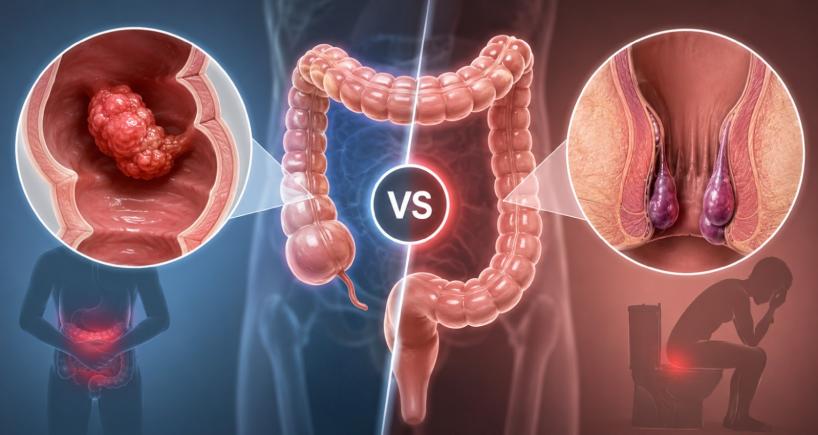


Colon Cancer vs Piles - How to Tell the Difference
Blood in the stool, pain during bowel movements, or changes in bowel habits can be alarming, and many people assume they are caused by piles (haemorrhoids). While piles are a common and often benign condition, similar symptoms can sometimes indicate colon cancer. The key difference is that symptoms of colon cancer tend to persist, may worsen over time, and are often accompanied by warning signs such as unexplained weight loss, persistent changes in bowel habits, fatigue, or abdominal pain.
It is not possible to diagnose either condition based on symptoms alone. If you notice rectal bleeding or other persistent bowel-related symptoms, consult a specialist for a proper evaluation rather than assuming it is "just piles."
Seeing blood after passing stool can be frightening. In India, many people immediately assume it is due to piles and either self-medicate or delay seeking medical advice. While piles are one of the most common causes of rectal bleeding, they are not the only cause.
Colon cancer can also present with similar symptoms, particularly in its early stages. Mistaking one for the other may delay diagnosis and treatment.
The good news is that not every episode of rectal bleeding is a sign of cancer. However, because the symptoms can overlap, understanding the differences—and knowing when to seek medical attention—is essential.
This article explains how colon cancer differs from piles, highlights symptoms that should never be ignored, and discusses when you should consult a specialist.
What Are Piles (Haemorrhoids)?
Piles, also called haemorrhoids, are swollen veins in or around the anus and lower rectum. They can develop due to increased pressure in the rectal area, commonly associated with:
- Chronic constipation
- Straining during bowel movements
- Pregnancy
- Obesity
- Sitting on the toilet for prolonged periods
- Low-fibre diet
Piles are not cancer and do not increase the risk of developing colon cancer. However, because both conditions can cause rectal bleeding, they are often confused.
What Is Colon Cancer?
Colon cancer develops when abnormal cells in the large intestine (colon) grow uncontrollably. It often begins as small, non-cancerous growths called polyps, some of which may become cancerous over time if left untreated.
When detected early, colon cancer is often more treatable, making timely evaluation of persistent symptoms especially important.
Colon Cancer vs Piles: A Comparison
Feature | Piles (Haemorrhoids) | Colon Cancer |
|---|---|---|
Bleeding | Usually bright red blood on toilet paper or after passing stool | May cause bright red blood or darker blood mixed with stool |
Pain | Common, especially with external piles or thrombosed piles | Often absent in early stages; abdominal discomfort may occur later |
Bowel habits | Usually unchanged | Persistent constipation, diarrhoea, or narrowing of stools may occur |
Weight loss | Not typical | May occur without trying |
Fatigue | Usually absent unless there is significant bleeding | May occur due to chronic blood loss and anaemia |
Abdominal pain | Uncommon | May be persistent or recurrent |
Lump | May be felt around the anus | Usually not felt externally |
Symptoms More Suggestive of Piles
Piles commonly present with:
- Bright red blood after passing stool
- Pain or discomfort during bowel movements
- Itching around the anus
- Swelling near the anal opening
- A small lump around the anus
- Mucus discharge in some cases
Symptoms often worsen after straining and may improve with dietary changes, hydration, and appropriate treatment.
Symptoms That May Indicate Colon Cancer
While these symptoms can also occur in non-cancerous conditions, they warrant medical evaluation if they persist.
Persistent Rectal Bleeding
Bleeding that continues despite treatment for piles, recurs frequently, or is mixed with the stool should not be ignored.
Changes in Bowel Habits
Be alert if you notice:
- Constipation lasting several weeks
- Persistent diarrhoea
- Alternating constipation and diarrhoea
- Narrow or pencil-thin stools
- A feeling of incomplete bowel emptying
Unexplained Weight Loss
Losing weight without changes in diet or exercise may indicate an underlying medical condition and should be evaluated.
Persistent Abdominal Pain or Bloating
Recurring abdominal discomfort, cramping, or bloating that does not improve over time deserves medical attention.
Fatigue and Weakness
Slow blood loss from the colon can lead to iron deficiency anaemia, causing:
- Persistent tiredness
- Weakness
- Dizziness
- Shortness of breath during routine activities
Myth vs Fact
Myth | Fact |
|---|---|
Blood in the stool is always due to piles. | Rectal bleeding has many possible causes, including colon cancer. |
Colon cancer affects only older adults. | Although more common after 50 years of age, it can occur in younger adults as well. |
If bleeding is painless, it is not serious. | Some colon cancers cause painless bleeding, especially in the early stages. |
Piles turn into cancer over time. | Piles do not become cancer. However, both conditions can exist at the same time. |
When Should You See a Specialist?
Consult a gastroenterologist or GI oncology specialist if you have:
- Rectal bleeding that persists or recurs
- Blood mixed with stool
- Persistent constipation or diarrhoea
- Unexplained weight loss
- Ongoing abdominal pain
- Fatigue with no obvious cause
- A family history of colon cancer
- Symptoms that do not improve despite treatment for piles
Even if you have been diagnosed with piles in the past, new or changing symptoms should be reassessed rather than attributed to the same condition.
How Is the Cause Diagnosed?
Your doctor will recommend investigations based on your age, symptoms, and medical history.
These may include:
- Physical examination
- Digital rectal examination
- Blood tests
- Stool tests
- Colonoscopy
- Biopsy (if an abnormal growth is found)
- CT scan or MRI when clinically indicated
A colonoscopy remains one of the most effective tests for evaluating persistent rectal bleeding and detecting abnormalities within the colon.
Can Colon Cancer Be Prevented?
While not all cases can be prevented, the risk may be reduced by adopting healthy lifestyle habits and participating in screening when recommended.
These include:
- Eating a fibre-rich diet
- Limiting processed and red meat
- Staying physically active
- Maintaining a healthy weight
- Avoiding tobacco
- Limiting alcohol consumption
- Discussing colon cancer screening with your doctor, particularly if you have risk factors or a family history
Comprehensive Colon Cancer Care at Fortis Hospital, Shalimar Bagh
At Fortis Hospital, Shalimar Bagh, patients with suspected or confirmed colon cancer benefit from a multidisciplinary approach involving gastroenterologists, GI surgical oncologists, medical oncologists, radiation oncologists, radiologists, pathologists, nutrition specialists, and critical care experts.
The hospital provides advanced diagnostic facilities, including endoscopic evaluation and imaging, to help establish an accurate diagnosis. Based on the stage and location of the disease, treatment may include minimally invasive or robotic-assisted surgery (where appropriate), chemotherapy, targeted therapy, immunotherapy, and personalised follow-up care. Every treatment plan is tailored to the patient's clinical condition and overall health.
Key Takeaways
- Piles and colon cancer can share symptoms such as rectal bleeding, but they are very different conditions.
- Persistent bleeding, unexplained weight loss, ongoing changes in bowel habits, and fatigue require medical evaluation.
- Never assume that rectal bleeding is caused by piles without a proper diagnosis.
- Colonoscopy plays an important role in identifying the cause of persistent bowel symptoms.
- Early diagnosis of colon cancer can improve treatment options and outcomes.
Categories
Clear allMeet the doctor

- Gastroenterology and Hepatobiliary Sciences | Gastrointestinal Surgery | Metabolic & Bariatric Surgery | Robotic Surgery | GI, Minimal Access and Bariatric Surgery | GI Oncology
- Oncology | Oncology | Surgical Oncology | Robotic Surgery | GI Oncology
- General Surgery | General and Laparoscopic Surgery | General and Minimal Access Surgery | Bariatric Surgery | General Surgery | Robotic Surgery
-
 35 Years
-
 2500
2500
Related Blogs
View all









FAQs
Can piles and colon cancer occur together?
Yes. Having piles does not prevent someone from developing colon cancer. If symptoms change or persist despite treatment, further evaluation is recommended.
Is bright red blood always due to piles?
No. Bright red blood is commonly seen with piles, but it can also occur with colorectal polyps, inflammatory bowel disease, anal fissures, and colon cancer. A medical assessment is important.
Does colon cancer always cause pain?
Not necessarily. Early-stage colon cancer may not cause pain. Some people first notice changes in bowel habits, blood in the stool, or unexplained anaemia.
When should I get a colonoscopy?
A colonoscopy may be advised if you have persistent rectal bleeding, ongoing changes in bowel habits, unexplained anaemia, a family history of colon cancer, or other concerning symptoms. Your doctor will recommend the appropriate timing based on your individual risk.
Can young adults develop colon cancer?
Yes. Although the risk increases with age, colon cancer can occur in younger adults. Persistent bowel symptoms should always be evaluated, regardless of age.
If my bleeding stops, do I still need to see a doctor?
If the bleeding was a one-time episode and resolved, it may not indicate a serious condition. However, recurrent bleeding, associated symptoms, or risk factors warrant a medical consultation to identify the underlying cause.

Keep track of your appointments, get updates & more!

