
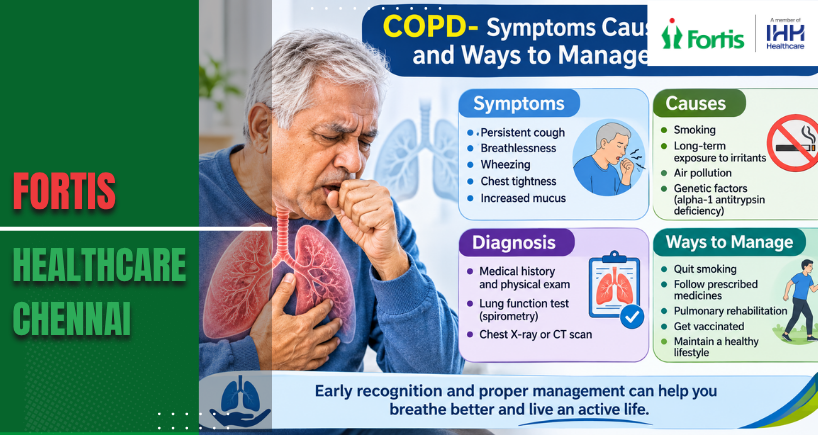


COPD- Symptoms Causes Diagnosis and Ways to Manage the Condition
A morning cough that never quite goes away. Getting breathless while climbing stairs you once managed easily. Chest infections every winter that take longer to clear. Many people dismiss these as “smoker's cough” or ageing — but they can be signs of COPD.
Chronic obstructive pulmonary disease is one of the leading causes of illness and death in India. It cannot be cured, but it can be managed well. Here is what to know about COPD symptoms, causes, diagnosis and management.
What Is COPD?
COPD is a long-term lung condition in which the airways become narrowed and inflamed, and the air sacs may be damaged. This makes it hard to breathe out fully, trapping air in the lungs. It includes conditions previously called chronic bronchitis and emphysema.
Common Symptoms of COPD
- Breathlessness, especially on exertion, which gradually worsens
- Long-term cough, often worse in the morning
- Phlegm (sputum) production
- Wheezing and chest tightness
- Frequent chest infections
- Tiredness and reduced ability to exercise
- In advanced stages, swollen ankles and weight loss
What Causes COPD?
| Cause | Details |
|---|---|
| Tobacco smoking | Cigarettes, bidis and hookah are the leading cause |
| Biomass fuel smoke | Cooking with wood, dung or crop waste on chulhas — a major cause in Indian women |
| Outdoor air pollution | Long-term exposure in polluted cities |
| Occupational dust and fumes | Mining, construction, textiles, farming and factories |
| Previous lung infections | Including past tuberculosis and repeated childhood infections |
| Genetic factors | Rarely, alpha-1 antitrypsin deficiency |
Importantly, many Indians with COPD have never smoked, making household smoke and pollution key causes.
COPD vs Asthma
| Feature | COPD | Asthma |
|---|---|---|
| Usual age of onset | Usually after 40 | Often in childhood, but any age |
| Main causes | Smoking, smoke and dust exposure | Allergies and genetic tendency |
| Symptom pattern | Gradually worsening, persistent | Variable, with symptom-free periods |
| Reversibility | Limited | Largely reversible with treatment |
Some people have features of both, and treatment is tailored accordingly.
How Is COPD Diagnosed?
Spirometry
Spirometry is the key test. You breathe out as hard and fast as possible into a device, before and after an inhaler. In COPD, airflow remains reduced even after the inhaler, confirming persistent obstruction.
Other tests
- Chest X-ray to rule out other conditions such as TB
- CT scan in selected cases
- Oxygen saturation and sometimes blood gas tests
- Blood count, as some patients develop high red cell counts
- ECG or echocardiogram if heart strain is suspected
- Six-minute walk test to assess exercise capacity
Management is lifelong, and small daily habits add up to meaningful improvements in breathing and energy over time.
Ways to Manage COPD
1. Stop smoking and avoid smoke
Quitting smoking is the single most effective step to slow COPD. Switching to cleaner cooking fuels such as LPG, improving kitchen ventilation and avoiding polluted air also help.
2. Inhalers
| Inhaler type | Role |
|---|---|
| Short-acting bronchodilators | Quick relief of breathlessness |
| Long-acting bronchodilators (LAMA, LABA) | Daily maintenance to keep airways open |
| Inhaled corticosteroids | Added for selected patients with frequent flare-ups |
Correct inhaler technique is essential. Spacers can help, and your doctor or nurse should check your technique regularly.
3. Pulmonary rehabilitation
A structured programme of exercise, breathing techniques and education improves breathlessness, stamina and quality of life.
4. Vaccinations
Yearly influenza vaccines and pneumococcal vaccines reduce chest infections and flare-ups.
5. Oxygen and breathing support
Long-term oxygen therapy helps patients with persistently low oxygen levels. Non-invasive ventilation may be used during severe flare-ups or for selected patients at home.
6. Nutrition and general health
Maintaining a healthy weight, eating a balanced diet and treating other conditions such as heart disease and diabetes support lung health.
COPD Flare-Ups (Exacerbations)
A flare-up is a sudden worsening of breathlessness, cough or sputum, often triggered by infections or pollution. Many patients benefit from a written action plan that explains when to increase inhalers, start prescribed medicines and seek care.
Seek emergency care for
- Severe breathlessness at rest
- Bluish lips or fingertips
- Confusion or drowsiness
- Chest pain
- No relief from usual inhalers
Living Well With COPD
- Stay active with daily walks, pacing yourself
- Practise breathing techniques such as pursed-lip breathing
- Wear a mask on high-pollution days and avoid smoke
- Eat small, frequent meals if breathlessness affects eating
- Keep inhalers handy and refill them on time
- Attend regular reviews and spirometry
Emotional health
Breathlessness can cause anxiety and low mood, which in turn worsen breathing. Talking to your doctor, joining a pulmonary rehabilitation group and involving family can help you cope better.
Advanced options
For selected patients with severe emphysema, procedures to reduce lung volume or, rarely, lung transplantation may be considered at specialised centres.
How COPD Is Staged
Doctors grade COPD severity based on spirometry results, symptoms and how often flare-ups occur. Treatment is stepped up or down according to these factors, so regular reviews help keep your plan right for your current condition.
Travel and COPD
Before flying or travelling to high altitudes, check with your doctor, as you may need extra oxygen. Carry inhalers in hand luggage and a copy of your prescriptions.
Conclusion
COPD causes long-term breathlessness, cough and sputum, and in India it is driven by smoking, chulha smoke, pollution and occupational exposure. Spirometry confirms the diagnosis.
With quitting smoke exposure, the right inhalers, pulmonary rehabilitation, vaccinations and a flare-up plan, most people with COPD can breathe easier and stay active for longer.
Categories
Clear allMeet the doctor

- Pulmonology | Interventional Pulmonology | Pulmonology and Critical care | Sleep Medicine | Pulmonology
- Organ Transplant | Lung Transplant
-
 15 Years
-
 1600
Related Blogs
View all




FAQs
What are the early symptoms of COPD?
Early symptoms include breathlessness on exertion, a persistent morning cough, phlegm production, wheezing and frequent chest infections. Because they develop slowly, many people mistake them for ageing or smoker's cough.
Can non-smokers get COPD?
Yes. In India, many people with COPD have never smoked. Long-term exposure to biomass cooking smoke, air pollution, occupational dust and previous lung infections such as tuberculosis are important causes.
How is COPD diagnosed?
COPD is diagnosed with spirometry, a breathing test that measures how much and how fast you can breathe out, before and after an inhaler. Chest X-ray and other tests help rule out conditions such as TB.
Can COPD be cured?
COPD cannot be cured, but it can be managed well. Quitting smoking, avoiding smoke and pollution, using inhalers correctly, pulmonary rehabilitation and vaccinations slow progression and improve breathing and quality of life.

Keep track of your appointments, get updates & more!

