
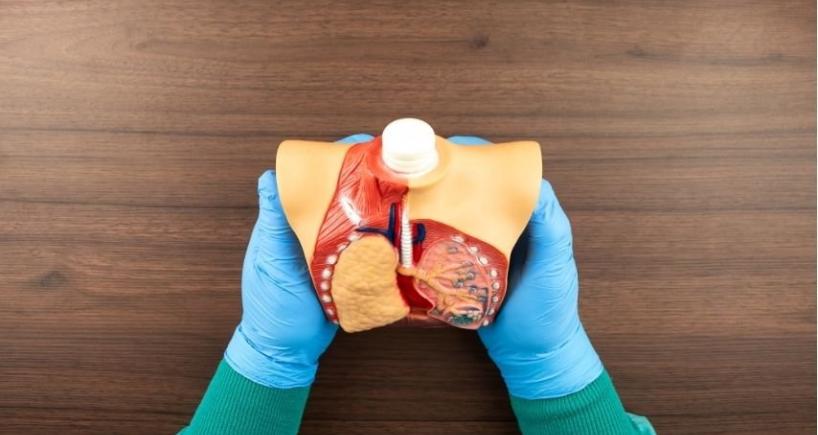


CT Guided Lung Biopsy vs Bronchoscopy - Best Test for Lung Nodules
Medicine Made Simple
When a CT scan detects a lung nodule, doctors may recommend a biopsy to determine its cause. Two common biopsy methods are CT-guided lung biopsy and bronchoscopy. CT Guided Lung Biopsy Procedure uses CT imaging to guide a thin needle through the chest wall into the lung nodule to collect tissue. Bronchoscopy uses a flexible tube inserted through the mouth or nose to reach the lungs through the natural airway passages. Both procedures help doctors diagnose lung conditions, including infections, inflammation, and cancer. The best method depends on the size, location, and characteristics of the lung nodule.
Understanding Why Lung Nodules Require Further Testing
A lung nodule is a small spot that appears in lung tissue during imaging tests such as CT scans. These nodules are commonly discovered when imaging is performed to evaluate symptoms such as cough, chest discomfort, or during routine lung cancer screening.
Most lung nodules are harmless and may develop due to past infections, inflammation, or scar tissue in the lungs. However, some nodules may represent early lung cancer or other serious lung diseases.
Imaging tests provide valuable information about the size, shape, and location of the nodule. However, they cannot always determine the exact cause.
When doctors need more information, they may recommend a biopsy. A biopsy allows doctors to collect a small tissue sample from the nodule so that it can be examined under a microscope.
This examination helps determine whether the nodule is benign, infectious, inflammatory, or cancerous, especially when evaluating CT Guided Lung Biopsy for Lung Nodules.
Two Common Biopsy Methods Used for Lung Nodules
Doctors commonly use two minimally invasive procedures to obtain tissue samples from lung nodules.
The first method is bronchoscopy. During bronchoscopy, a thin flexible tube called a bronchoscope is inserted through the mouth or nose and guided through the airway passages of the lungs.
The second method is CT-guided lung biopsy. In this procedure, a thin needle is inserted through the chest wall and guided toward the lung nodule using CT imaging.
Both methods help doctors obtain tissue samples for laboratory analysis, but they reach the lung nodule in different ways.
Understanding Bronchoscopy
Bronchoscopy is a procedure used to examine the airways and collect tissue samples from certain areas of the lungs.
The bronchoscope contains a small camera and light source that allow doctors to view the inside of the airway passages on a monitor.
Specialized instruments can be passed through the bronchoscope to collect tissue samples from lung abnormalities.
Bronchoscopy is particularly useful when lung nodules are located near the central airways.
Because the bronchoscope travels through the natural airway passages, the procedure does not require puncturing the chest wall.
Bronchoscopy may also allow doctors to examine other parts of the airway and collect additional samples if necessary.
Understanding CT-Guided Lung Biopsy
CT-guided lung biopsy is another commonly used technique for diagnosing lung nodules.
This procedure uses CT imaging to guide a thin needle through the chest wall and into the lung nodule.
The CT scanner produces detailed images that help doctors determine the safest and most accurate pathway for the needle, improving CT Guided Lung Biopsy Accuracy.
Once the needle reaches the nodule, a small tissue sample is collected.
This sample is then sent to a pathology laboratory where specialists examine it under a microscope.
CT-guided biopsy is especially useful for nodules located near the outer edges of the lungs.
How the Location of the Nodule Affects the Choice of Procedure
The location of the lung nodule is one of the most important factors when choosing the biopsy method.
Nodules located near the central airways are often easier to reach through bronchoscopy.
Because the bronchoscope travels through the airway system, it provides direct access to areas close to these air passages.
However, many lung nodules are located in peripheral areas of the lungs. These regions are located farther from the central airways and closer to the chest wall.
In these cases, bronchoscopy may not reach the nodule easily.
CT-guided biopsy provides a direct pathway through the chest wall to reach these peripheral nodules.
Comparing Accuracy of Both Procedures
Both bronchoscopy and CT-guided biopsy can provide accurate tissue samples when used appropriately.
The diagnostic accuracy of bronchoscopy depends on how close the lung nodule is to the airway system.
If the nodule is located near the airways, bronchoscopy can often provide reliable results.
CT-guided biopsy is often more accurate for nodules located near the outer parts of the lungs because the needle can be guided directly to the target area.
Doctors carefully evaluate imaging results to determine which method is more likely to obtain a useful tissue sample.
Understanding the Risks of Each Procedure
Both procedures are generally safe, but they involve different types of risks.
Bronchoscopy is minimally invasive because it uses the natural airway passages. Temporary throat irritation, cough, or hoarseness may occur after the procedure.
CT-guided lung biopsy involves inserting a needle through the chest wall. This approach carries a higher risk of pneumothorax, a condition in which air leaks into the space around the lung and causes partial lung collapse.
Most pneumothorax cases are mild and resolve without treatment. However, some may require additional medical care.
Doctors carefully evaluate each patient’s condition to minimize risks.
Recovery After Each Procedure
Recovery after bronchoscopy is usually quick. Patients are monitored until sedation wears off and are often able to go home the same day.
Temporary throat discomfort may occur for a short period after the procedure.
Recovery after CT-guided lung biopsy also usually involves same-day discharge. Patients are monitored for several hours to ensure that no complications such as pneumothorax occur.
Doctors may perform a chest X-ray after the procedure to confirm that the lung remains fully expanded.
Patients are usually advised to avoid strenuous activities for a short time after the biopsy.
How Doctors Decide Which Procedure Is Best
Doctors consider several factors when choosing between bronchoscopy and CT-guided biopsy.
The location and size of the lung nodule are important considerations.
Doctors also review the patient’s medical history, imaging results, and overall health.
In many hospitals, pulmonologists and radiologists work together to determine the most appropriate diagnostic approach.
Advanced bronchoscopy technologies may allow some nodules that were previously unreachable to be biopsied through the airway system.
The final decision is made based on which procedure is most likely to provide a safe and accurate diagnosis.
Conclusion
When a lung nodule is detected on a CT scan, obtaining an accurate diagnosis is essential for planning the next steps in care. Both bronchoscopy and CT-guided lung biopsy are valuable diagnostic procedures used to collect tissue samples from lung nodules.
Bronchoscopy is often preferred for nodules located near the central airways, while CT-guided biopsy is commonly used for nodules located near the outer edges of the lungs.
Doctors carefully evaluate imaging results and patient factors to determine which method will provide the most reliable diagnosis.
If your doctor recommends a biopsy to evaluate a lung nodule, discussing the available options with your healthcare team can help you understand the procedure and feel more confident about the diagnostic process.
Categories
Clear allRelated Blogs
View all








Keep track of your appointments, get updates & more!

