


DBS Treatment for Parkinsons in Mumbai
Deep Brain Stimulation for Parkinson’s & Movement Disorders
Deep Brain Stimulation (DBS) is a complex neurosurgical treatment used to control symptoms of some neurological and movement disorders, notably Parkinson's disease, essential tremor and dystonia. For patients whose symptoms are no longer adequately controlled by medicines, DBS may provide better and more consistent control of disabling movement-related symptoms.
Fortis Hospital, Mulund, Mumbai offers DBS treatment as part of specialized stereotactic and functional neurosurgical care. Dr Gurneet Singh Sawhney Director – Stereotactic & Functional Neurosciences & Senior Consultant, Department of Neurosurgery & Spinal Surgery has completed advanced fellowship training in Functional Neurosurgery from Japan and has performed 80+ DBS surgeries.
What is Deep Brain Stimulation (DBS)?
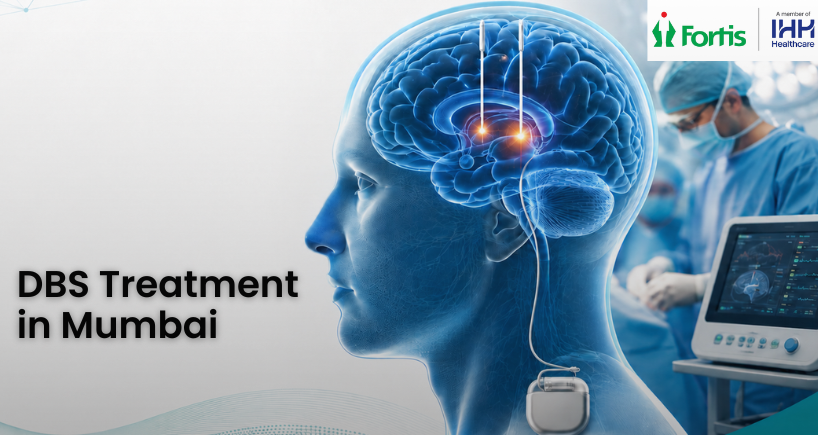
Deep Brain Stimulation is a surgical procedure involving the accurate placement of fine electrodes in specific regions of the brain involved in the control of movement. The electrodes are attached to a neurostimulator — a small device usually implanted under the skin in the chest area.
The neurostimulator provides controlled electrical stimulation to select brain circuits. These impulses can help regulate the abnormal electrical activity that is associated with movement disorders.
Commonly considered DBS targets can be Subthalamic Nucleus (STN), Globus Pallidus Internus (GPi) and thalamic targets depending on the condition and symptoms of the patient.
DBS does not cure Parkinson’s disease or halt the disease’s progression. It is intended to improve certain symptoms and to provide more consistent symptom control in properly selected patients.
Who May Benefit from DBS Treatment?
DBS is not appropriate for all Parkinson’s disease or movement disorder patients. One of the most important parts of successful DBS treatment is careful patient selection.
• Parkinson’s medicines still work but their effect has become unpredictable
• There are annoying “ON-OFF” fluctuations
• Tremor is still hard to control with medicine
• Drug-induced dyskinesia develops in the patient
• Greatly disrupt daily activities due to stiffness or slowness of movement
• Medication side effects prevent further dose changes
• Essential tremor or dystonia refractory to appropriate medical treatment and disabling
Factors considered before DBS surgery include levodopa response, cognitive status, overall health, symptom pattern, imaging and neurological assessment.
Parkinson’s Disease DBS
Deep Brain Stimulation is one of the classic indications for Parkinson’s disease. As Parkinson’s progresses, some patients develop shorter periods of good control of symptoms despite changes in medications.
DBS may help to control motor symptoms in some patients, including tremor, stiffness or rigidity, slowness of movement or bradykinesia, and motor fluctuations and dyskinesia.
Timing is another important consideration. DBS should not be regarded as the last resort treatment after all other treatments have failed. Patients with significant motor complications despite optimization of their medication should be discussed with their neurologist and functional neurosurgeon regarding suitability for evaluation for DBS.
How Are Patients Evaluated Before DBS Surgery?
DBS treatment is more than just the surgical procedure. A thorough pre-surgical assessment helps determine whether a patient is likely to benefit and identifies potential risks.
• Complete neurologic examination
• Tracking of Parkinson’s symptoms and disease progression
• Evaluate levodopa response and medication
• Neuroimaging
• Cognitive and neuropsychological assessment
• Assessment of neurologic functions such as speech and balance
• Reviewed overall fitness for surgery
The final decision should be made on the basis of the individual clinical picture of the patient and not on age or diagnosis alone.
How is DBS surgery done?
In DBS surgery electrodes are placed into specific targets in the brain that are part of the abnormal movement circuit. The procedure calls for careful planning and correct placement of the electrodes.
Extension wires link the electrodes to a pulse generator that is implanted in the body. After surgery and a short recovery period the DBS system is programmed to deliver electrical stimulation depending on the patient’s symptoms and clinical response.
DBS is therefore not a one-time surgery with no other treatment. Programming and follow-up are essential parts of the DBS journey.
What Happens After DBS Surgery?
Regular follow-up is needed after implantation. The settings of the neurostimulator are slowly “programmed” so that it can find the desired balance between symptom improvement and side effects from the stimulation.
Because every patient is different, it may take a number of sessions to program.
You might need to have your Parkinson's medications adjusted after DBS. Patients should not stop or reduce medicines without advice from their treating neurological team.
DBS settings can be fine-tuned over time as symptoms and treatment needs change.
Deep Brain Stimulation Treatment Fortis Hospital, Mulund – Mumbai
When considering DBS treatment in Mumbai, patients should look beyond the surgical procedure itself. DBS requires expertise in patient selection, stereotactic surgical planning, electrode placement, neurological assessment, programming and long-term follow-up.
Dr. Gurneet Singh Sawhney is the Head of Stereotactic & Functional Neurosciences at Fortis Hospital, Mulund and has performed more than 80+ DBS surgeries. He has completed advanced fellowship training in Functional Neurosurgery at Tokyo Women’s Medical University, Japan, enhancing his subspecialty focus in DBS, stereotactic neurosurgery and movement disorder surgery.
He has a clinical interest in Parkinson’s disease, essential tremor, dystonia, Deep Brain Stimulation, functional neurosurgery, stereotactic procedures and neuromodulation.
For patients from Mumbai, Navi Mumbai and other parts of India a detailed specialist assessment can help determine if DBS is appropriate, which symptoms are likely to respond best and what to expect from surgery, programming and long term follow up.
When to Consult a DBS Specialist?
If: Parkinson’s symptoms are increasingly affecting daily life despite medication. Tremor remains difficult to manage. Motor fluctuations and dyskinesia become troublesome. Consider: A specialist DBS assessment.
DBS is very much a personal thing. The consultation is not only to recommend surgery, but to determine whether DBS is the right treatment for the right patient at the right time.
Contact the Stereotactic & Functional Neurosciences team at Fortis Hospital, Mulund, Mumbai & Vashi, Navi Mumbai to find out if Deep Brain Stimulation is right for you or a family member.
Categories
Clear allMeet the doctor

- Neurosurgery | Neurosurgery
-
 17 Years
-
 2500
2500
 Available at 1 different locations

Related Blogs
View all

Head Injury: Better Be Safe Than Sorry
Traumatic Brain Injury: Symptoms, Causes and Management

FAQs

Keep track of your appointments, get updates & more!

