
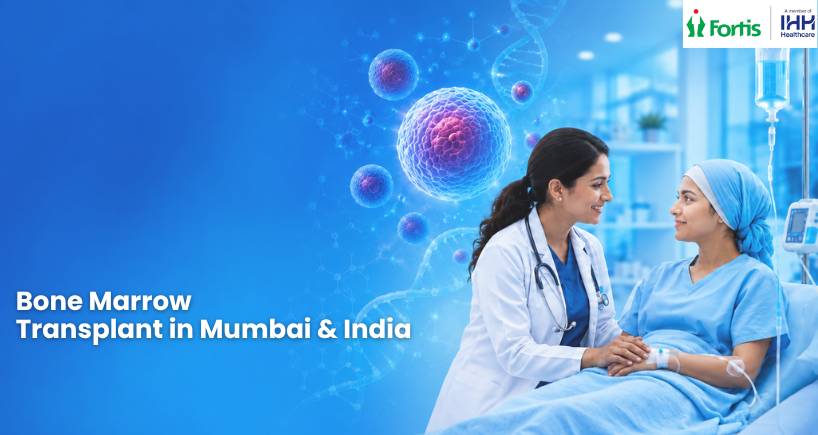


Different types of Bone Marrow Transplant in Mumbai and India
About Dr Subhaprakash Sanyal
Dr. Subhaprakash Sanyal is Director - Haemato-Oncology & Bone Marrow Transplant (BMT) at Fortis Hospital, Mulund, Mumbai. He is a Hematologist, Haemato-Oncologist and BMT physician involved in the management of blood cancers and blood disorders, including leukemia, lymphoma, multiple myeloma and conditions that may require bone marrow or stem cell transplantation.
His clinical positioning also includes conditions such as anemia, low platelets, thalassemia, sickle cell disease and bone marrow failure disorders.
Patients from Mumbai and across India can seek specialist evaluation at Fortis Hospital, Mulund for blood disorders, blood cancers, BMT eligibility assessment and transplant-related treatment planning.
What is a bone marrow transplant?
Bone marrow transplant (BMT): A treatment in which healthy blood-forming stem cells are transplanted into a patient to replace the patient's ability to generate blood cells. The cells utilized for transplantation can be from the patient, or from a related or unrelated donor. When injected into the bloodstream the stem cells head to the bone marrow, where they can start producing new red blood cells, white blood cells and platelets.
What is the difference between a bone marrow transplant and a stem cell transplant?
A bone marrow transplant is a specific sort of transplant that uses blood-forming stem cells from the bone marrow. Stem cell transplant is more generic. Blood producing stem cells for transplantation may be obtained from bone marrow, peripheral blood or umbilical cord blood. The surgery is sometimes referred to as a peripheral blood stem cell transplant since the stem cells are obtained from the blood. If they are extracted from the bone marrow it is called a bone marrow transplant or BMT. They are both forms of hematopoietic stem cell transplantation.
What diseases can be treated with bone marrow transplant?
Bone marrow or stem cell transplantation (sometimes referred to as a marrow transplant) may be an option for some patients with leukemia, lymphoma, multiple myeloma, myelodysplastic syndromes (MDS), severe aplastic anemia, bone marrow failure syndromes, sickle cell disease, thalassemia, and certain inherited blood or immune system disorders. Not all individuals with these disorders require BMT. The choice relies on the exact diagnosis, the risk of disease, the response to prior therapy, general health and, in the case of donor transplants, the availability of a suitable donor.
Keyword focus: diseases treated with bone marrow transplant, when is BMT needed
What are the different types of bone marrow or stem cell transplant?
There are three major forms of stem cell transplant: 1. Auto transplant 2. Transplantation, Allogeneic 3. Syngeneic transplant. In an autologous transplant the patient's own stem cells are extracted, preserved and then reinfused into the patient. In an allogeneic transplant, the stem cells come from another person, a related or unrelated donor. In a syngeneic transplant, stem cells are harvested from an identical twin. Haploidentical transplant is a type of allogeneic transplant in which the donor is a half HLA match, usually a parent, child or sibling. The type of transplant relies on the condition, the treatment strategy, the fitness of the patient and the donor alternatives available.
What is an autologous stem cell transplant?
An autologous stem cell transplant involves the patient's own blood-forming stem cells. Healthy stem cells are taken from the patient and stored before high dosage treatment. After treatment, the stored stem cells are then pumped back into the blood stream to assist restore normal blood cell synthesis. Autologous stem cell transplantation is often offered to patients with certain disorders such as multiple myeloma and some lymphomas. Suitability is assessed by the diagnosis, reaction to treatment and general fitness of the patient.
What is an allogeneic bone marrow transplant?
Allogeneic bone marrow or stem cell transplant: Healthy blood-forming stem cells are taken from a donor. The donor may be a sibling who is a match, another relative, a matched unrelated donor, a haploidentical or half-matched donor or in selected circumstances another eligible source of stem cells. Doctors will carefully assess how well the patient matches with a possible donor, especially in terms of Human Leukocyte Antigen (HLA) markers. Allogeneic transplantation can be an option for chosen patients with leukemia, myelodysplastic syndromes, severe aplastic anemia, and other hematologic or marrow abnormalities.
What is a haploidentical bone marrow transplant?
A haploidentical bone marrow or stem cell transplant is an allogeneic transplant where the donor is a half match for the patient. Parents and biological offspring are often half-matched, and some siblings may be haploidentical mates. Haploidentical transplantation can be an alternative donor option for selected patients without a fully matched sibling or unrelated donor. Whether this is appropriate depends on the condition and health of the patient, the donor possibilities available and the assessment of the transplant team.
Who should I consult for bone marrow transplant in Mumbai or India?
Patients who may need a Bone Marrow Transplant should see a Hematologist, Hemato-Oncologist or BMT expert experienced in Stem Cell Transplantation. BMT specialist reviews diagnosis, necessity for BMT, timing of transplant, autologous versus allogeneic transplant, patient fitness, donor requirements, HLA matching, alternative therapy options, predicted risks and benefits and post-transplant follow up. Dr Subhaprakash Sanyal Director - Hemato-Oncology & BMT Fortis Hospital, Mulund, Mumbai Patients from Mumbai and all over India who are recommended a bone marrow or stem cell transplant can avail specialist review for diagnosis review, transplant eligibility, treatment planning and a BMT related second opinion.
Categories
Clear allMeet the doctor

- Organ Transplant | Haematology and BMT
- Oncology | Hemato-Oncology
- Haematology | Paediatric Haematology and BMT | Haematology
-
 14 Years
-
 2000
2000
 Available at 1 different locations

Related Blogs
View all






FAQs

Keep track of your appointments, get updates & more!

