
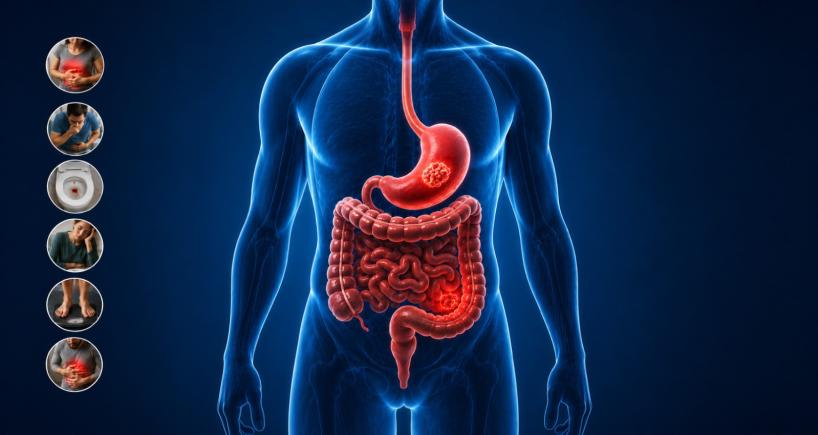


Early Signs of Gastrointestinal (GI) Cancer You Should Never Ignore
Gastrointestinal (GI) cancers often develop silently, and their early symptoms can be mistaken for common digestive problems. Persistent changes such as unexplained weight loss, blood in the stool, difficulty swallowing, ongoing abdominal pain, prolonged indigestion, changes in bowel habits, or persistent fatigue should never be ignored. While these symptoms do not always indicate cancer, timely evaluation can help detect serious conditions early, when treatment is often more effective.
Introduction
Most people experience digestive discomfort at some point—acidity after a heavy meal, occasional constipation, or stomach pain due to an infection. In many cases, these symptoms resolve on their own. However, when digestive symptoms persist, recur frequently, or gradually worsen, they may signal an underlying condition that requires medical attention.
Gastrointestinal (GI) cancers affect organs involved in digestion, including the oesophagus (food pipe), stomach, liver, pancreas, gallbladder, small intestine, colon, rectum, and anus. One of the biggest challenges with GI cancers is that early symptoms are often subtle and easy to overlook.
Recognising these warning signs and seeking medical advice promptly can make a significant difference. Early diagnosis not only improves treatment options but may also lead to better outcomes.
What Is Gastrointestinal (GI) Cancer?
Gastrointestinal (GI) cancer is a group of cancers that develop in different parts of the digestive system.
These include cancers of the:
- Oesophagus (food pipe)
- Stomach
- Liver
- Pancreas
- Gallbladder
- Small intestine
- Colon
- Rectum
- Anal canal
Each type has unique characteristics, but many share similar early warning signs, making awareness essential.
Why Early Detection Matters
Many GI cancers can be treated more effectively when diagnosed in their early stages, before they spread to nearby tissues or distant organs.
Early detection may help:
- Increase treatment options
- Improve chances of successful treatment
- Allow less extensive surgery in selected patients
- Reduce complications
- Improve overall quality of life
Because symptoms can be vague, it is important not to dismiss persistent digestive problems as "just acidity" or "gas."
Early Signs of GI Cancer You Should Never Ignore
1. Persistent Change in Bowel Habits
Occasional constipation or diarrhoea is common. However, lasting changes that continue for several weeks deserve medical evaluation.
Watch for:
- Persistent constipation
- Frequent diarrhoea
- Alternating constipation and diarrhoea
- Narrow or pencil-thin stools
- Feeling that the bowel does not empty completely
These symptoms may be associated with colorectal conditions, including colorectal cancer, although many non-cancerous conditions can also cause them.
2. Blood in the Stool
Blood in the stool should never be ignored.
It may appear as:
- Bright red blood
- Dark maroon stool
- Black, tarry stools
- Occult (hidden) blood detected during laboratory testing
Although piles (haemorrhoids) and anal fissures are common causes, blood in the stool may also indicate bleeding from a tumour within the digestive tract.
Prompt medical evaluation is essential.
3. Persistent Abdominal Pain or Discomfort
Recurring abdominal pain that lasts for weeks or keeps returning should not be considered normal.
Seek medical advice if pain is:
- Persistent
- Increasing in intensity
- Associated with bloating
- Accompanied by weight loss
- Linked with vomiting or loss of appetite
4. Unexplained Weight Loss
Losing weight without dieting or increasing physical activity is an important warning sign.
Unexpected weight loss may occur because cancer can affect:
- Appetite
- Digestion
- Nutrient absorption
- Metabolism
Any unexplained weight loss should be assessed by a healthcare professional.
5. Difficulty Swallowing
Difficulty swallowing (dysphagia) may begin with solid foods and gradually progress to liquids.
It may be associated with:
- Oesophageal cancer
- Stomach cancer
- Benign narrowing of the food pipe
- Neurological conditions
Persistent swallowing difficulty always warrants evaluation.
6. Ongoing Indigestion or Acidity
Many people experience acidity occasionally. However, persistent symptoms despite lifestyle changes or medication should not be ignored.
Warning features include:
- Frequent heartburn
- Persistent indigestion
- Feeling full after eating very little
- Burning chest discomfort
- Recurrent nausea
These symptoms may have several causes, but prolonged or worsening symptoms require further investigation.
7. Loss of Appetite
A reduced desire to eat for several weeks, especially when accompanied by other symptoms, may indicate an underlying illness.
When loss of appetite occurs alongside:
- Weight loss
- Fatigue
- Persistent abdominal discomfort
medical evaluation is recommended.
8. Persistent Fatigue
Feeling tired despite adequate sleep may indicate anaemia caused by slow blood loss from the digestive tract.
Fatigue accompanied by:
- Weakness
- Dizziness
- Pale skin
- Breathlessness
should not be ignored.
9. Persistent Bloating
Temporary bloating is common after certain meals.
However, persistent bloating that continues for weeks, especially with:
- Abdominal swelling
- Pain
- Weight loss
- Early fullness
should be assessed by a doctor.
10. Yellowing of the Skin or Eyes (Jaundice)
Jaundice can occur when bile flow is blocked.
It may be associated with conditions affecting the:
- Liver
- Gallbladder
- Pancreas
- Bile ducts
Symptoms may include:
- Yellow eyes
- Dark urine
- Pale stools
- Itching
Jaundice requires urgent medical evaluation.
Who Is at Higher Risk?
Some people have a higher likelihood of developing GI cancers.
Risk factors include:
- Age above 50 years
- Family history of GI cancers
- Smoking
- Heavy alcohol consumption
- Obesity
- Diet low in fibre and high in processed foods
- Chronic inflammatory bowel diseases
- Chronic liver disease
- Long-standing acid reflux
- Certain inherited genetic conditions
Having one or more risk factors does not mean a person will develop cancer, but it highlights the importance of regular health check-ups and discussing screening with a specialist when appropriate.
When Should You See a Specialist?
Consult a GI oncology or gastroenterology specialist if you experience:
- Symptoms lasting more than two to three weeks
- Blood in the stool
- Persistent abdominal pain
- Difficulty swallowing
- Unexplained weight loss
- Ongoing fatigue
- Recurrent vomiting
- Jaundice
- Persistent changes in bowel habits
Early evaluation can help identify the cause and, if necessary, begin treatment without unnecessary delay.
How Are GI Cancers Diagnosed?
The doctor may recommend investigations based on your symptoms, including:
- Clinical examination
- Blood tests
- Stool tests
- Upper GI endoscopy
- Colonoscopy
- Ultrasound
- CT scan
- MRI
- PET-CT scan (when indicated)
- Biopsy for confirmation
Not everyone requires every investigation. The diagnostic plan is personalised according to the patient's symptoms and clinical findings.
Comprehensive GI Cancer Care at Fortis Hospital, Shalimar Bagh
Managing GI cancers often requires expertise from multiple specialists working together. At Fortis Hospital, Shalimar Bagh, patients have access to a multidisciplinary team that may include GI oncologists, gastroenterologists, surgical oncologists, medical oncologists, radiation oncologists, radiologists, pathologists, nutrition experts, and critical care specialists.
The hospital offers advanced diagnostic facilities and evidence-based treatment planning, with care tailored to each patient's condition. Depending on the diagnosis, treatment may involve minimally invasive or robotic-assisted surgery (where appropriate), chemotherapy, targeted therapy, immunotherapy, radiation therapy, nutritional support, and comprehensive follow-up care.
Key Takeaways
- GI cancers often begin with subtle digestive symptoms.
- Persistent symptoms should never be ignored.
- Blood in the stool, unexplained weight loss, difficulty swallowing, and ongoing abdominal pain require medical evaluation.
- Many non-cancerous conditions can cause similar symptoms, but only proper assessment can determine the underlying cause.
- Early diagnosis can improve treatment options and outcomes.
Categories
Clear allMeet the doctor

- Gastroenterology and Hepatobiliary Sciences | Gastrointestinal Surgery | Metabolic & Bariatric Surgery | Robotic Surgery | GI, Minimal Access and Bariatric Surgery | GI Oncology
- Oncology | Oncology | Surgical Oncology | Robotic Surgery | GI Oncology
- General Surgery | General and Laparoscopic Surgery | General and Minimal Access Surgery | Bariatric Surgery | General Surgery | Robotic Surgery
-
 35 Years
-
 2500
2500
Related Blogs
View all









FAQs
Are all digestive problems a sign of GI cancer?
No. Most digestive symptoms are caused by non-cancerous conditions such as acidity, infections, or irritable bowel syndrome. However, symptoms that persist, worsen, or recur frequently should be evaluated by a doctor.
Which GI cancer is the most common?
The frequency varies by region and population. Colorectal, stomach, liver, pancreatic, and oesophageal cancers are among the commonly diagnosed GI cancers.
Can young adults develop GI cancer?
Although GI cancers are more common in older adults, they can occur in younger individuals, particularly if there is a family history, inherited genetic conditions, or certain risk factors. Persistent symptoms should not be ignored regardless of age.
Does blood in the stool always mean cancer?
No. Blood in the stool is often caused by piles, anal fissures, or infections. However, because it can also be a sign of colorectal cancer or other serious conditions, it should always be assessed by a doctor.
When should I undergo screening for GI cancers?
Screening recommendations depend on age, family history, personal medical history, and individual risk factors. A specialist can advise whether and when screening tests such as a colonoscopy are appropriate for you.
Can GI cancers be cured if detected early?
Many GI cancers have better treatment outcomes when diagnosed at an early stage. Timely diagnosis can expand treatment options and may improve long-term prognosis.

Keep track of your appointments, get updates & more!

