
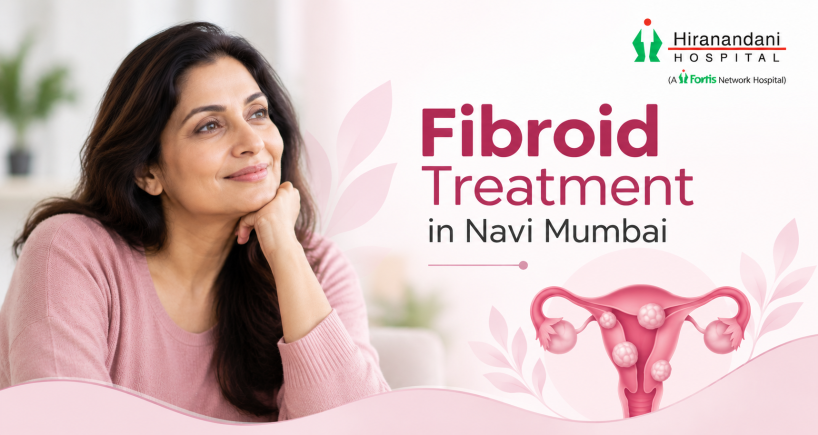


Fibroids Treatment in Navi Mumbai
Fibroids Treatment in Navi Mumbai
Uterine fibroids are benign growths in the muscular wall of the uterus and are among the most common gynaecological findings in women of reproductive age. Most fibroids cause no symptoms and are found incidentally on a routine scan; they need treatment only when they cause heavy bleeding, pressure symptoms, or affect fertility. Dr. Prashant Bhamare, Director & HOD - Obstetrics & Gynaecology at Fortis Hiranandani Hospital, Vashi, evaluates fibroids across the full range of management options, from monitoring through to minimally invasive surgery.
What Are Uterine Fibroids?
Fibroids can grow in different parts of the uterus, and location not just size largely determines both symptoms and treatment options:
- Submucosal fibroids grow into the cavity of the uterus (the space where a pregnancy would develop) and are the type most likely to cause heavy bleeding, fertility problems, or pregnancy loss.
- Intramural fibroids grow within the muscular wall of the uterus itself and are the most common type.
- Subserosal fibroids grow on the outer surface of the uterus and more often cause pressure or bulk symptoms a feeling of fullness or swelling, than bleeding.
- A single fibroid can span multiple zones, and most women with fibroids have more than one. This is why two women with similarly sized fibroids can need very different treatment plans.
Symptoms of Fibroids
Symptoms depend on the fibroid's size, number and location. They generally fall into three groups:
- Bleeding-related: heavy or prolonged periods, passing clots, and over time anaemia from ongoing blood loss.
- Pressure-related: a feeling of heaviness or bloating in the pelvis, frequent urination, constipation, or lower back pain.
- Fertility-related: difficulty conceiving or, particularly with submucosal fibroids, recurrent pregnancy loss.
Many women with fibroids have no symptoms at all and need no treatment beyond periodic monitoring.
When Fibroids Need Treatment
Most fibroids do not require any intervention. Treatment becomes appropriate when fibroids cause anaemia, disrupt daily life or work, affect fertility, or continue to grow significantly on follow-up scans. The right approach depends on the patient's age, the fibroid's size, number and location, the severity of symptoms, and whether future pregnancy is desired there is no single treatment that fits every case.
Non-Surgical Options
Surgery is not always the first step. Medical therapy including hormonal treatments and, in selected cases, medicines that temporarily lower oestrogen levels (GnRH analogues) can reduce heavy bleeding and may temporarily shrink fibroid volume. It does not remove fibroids permanently, and symptoms typically return once treatment is stopped, so medical therapy is generally used for short-term symptom control or to bridge to a planned procedure.
Uterine artery embolization (blocking the blood supply that feeds a fibroid, done through a small catheter rather than surgery) and radiofrequency ablation (using heat, delivered through a fine probe, to shrink fibroid tissue) are minimally invasive, uterus-preserving procedures available at select centres. They are generally considered for women who have completed childbearing or do not wish to conceive in the future, as fibroids can still recur or need further treatment after either procedure.
Surgical Options -
Myomectomy - Myomectomy removes the fibroids while leaving the uterus intact and is the standard fertility-preserving surgical option. Depending on the fibroid's size, number and location, it can be performed hysteroscopically (for fibroids inside the uterine cavity, using an instrument passed through the vagina with no cuts), laparoscopically (through a few small incisions in the abdomen, using a camera), or through open surgery. Fibroids can recur after myomectomy studies suggest roughly half of women have new fibroids within five years so this is a genuine trade-off against hysterectomy rather than a straightforwardly superior option, and the choice should be discussed on those terms.
Hysterectomy - Hysterectomy removal of the uterus is the only treatment that guarantees fibroids will not return. It is generally considered once childbearing is complete and symptoms are severe enough to warrant definitive treatment. In most cases it can be performed laparoscopically, which is associated with a shorter hospital stay and faster recovery than open surgery.
How Treatment Is Planned
Dr. Bhamare's assessment is built around the fibroid's location, size and number (assessed on ultrasound and MRI where the detail is needed for surgical planning), the severity of symptoms and their effect on haemoglobin (the blood's iron-carrying protein, lowered by heavy blood loss), the patient's fertility plans, and personal preference regarding uterus preservation. Treatment planning is a shared decision between doctor and patient, not a default pathway.
Fibroid Care at Fortis Hiranandani Hospital, Vashi
Fortis Hiranandani Hospital, Vashi provides fibroid evaluation and the full range of management from monitoring and medical therapy through to hysteroscopic and laparoscopic myomectomy and hysterectomy for patients from Vashi, Navi Mumbai, Panvel, Ulwe, Uran, Raigad and nearby areas.
____________________________________________________________________________________________
Fortis Hiranandani Hospital Vashi, Navi Mumbai
Address: Mini Sea Shore Road, Sector 10, Vashi, Navi Mumbai, Maharashtra - 400703
Ph. 02268846142
Categories
Clear allMeet the doctor

- Obstetrics and Gynaecology | Robotic Surgery | Obstetrics and Gynaecology
-
 30 Years
-
 1200
1200
Related Blogs
View all

Bacterial Vaginosis: Causes, Symptoms And Treatment


Awareness, Breast Self-Examination And Regular Screening Examination Can Change The Life o...

Hormonal Imbalance: Symptoms, Causes And Treatment

Evolution of Gynae & Cancer Surgeries With Robotics

Know The Top 11 Benefits of Antenatal Exercises
FAQs
Do all fibroids need treatment?
No, most fibroids cause no symptoms and are found incidentally on a scan. Treatment is considered when fibroids cause anaemia, significant symptoms, or affect fertility.
What is the difference between myomectomy and hysterectomy?
Myomectomy removes only the fibroids and preserves the uterus, making it the option for women who wish to have children in future but fibroids can recur. Hysterectomy removes the uterus entirely and is the only option that guarantees fibroids will not come back; it is generally reserved for women who have completed childbearing.
Can fibroids come back after myomectomy?
Yes. New fibroids develop in a meaningful proportion of women within five years of myomectomy. This possibility should be part of the decision between myomectomy and hysterectomy, not a surprise afterward.
Are there treatment options that avoid major surgery?
Medical therapy can control bleeding and may temporarily reduce fibroid size. Uterine artery embolization and radiofrequency ablation are minimally invasive, uterus-preserving alternatives to surgery, generally suited to women not planning future pregnancy. Suitability depends on the fibroid's size, number and location.
Can fibroids affect fertility or pregnancy?
They can, particularly submucosal fibroids that distort the uterine cavity, where they are associated with difficulty conceiving and higher rates of pregnancy loss. Not all fibroids affect fertility — location matters more than size alone.
Where can I get a fibroid evaluation in Navi Mumbai?
Dr. Prashant Bhamare is available at Fortis Hiranandani Hospital, Vashi for fibroid evaluation and treatment planning.

Keep track of your appointments, get updates & more!

