
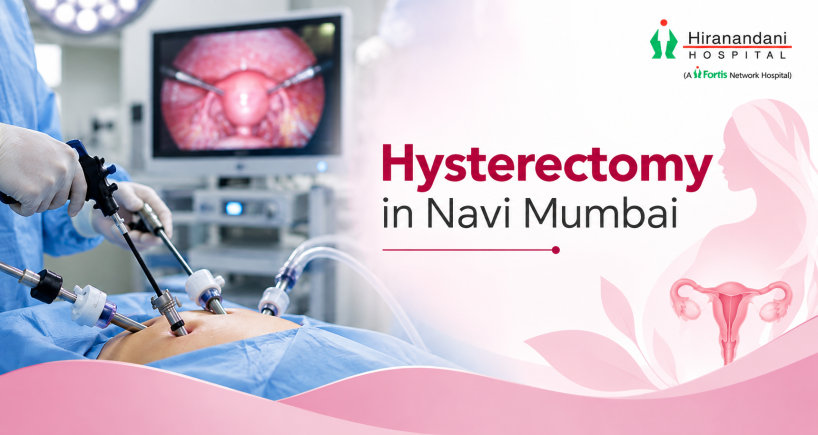


Hysterectomy in Navi Mumbai
Hysterectomy in Navi Mumbai
Laparoscopic Hysterectomy in Navi Mumbai
A hysterectomy is the surgical removal of the uterus. It is a definitive treatment once performed, periods stop and pregnancy is no longer possible so it is generally considered only after other appropriate treatments have been tried or are not suitable, and once a woman has completed or does not desire future childbearing. Dr. Prashant Bhamare, Director & HOD - Obstetrics & Gynaecology at Fortis Hiranandani Hospital, Vashi, performs hysterectomy through a laparoscopic approach in the majority of cases where it is clinically appropriate.
When is Hysterectomy considered?
Hysterectomy is one option among several for each of the following conditions, not the automatic next step. It becomes appropriate when symptoms are significant, other treatments have been tried and have not worked or are unsuitable, and for most of these conditions when future pregnancy is not desired:
- Fibroids (leiomyoma) causing heavy bleeding or pressure symptoms that have not responded to medication or fertility-preserving surgery (myomectomy).
- Adenomyosis is a condition where the tissue that normally lines the uterus grows into the uterine muscle wall, causing heavy, painful periods. It frequently coexists with endometriosis, and laparoscopic assessment allows both to be identified and addressed together.
- Abnormal uterine bleeding that continues despite medical treatment and where investigation has excluded other treatable causes.
- Endometriosis with severe symptoms, in selected cases where other surgical and medical options have not given adequate relief.
- Uterine prolapse, where the uterus has descended from its normal position, causing discomfort or pressure symptoms.
A hysterectomy is not the first step for any of these conditions. It is considered once the underlying cause is confirmed and more conservative options have genuinely been exhausted or are not appropriate for the individual case.
Why Laparoscopic Hysterectomy?
A laparoscopic hysterectomy is performed through several small incisions in the abdomen, typically a 1 cm supra-umbilical incision for the camera port and 5 mm incisions for the ancillary instrument ports using a camera and fine instruments, rather than a single large abdominal incision.
Professional guidelines from bodies including the American College of Obstetricians and Gynecologists recognize the laparoscopic approach as generally preferred over open abdominal surgery where it is technically feasible, on the basis of improved outcomes typically less blood loss, a shorter hospital stay, and a faster return to normal activity.
Not every case is suitable for a laparoscopic approach: a very large uterus, extensive adhesions from previous surgery, or suspected malignancy may mean open surgery is safer, and this is assessed individually.
The magnified laparoscopy view also provides a more precise assessment of disease extent and surgical margins than is achievable with the naked eye, an advantage that matters particularly in cases involving suspected malignancy, coexisting endometriosis, or anatomically difficult pelvic findings.
What a Hysterectomy Does and Does Not Remove?
A hysterectomy always removes the uterus. Whether the cervix, fallopian tubes and ovaries are also removed depends on the underlying condition, the patient's age, and personal preference and is discussed in detail before surgery:
- Total hysterectomy removes the uterus and cervix together.
- Subtotal (or partial) hysterectomy removes the uterus but leaves the cervix in place an option in selected cases.
- The ovaries are usually preserved unless there is a specific reason to remove them (such as ovarian disease or, in some cases, family history), since removing the ovaries before natural menopause brings on menopause immediately and has its own long-term health implications that are discussed beforehand.
How the Decision Is Made?
Dr. Bhamare's assessment considers the underlying diagnosis, symptom severity, response to treatments already tried, the size and mobility of the uterus, previous abdominal or pelvic surgery, and the patient's own preferences regarding the cervix and ovaries. The choice to proceed with hysterectomy and whether it can be done laparoscopically is made jointly with the patient, not presented as the only option.
Hysterectomy Care at Fortis Hiranandani Hospital, Vashi
Fortis Hiranandani Hospital, Vashi provides evaluation for women being considered for hysterectomy, including a review of prior treatments tried, pre-operative assessment, and laparoscopic surgery where clinically appropriate, for patients from Vashi, Navi Mumbai, Panvel, Ulwe, Uran, Raigad and nearby areas.
____________________________________________________________________________________________
Fortis Hiranandani Hospital Vashi, Navi Mumbai
Address: Mini Sea Shore Road, Sector 10, Vashi, Navi Mumbai, Maharashtra - 400703
Ph. 02268846142
Categories
Clear allMeet the doctor

- Obstetrics and Gynaecology | Robotic Surgery | Obstetrics and Gynaecology
-
 30 Years
-
 1200
1200
Related Blogs
View all

Bacterial Vaginosis: Causes, Symptoms And Treatment


Awareness, Breast Self-Examination And Regular Screening Examination Can Change The Life o...

Hormonal Imbalance: Symptoms, Causes And Treatment

Evolution of Gynae & Cancer Surgeries With Robotics


Know The Top 11 Benefits of Antenatal Exercises

FAQs
Will I go into menopause after a hysterectomy?
Only if the ovaries are also removed. If the ovaries are preserved, they continue producing hormones and natural menopause occurs at its usual time the only change is that periods stop, since there is no longer a uterus to shed a lining.
Is laparoscopic hysterectomy always possible?
Not always. A very large uterus, extensive scarring from previous surgery, or suspected malignancy can make an open or a combined approach safer. This is assessed on an individual basis, usually with a pre-operative ultrasound or MRI.
How long is recovery after laparoscopic hysterectomy?
Recovery is generally faster than after open surgery — most women are up and moving within a day and home within a few days, with a return to normal activity over the following few weeks. Individual recovery time depends on the extent of surgery and overall health.
Can fibroids be treated without a hysterectomy?
Often, yes. Medication, hysteroscopic or laparoscopic myomectomy (removing the fibroids while preserving the uterus), and non-surgical options such as uterine artery embolization can all be considered first, depending on the fibroid's size, location, and whether future pregnancy is desired. Hysterectomy is considered when these are not suitable or have not worked.
Where can I get an evaluation for hysterectomy in Navi Mumbai?
Dr. Prashant Bhamare is available at Fortis Hiranandani Hospital, Vashi for evaluation and treatment planning.

Keep track of your appointments, get updates & more!

