
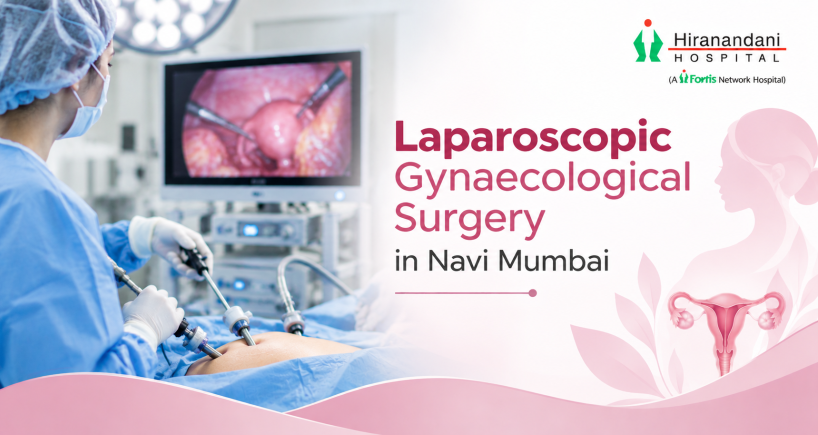


Laparoscopic Gynaecological Surgery in Navi Mumbai
Laparoscopic Gynaecological Surgery in Navi Mumbai
Dr. Prashant Bhamare, Fortis Vashi
Laparoscopic surgery is a way of performing an operation through several small incisions in the abdomen typically a 1 cm supra-umbilical incision for the camera port and 5 mm incisions for the ancillary instrument ports using a thin camera (laparoscope) and long, fine instruments, instead of one large incision. The surgeon views the pelvis and abdomen on a screen and operates through the small ports. This page is a general starting point: which conditions apply to you, and what the surgical approach actually involves, depends on your specific diagnosis the dedicated pages for fibroids, endometriosis, and hysterectomy go into that detail.
Why Laparoscopic Surgery Is Often Preferred?
Compared with open (abdominal) surgery through a single larger incision, a laparoscopic approach is generally associated with less blood loss, less post-operative pain, a shorter hospital stay, and a faster return to normal activity, where it is technically suitable for the case. It is not automatically the right approach for every situation very large masses, extensive scar tissue from previous surgery, or suspected malignancy can make an open approach safer, and this is assessed individually. The magnified view laparoscopy provides also allows more precise assessment of disease extent and surgical margins than is achievable with the naked eye an advantage that matters particularly in endometriosis, suspected malignancy, and other anatomically difficult cases.
Conditions Typically Evaluated With Laparoscopy
Laparoscopy is used both to diagnose and to treat a range of gynaecological conditions, broadly grouped as follows:
- Abnormal uterine bleeding that has not responded to medical treatment and needs further evaluation or surgical management.
- Benign uterine conditions fibroids (myomectomy) and adenomyosis where surgery is being considered. Adenomyosis frequently coexists with endometriosis, and laparoscopic evaluation allows both to be assessed and, where appropriate, addressed at the same time.
- Ovarian cysts and other adnexal masses that need removal or further assessment based on their size, appearance, and persistence on imaging.
- Endometriosis, for both diagnosis and surgical treatment.
- Pelvic pain of unclear cause, where laparoscopy can help identify a diagnosis when other investigations have not.
Not all of these conditions require surgery. Many are managed first with medication or monitoring, and laparoscopy is considered when symptoms persist, other treatment has not worked, or the diagnosis itself needs surgical confirmation.
Laparoscopy and Hysteroscopy Are Not the Same
The two are often confused because both are minimally invasive, but they look at different things. Laparoscopy views the pelvis and abdomen from outside the uterus through small abdominal incisions used for conditions on the ovaries, fallopian tubes, or the outer and muscular layers of the uterus. Hysteroscopy examines the inside of the uterine cavity, using an instrument passed through the vagina and cervix with no incisions at all used for conditions such as fibroids growing into the cavity, or polyps. Which one is appropriate or whether both are needed together depends on where the suspected problem lies.
What a Consultation Involves?
Before recommending surgery, evaluation typically includes a detailed history, pelvic examination, and imaging (usually ultrasound, with MRI in selected cases). For endometriosis and other complex pelvic pathologies, bowel preparation before these scans is often advised, since a clear bowel reduces air and stool artefact and improves visualisation. This determines whether the condition can reasonably be managed without surgery, whether laparoscopy is appropriate, and if so what the specific procedure would involve.
Laparoscopic Surgery at Fortis Hiranandani Hospital, Vashi
Fortis Hiranandani Hospital, Vashi offers laparoscopic gynaecological consultation as a starting point for evaluation the exact surgical approach and next steps depend on which specific condition is confirmed, for patients from Vashi, Navi Mumbai, Panvel, Ulwe, Uran, Raigad and nearby areas.
____________________________________________________________________________________________
Fortis Hiranandani Hospital Vashi, Navi Mumbai
Address: Mini Sea Shore Road, Sector 10, Vashi, Navi Mumbai, Maharashtra - 400703
Ph. 02268846142
Categories
Clear allMeet the doctor

- Obstetrics and Gynaecology | Robotic Surgery | Obstetrics and Gynaecology
-
 30 Years
-
 1200
1200
Related Blogs
View all

Bacterial Vaginosis: Causes, Symptoms And Treatment


Awareness, Breast Self-Examination And Regular Screening Examination Can Change The Life o...

Hormonal Imbalance: Symptoms, Causes And Treatment

Evolution of Gynae & Cancer Surgeries With Robotics


Know The Top 11 Benefits of Antenatal Exercises


FAQs
Is laparoscopic surgery painful?
There is generally less pain than after open surgery, since the incisions are much smaller, though some discomfort — including shoulder-tip pain from the gas used during the procedure is common in the first day or two and settles with simple pain relief.
How is laparoscopic surgery different from open surgery?
Open surgery uses a single larger incision to access the abdomen directly. Laparoscopic surgery uses several small incisions and a camera, which generally means less blood loss, a shorter hospital stay, and a faster recovery but not every case is suitable for a laparoscopic approach.
Will I need general anaesthesia?
Yes, laparoscopic gynaecological surgery is performed under general anaesthesia.
How do I know if I need surgery at all?
Most gynaecological conditions are evaluated with medical treatment or monitoring first. Surgery is considered when symptoms are significant, other treatment has not worked, or the diagnosis itself requires surgical confirmation this is assessed at consultation, not assumed in advance.
Where can I get a laparoscopic surgery consultation in Navi Mumbai?
Dr. Prashant Bhamare is available at Fortis Hiranandani Hospital, Vashi for evaluation and treatment planning.

Keep track of your appointments, get updates & more!

