
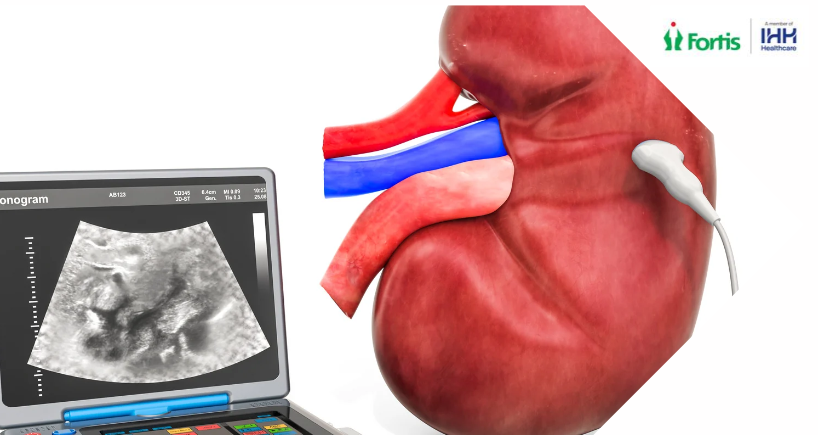


What Options for Large Kidney Stones Such as RIRS or PCNL Are Available at Hospitals in Faridabad?
For large kidney stones, doctors usually choose between PCNL, which works through a small cut in the back, and RIRS, which goes in through the urinary tract with no cut. The decision rests on the stone’s size, position and make-up, confirmed by a scan. Before agreeing to a date, verify the surgeon’s registration and the hospital’s equipment. Fever with severe back pain needs urgent care.
Quick Reads
- About 12% of people in India are prone to urinary stones, according to a 2025 Urology Science study from southern India.
- In the same study of 875 patients, 88% drank less than 2 litres of fluid a day.
- That study also notes that calcium oxalate stones predominate in India, while cystine stones are rarely reported.
- India recorded about 18.6 million new kidney stone cases, second only to China, as per a 2025 review of global data.
Kidney stones that are too large to pass naturally call for a planned procedure, and the choice is rarely straightforward. Patients are often given several unfamiliar terms at once, along with questions about hospital selection, cost and recovery. This blog sets out the treatment routes in clear language. It also covers how to assess a hospital’s facilities and how to prepare for the consultation, so families can decide carefully and without pressure.
What Counts as a Large Kidney Stone?
Doctors generally start calling a kidney stone “large” once it crosses 10 millimetres, about the size of a chickpea. Below that size, stones often pass on their own with enough fluids and the right medication. Above it, the odds drop sharply, and most will need some form of intervention to avoid blockages or repeated infections.
The millimetre count on a scan is not the only thing that matters. A 7mm stone lodged at a narrow point in the ureter can cause just as much trouble as a 12mm one sitting loosely in the kidney. Location, shape and how much urine flow is already obstructed all factor into how a urologist assesses the case. There’s also a category known as staghorn stones, which grow past 20 millimetres and branch out to fill much of the kidney’s collecting system. These rarely leave room for anything less than surgery, and PCNL is usually the first option doctors reach for.
What Treatment Options Are Available for Large Kidney Stone Removal?
Large kidney stone removal is usually done with PCNL or RIRS, and sometimes with other methods when the stone’s size, position or composition makes them more suitable.
PCNL (Percutaneous Nephrolithotomy)
PCNL surgery in Faridabad follows the technique used across the country. Under general anaesthesia, the surgeon makes a cut of about 1 cm in the back, creates a narrow channel into the kidney, and uses a thin scope to break up the stone and remove the pieces. It’s often the first choice for stones above about 2 cm and for staghorn stones. The hospital stay is typically one to three days.
RIRS (Retrograde Intrarenal Surgery)
RIRS surgery in Faridabad leaves the skin untouched. The surgeon passes a slim, flexible ureteroscope along the urethra, bladder and ureter until it reaches the kidney, then uses a laser to break the stone into small pieces. Larger fragments are lifted out with a fine basket, and the rest can pass in the urine. A temporary stent is often placed afterwards to keep the ureter open, and it’s removed later. A large stone may need more than one session.
Shock Wave Lithotripsy (ESWL)
Some stones can be broken without entering the body at all. In ESWL, a lithotripter focuses shock waves on the stone through the skin, and the fragments pass in the urine over the following days. Large stones often need repeated sessions, so doctors tend to reserve this method for stones under about 2 cm.
Open or Laparoscopic Surgery
Open and laparoscopic surgery are used sparingly. A very large stone in an unusually shaped kidney is a typical example. Because both involve an incision, recovery generally takes longer than with PCNL or RIRS.
How Do RIRS and PCNL Compare?
The two procedures differ in access, recovery and the stone sizes they suit.
Which one works better depends on the case in front of the urologist, not a fixed ranking between the two. The urologist weighs the stone’s size, position and composition, your kidney anatomy and your general health.
How Do You Choose Kidney Stone Treatment in Faridabad?
For kidney stone treatment in Faridabad, choose a registered urologist with endourology experience and a hospital that has the right equipment, backup and clear billing. We at Fortis include a list of our urology equipment and accreditation status on our websites, which can be a useful starting point before you call.
- Verify the urologist’s registration with the National Medical Commission or a State Medical Council, and confirm qualifications such as MCh or DNB in urology.
- Ask whether the hospital has flexible ureteroscopes, a holmium laser, fluoroscopy and nephroscopes, since RIRS and PCNL depend on them.
- Check for blood bank access, intensive care and round-the-clock emergency cover in case of bleeding or infection.
- Look for NABH accreditation, which can be verified on the board’s website.
- Request an itemised estimate, and ask whether your insurer needs pre-authorisation for cashless admission.
What Should You Expect Before and After the Procedure?
Preparation focuses on ruling out infection before the procedure, and recovery brings a few days of mild discomfort along with specific symptoms worth watching for.
Before the Procedure
Expect a CT scan, blood tests and a urine culture. An active infection is treated first, because operating on an infected system can be dangerous. Tell the team about blood thinners and any other regular medicines.
After the Procedure
Mild back pain, blood-tinged urine and stent discomfort are common in the first days. Fluids, prescribed medicines, and a follow-up scan help confirm the stone has cleared. Fever with severe flank pain, difficulty passing urine, or persistent vomiting needs urgent care.
How Can You Lower the Risk of New Stones?
Steady hydration is the most widely advised way to prevent new stones, and a few diet changes add to that protection.
- Drink enough to pass 2 to 2.5 litres of urine daily, which often means about 3 litres of fluid in hot weather.
- Spread your drinks across the day instead of taking them all at once, and add extra after exercise.
- Go easy on salt. Sodium raises the amount of calcium in the urine, which makes stones more likely to form.
- Keep milk, curd and other calcium-rich foods in your diet unless advised otherwise, because too little calcium can raise stone risk.
- Moderate your intake of red meat and other animal protein, as large portions can raise uric acid and reduce protective citrate.
- If your stone was calcium oxalate, ask your doctor whether to limit spinach, beetroot, nuts and similar high-oxalate foods.
Conclusion
If you’ve been told you have a large kidney stone, book a consultation with a registered urologist and carry your scans and reports. Many people researching treatment have one question first: what options for large kidney stones, such as RIRS or PCNL, are available at hospitals in Faridabad? Most major hospitals in the city offer both, and your urologist will match the choice to your stone’s size and location.
Ask which procedure suits your stone and why, whether treatment may be staged, and what the full estimate covers. Check the hospital’s equipment, backup and accreditation before agreeing a date. Afterwards, follow the fluid and follow-up advice closely. Seek urgent care for fever with severe flank pain, vomiting or difficulty passing urine.
Categories
Clear allRelated Blogs
View all



Adult Circumcision: Debunking Facts and Myths | Fortis Health Connect Blogs
Is Beer Good for Kidney Stones ? - Myths Vs Facts | Fortis Healthcare




Quick Enquiry Form
FAQs
Which hospitals in Faridabad offer RIRS and PCNL?
Several multispecialty hospitals in the city have urology departments that perform both procedures. Instead of relying on a list, call the hospital and ask who performs them, what equipment is available and what backup exists if a complication arises.
Is PCNL or RIRS better for large kidney stones?
Neither wins in every case. PCNL is usually chosen for stones above about 2 cm, while RIRS suits smaller stones and some larger ones, sometimes in two stages. Your urologist decides after reviewing the CT scan, your kidney anatomy and any other health conditions.
How long does recovery take?
It differs from person to person and between the two procedures. Many people return to a light routine within a week or two, though PCNL may take a little longer than RIRS. The surgeon will advise on work, travel, exercise and when the stent comes out.
Can a large kidney stone come back?
Yes, stones do recur, particularly when daily fluid intake is low. Drinking enough to pass roughly 2 to 2.5 litres of urine a day and following dietary advice lowers the risk. If stones return, the doctor may suggest a stone analysis and urine tests to find the cause.

Keep track of your appointments, get updates & more!

