


Managing Complex Urogenital Fistula After Hysterectomy: Importance of Early Diagnosis and Multidisciplinary Care
Managing Complex Urogenital Fistula After Hysterectomy: Early Diagnosis and Definitive Surgical Repair
Postoperative complications following gynecological surgery are uncommon but can significantly affect a patient’s quality of life when they occur. One such complication is a urogenital fistula, an abnormal communication between the urinary tract and the vagina that results in continuous urinary leakage. Early recognition and timely intervention are crucial for successful treatment.
At Fortis Hospital Bannerghatta Road, a complex case of persistent urinary leakage following hysterectomy was successfully diagnosed and treated through advanced reconstructive urological surgery. The case was managed by Dr. Karthik Rao, demonstrating the importance of prompt imaging, specialist referral, and multidisciplinary collaboration.
Patient Presentation
A 43-year-old woman with no known comorbidities presented with continuous urinary leakage through the vagina after undergoing a total laparoscopic hysterectomy for a large cervical fibroid.
Instead of experiencing a normal postoperative recovery, the patient noticed persistent watery discharge, which raised suspicion of a postoperative urogenital fistula. Such symptoms can be both physically uncomfortable and emotionally distressing, requiring prompt medical evaluation.
Diagnostic Evaluation
To identify the cause of the leakage, doctors performed a CT Intravenous Urogram (CT IVU) to evaluate the urinary tract.
The imaging findings included:
- The left kidney pelvicalyceal system was not dilated, suggesting preserved kidney drainage.
- A left DJ stent was seen in position.
- Small air pockets and contrast densities were present around the lower end of the ureter and the ureterovesical junction on the left side.
- Dense contrast extravasation was seen extending toward the vaginal stump.
- Subtle air and contrast densities were observed within the swab placed in the vaginal cavity, indicating a fistulous communication.
These findings confirmed a complex urogenital fistula involving the distal ureter and bladder region, resulting in continuous urinary leakage.
Definitive Surgical Treatment
After thorough evaluation and planning, the patient underwent definitive reconstructive surgery to restore normal urinary anatomy and stop the leakage.
The procedure included:
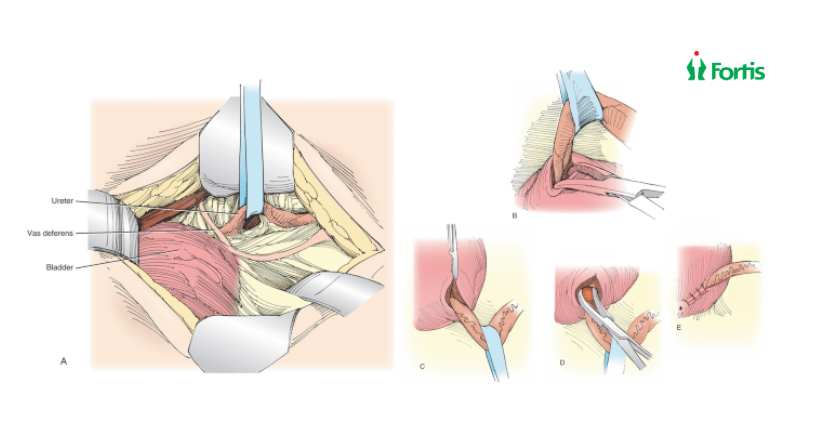
Vesico-Vaginal Fistula Repair
The abnormal connection between the bladder and vagina was carefully repaired to close the fistulous tract and eliminate the continuous leakage of urine.
Left Ureteric Reimplantation
Since the fistula involved the distal ureter near the ureterovesical junction, the affected ureter was surgically reimplanted into the bladder. This procedure restored normal urinary drainage from the kidney to the bladder while protecting kidney function.
This combined approach ensured:
- Complete closure of the fistula
- Restoration of normal urinary flow
- Prevention of recurrent leakage
- Preservation of kidney function
Understanding Urogenital Fistulas
Complex urogenital fistulas remain one of the most distressing complications following hysterectomy, although they occur infrequently.
Patients may experience:
- Continuous urinary leakage through the vagina
- Persistent watery discharge
- Recurrent infections
- Significant impact on physical comfort and emotional well-being
However, early diagnosis and specialized surgical repair can successfully restore normal function and significantly improve quality of life.
Importance of Early Recognition
This case highlights several key principles in managing postoperative urinary complications:
- Early recognition of symptoms is critical
- Accurate imaging helps determine the exact location and extent of the fistula
- Timely referral to urology specialists ensures appropriate treatment
- Meticulous surgical technique is essential for durable repair
Maintaining a high index of suspicion in patients with postoperative urinary leakage allows for earlier diagnosis and better outcomes.
Multidisciplinary Collaboration for Optimal Outcomes
The successful management of this complex case was made possible through close collaboration between gynecologists, radiologists, and urologists. Such multidisciplinary coordination ensures accurate diagnosis, careful surgical planning, and effective treatment.
According to Dr. Karthik Rao, timely imaging, precise surgical repair, and coordinated specialist care are key to managing complex urogenital fistulas and restoring patients’ quality of life.
Restoring Patient Well-Being
Following the vesico-vaginal fistula repair combined with left ureteric reimplantation, the patient recovered well, with resolution of urinary leakage and restoration of normal urinary function.
This case underscores the importance of early diagnosis, expert reconstructive surgery, and multidisciplinary care in successfully managing complex postoperative complications.
At Fortis Healthcare, advanced surgical expertise and collaborative care continue to help patients achieve better outcomes and faster recovery even in challenging clinical situations.
Dr. Nagendra Prasad Tripathy| Fortis Hospital BG Road Bangalore
Categories
Clear allMeet the doctor

- Urology | Uro-Oncology
- Organ Transplant | Kidney Transplant
-
 19 Years
-

Related Blogs
View all



Adult Circumcision: Debunking Facts and Myths | Fortis Health Connect Blogs

Is Beer Good for Kidney Stones ? - Myths Vs Facts | Fortis Healthcare




FAQs

Keep track of your appointments, get updates & more!

