
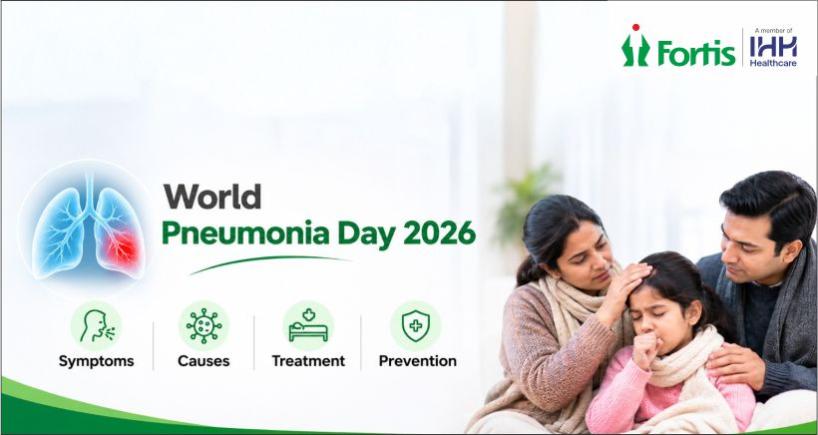


Pneumonia Symptoms Causes Treatment and Prevention - A Complete Guide
A persistent cough, fever, chest pain or difficulty breathing should never be ignored. These symptoms may indicate pneumonia, a lung infection that causes inflammation in one or both lungs and can make breathing difficult.
World Pneumonia Day is observed every year on 12 November to raise awareness about pneumonia prevention, early diagnosis and timely treatment. The 2026 theme, "A New Era of Pneumonia Control," highlights the importance of improving access to effective prevention and healthcare.
In India, the National Health Mission also runs the SAANS campaign to promote childhood pneumonia awareness and early medical intervention.
What Is Pneumonia?
Pneumonia is an infection that affects the lungs. The tiny air sacs, called alveoli, may fill with fluid or pus, making breathing difficult.
Pneumonia can be caused by:
- Bacterial infections: Including Streptococcus pneumoniae.
- Viral infections: Including influenza and respiratory syncytial virus (RSV).
- Fungal infections: More common in people with weakened immune systems or certain environmental exposures.
Common Symptoms and Early Warning Signs of Pneumonia
Pneumonia symptoms may develop suddenly or gradually. Common symptoms include:
- Persistent cough, sometimes with mucus.
- Fever, sweating and chills.
- Shortness of breath or rapid breathing.
- Chest pain while breathing or coughing.
- Fatigue, weakness and loss of appetite.
- Body aches, nausea or vomiting.
Pneumonia Symptoms in Adults and Older Adults
- Persistent cough and fever.
- Difficulty breathing.
- Chest discomfort.
- Unusual weakness or fatigue.
- Sudden confusion, particularly in older adults.
Pneumonia Symptoms in Babies and Children
- Fast or difficult breathing.
- Lower chest wall indrawing.
- Grunting or unusual breathing sounds.
- Difficulty feeding or breastfeeding.
- Fever and persistent cough.
- Unusual sleepiness or reduced activity.
Inability to drink or breastfeed, convulsions or difficulty waking a child are serious warning signs requiring urgent medical attention.
What Causes Pneumonia?
Common causes and contributing factors include:
- Bacterial and viral respiratory infections.
- Certain fungal infections.
- Exposure to tobacco smoke and indoor air pollution.
- Infections spreading through respiratory droplets or other routes, depending on the microorganism.
Who Is at Higher Risk of Developing Pneumonia?
Certain individuals are more vulnerable to severe pneumonia, including:
- Children under five years of age.
- Adults aged 65 years and above.
- People with chronic heart or lung diseases.
- Individuals with diabetes or weakened immunity.
- Patients undergoing certain cancer treatments.
- People exposed to tobacco smoke and indoor air pollution.
- Children with malnutrition or incomplete immunisation.
How Is Pneumonia Diagnosed?
Doctors may recommend the following investigations depending on the patient's condition:
- Physical examination: Checking symptoms and listening to lung sounds.
- Pulse oximetry: Measuring oxygen levels in the blood.
- Chest X-ray: Identifying changes in the lungs.
- Blood tests: Assessing infection and overall health.
- Sputum examination: Identifying the infection-causing organism in selected cases.
Not every patient requires all these tests. The doctor decides the appropriate investigations.
Pneumonia Treatment: What Are the Available Options?
Treatment depends on the cause and severity of pneumonia.
Common treatment approaches include:
- Antibiotics: For bacterial pneumonia, when prescribed by a doctor.
- Antiviral medicines: For selected viral infections.
- Antifungal medicines: For fungal pneumonia.
- Oxygen therapy: When oxygen levels are low.
- Hospital care: For severe infections requiring monitoring, oxygen support or intravenous fluids.
Antibiotics do not treat viral pneumonia. Avoid self-medication and follow your doctor's treatment advice.
How Can Pneumonia Be Prevented?
Important preventive measures include:
- Stay updated on recommended vaccinations, including pneumococcal and influenza vaccines where appropriate.
- Maintain regular hand hygiene.
- Avoid smoking and second-hand smoke.
- Reduce exposure to indoor air pollution.
- Maintain a balanced and nutritious diet.
- Follow recommended childhood immunisation schedules.
- Support exclusive breastfeeding during the first six months.
- Consult your doctor about preventive care if you have existing medical conditions.
When Should You Seek Medical Attention?
Consult a doctor if you experience:
- Persistent or worsening cough and fever.
- Shortness of breath or rapid breathing.
- Chest pain while breathing or coughing.
- Unusual weakness or increasing fatigue.
- Respiratory symptoms that continue to worsen.
Seek emergency medical care immediately for:
- Severe difficulty breathing.
- Blue or grey lips, tongue or skin.
- Sudden confusion or reduced consciousness.
- Convulsions or unusual unresponsiveness.
- Severe breathing difficulty in babies or children.
- Inability of a child to drink or breastfeed.
Recovery After Pneumonia
Recovery depends on the patient's age, general health and severity of infection.
Helpful recovery measures include:
- Complete the prescribed treatment as directed.
- Get sufficient rest.
- Maintain adequate fluid intake, unless medically restricted.
- Gradually resume normal activities.
- Avoid smoking and second-hand smoke.
- Attend follow-up appointments when advised.
Cough, fatigue and reduced stamina may continue for several weeks after the infection improves.
Pulmonology and Respiratory Care at Fortis Hospital Manesar, Gurugram
The Pulmonology Department at Fortis Hospital Manesar, Gurugram, provides specialised evaluation and care for various lung and respiratory conditions.
Available pulmonology and interventional respiratory services include:
- Flexible and rigid bronchoscopy.
- Endobronchial ultrasound (EBUS).
- Trans-Bronchial Needle Aspiration (TBNA).
- Bronchoscopic biopsies.
- Pleuroscopy and thoracoscopic procedures.
The department is led by Dr. Karn Mehra, Senior Consultant & Unit Head, Pulmonology, with expertise in respiratory medicine and interventional pulmonology.
Patients from Manesar, IMT Manesar, Gurugram, Pataudi, Bilaspur and Dharuhera can explore the following hospital resources:
- Pulmonology Department at Fortis Hospital Manesar
- Dr. Karn Mehra, Pulmonology
- Fortis Hospital Manesar, Gurugram
Early diagnosis and appropriate medical care are important for managing pneumonia and other respiratory conditions.
Conclusion
Pneumonia can affect people of all ages, but early recognition, appropriate treatment and preventive measures can help reduce the risk of serious complications.
On World Pneumonia Day 2026, raise awareness about vaccination, respiratory health and the importance of timely medical attention. Do not ignore persistent cough, fever or breathing difficulties. Consult a qualified healthcare professional for medical assessment.
Categories
Clear allRelated Blogs
View all





FAQs
What are the first symptoms of pneumonia in adults?
The early symptoms of pneumonia may include persistent cough, fever, chills, chest pain, fatigue and shortness of breath. Some people may also experience rapid breathing, reduced appetite or weakness. Older adults may develop sudden confusion or unusual tiredness.
Is pneumonia contagious, and how does it spread?
Some bacteria and viruses that cause pneumonia can spread through respiratory droplets and other routes. However, not every type of pneumonia is contagious. The risk of transmission depends on the microorganism responsible for the infection.
Can you have pneumonia without a fever?
Yes. Pneumonia can occur without a noticeable fever, particularly in older adults and people with weakened immune systems. Other warning signs may include persistent cough, breathlessness, unusual weakness and confusion. Medical assessment is important when these symptoms develop.
What is the best treatment for pneumonia? Do all patients need antibiotics?
Pneumonia treatment depends on the type and severity of infection. Bacterial pneumonia may require antibiotics, while viral and fungal pneumonia require different treatment approaches. Severe cases may need hospital admission, oxygen therapy and medical monitoring. Antibiotics should only be taken when prescribed by a doctor.
How can pneumonia be prevented? Are pneumonia vaccines available?
Pneumonia risk can be reduced through recommended vaccinations, regular handwashing, avoiding tobacco smoke, maintaining good nutrition and reducing exposure to indoor air pollution. Pneumococcal and influenza vaccines help protect against certain infections that can cause pneumonia. Consult your doctor about age-appropriate vaccination.
When should a child with pneumonia symptoms be taken to a hospital?
A child with fast or difficult breathing, chest indrawing, grunting or feeding difficulties needs prompt medical assessment. Inability to drink or breastfeed, convulsions, severe breathing difficulty or difficulty waking the child require emergency medical care.
Which doctor should I consult for pneumonia symptoms in Manesar, Gurugram?
A qualified pulmonologist (lung specialist) can evaluate symptoms such as persistent cough, breathing difficulties, chest discomfort and suspected lung infections. At Fortis Hospital Manesar, Gurugram, patients can consult Dr. Karn Mehra, Senior Consultant & Unit Head, Pulmonology, for respiratory health evaluation.
Where can I find a Pulmonology Department in Manesar, near IMT Manesar and Gurugram?
Fortis Hospital Manesar, located in Sector 5, IMT Manesar, Gurugram, has a dedicated Pulmonology Department offering evaluation and care for lung and respiratory conditions. Patients from Manesar, IMT Manesar, Pataudi, Bilaspur, Dharuhera and nearby areas can explore its respiratory care services.

Keep track of your appointments, get updates & more!

