
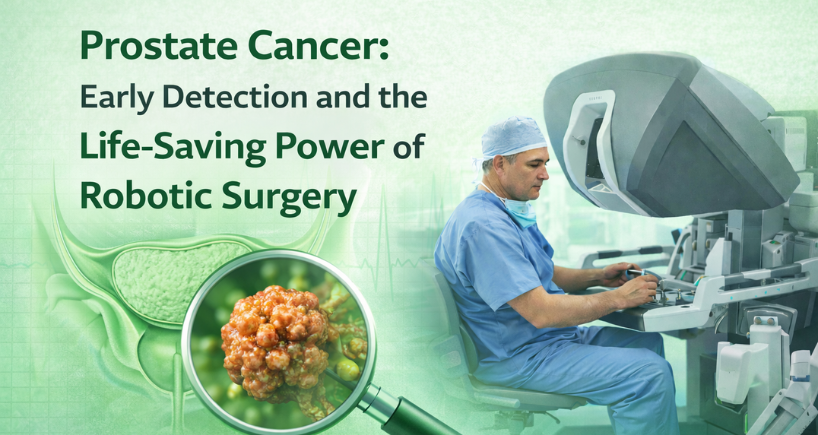


Prostate Cancer: Early Detection and the Life-Saving Power of Robotic Surgery
Expert Guide by Dr. Rohit Dadhwal, MCh Urology (AIIMS) | Robotic Surgeon & Uro-Oncologist | Fortis Hospital, Mohali
Prostate cancer (often referred to by patients as prostate gland cancer or a prostate tumor) is one of the most common cancers affecting men globally, and its incidence in India is rising rapidly. Every year, thousands of men across Punjab, Chandigarh, Haryana, and the surrounding regions face this daunting diagnosis. However, amidst the fear lies a powerful, life-saving reality: when detected early, prostate cancer is not just treatable; it is highly curable.
The landscape of prostate cancer treatment has undergone a monumental shift. Today, the most significant weapon in our surgical arsenal is Robotic-Assisted Radical Prostatectomy (robotic prostate removal surgery). At Fortis Hospital Mohali, we offer this gold-standard treatment using the world’s most advanced robotic platform. Under the expert guidance of Dr. Rohit Dadhwal, a leading prostate specialist and urologist, men now have access to surgical precision that eliminates cancer while fiercely protecting their quality of life—all without the need to travel abroad.
This guide will walk you through the essentials of prostate cancer, the critical nature of early detection, and why robotic surgery has become the ultimate game-changer in modern urology.
The Silent Threat: Understanding Prostate Cancer
The prostate is a small, walnut-sized gland unique to the male reproductive system. Situated just below the bladder, it produces the fluid that nourishes and transports sperm. Prostate cancer develops when abnormal cells within this gland begin to multiply uncontrollably.
Unlike many aggressive cancers, prostate cancer often grows at a remarkably slow pace. Many men can live for years without experiencing a single symptom. However, certain variants are highly aggressive and can spread (metastasize) to the lymph nodes and bones. This unpredictable nature makes routine screening (like a regular prostate checkup) the only reliable way to catch the disease before it becomes life-threatening.
Why Cases Are Surging in India
Detection rates in Indian urban centers (including Chandigarh, Mohali, and Delhi) are climbing to 19 cases per 100,000 men. This rise is driven by:
- Longer Lifespans: Age is the primary risk factor. Over 70% of cases occur in men over 65, though diagnoses in men in their 50s are increasingly common.
- Better Screening: Widespread use of the PSA blood test means we are catching cancers that previously went unnoticed.
- Lifestyle Shifts: Urbanization, sedentary routines, obesity, and diets high in red meat and low in fiber are contributing to higher risk profiles.
- Genetics: A man with a father or brother who had prostate cancer has double the risk of developing it himself.
Recognizing the Warning Signs
Early-stage prostate cancer is clinically silent. Symptoms typically only arise when a tumor has grown large enough to obstruct the urethra or has spread beyond the prostate. Do not wait for these urine flow problems to get screened:
- Difficulty starting urination or a weak, dribbling stream (urine blockage).
- Frequent urination, particularly waking multiple times at night (nocturia or frequent nighttime urination).
- A burning sensation during urination or painful ejaculation.
- Visible blood in the urine or semen.
- Deep, persistent pain in the lower back, hips, or thighs (a potential sign of bone spread).
Note: Many of these symptoms overlap with Benign Prostatic Hyperplasia (BPH), a non-cancerous prostate enlargement (swelling of the prostate). Never self-diagnose; always consult an expert urologist.
High-Tech Diagnosis: Seeing the Unseen
At Fortis Mohali, diagnosis is powered by state-of-the-art imaging and precision targeting, ensuring no guesswork is involved in your care.
- PSA Blood Test & DRE: The initial screening involves a simple blood test measuring Prostate-Specific Antigen (PSA) levels (the standard prostate test), combined with a Digital Rectal Examination (DRE). Elevated PSA signals the need for further investigation.
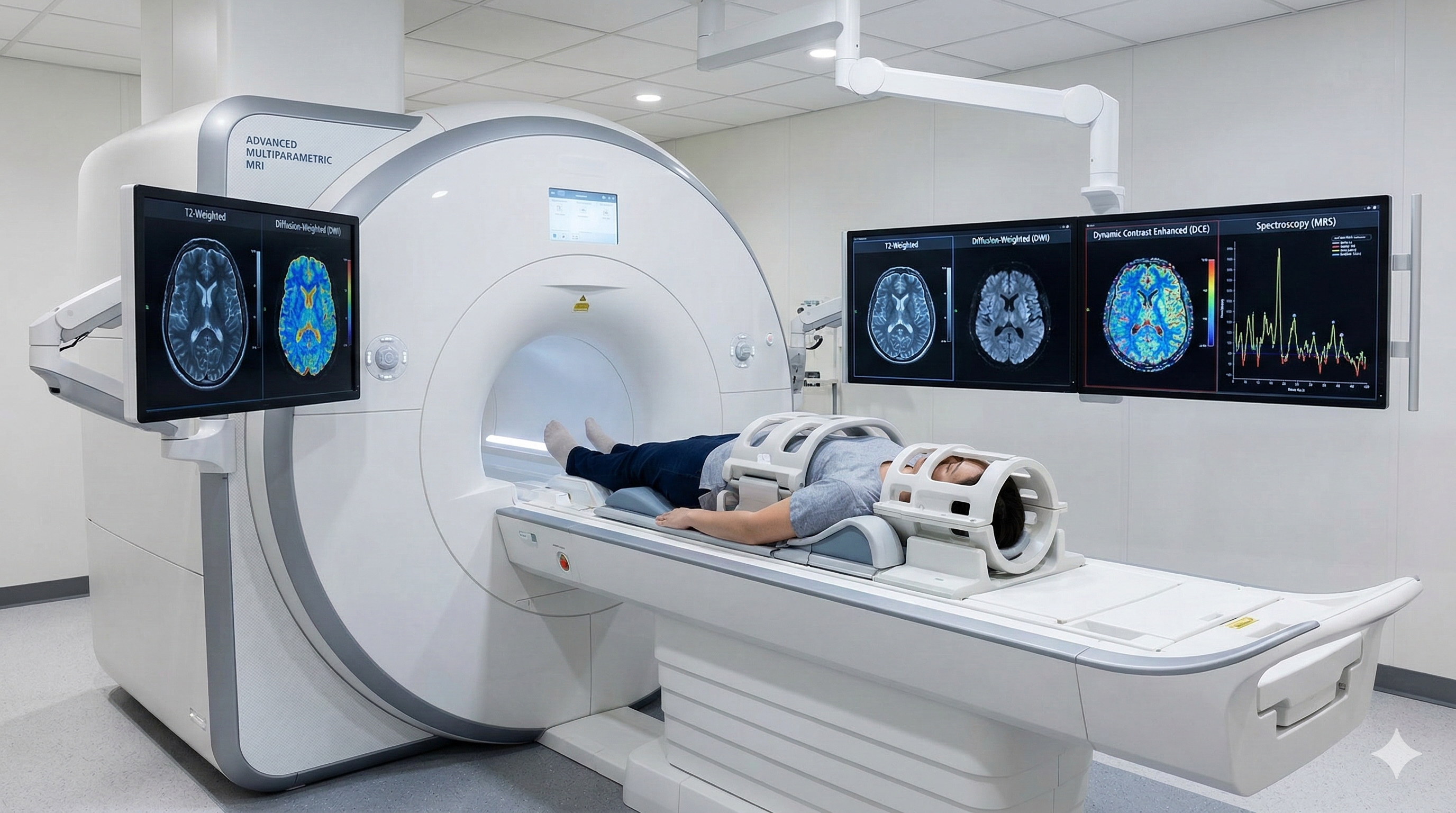
- Multiparametric MRI (mpMRI): We utilize advanced 3D imaging to visualize the prostate. mpMRI identifies highly suspicious lesions with remarkable clarity, generating a "roadmap" of the cancer.
- MRI-Guided Fusion Biopsy: Traditional blind biopsies can miss small tumors. We fuse the mpMRI images with live ultrasound, allowing Dr. Dadhwal to navigate directly to the targeted lesion and extract precise tissue samples to confirm the cancer's aggressiveness (Gleason Score).
- PSMA PET Scan: If cancer is confirmed, the PSMA PET scan—the world’s most advanced staging technology—detects even microscopic cancer spread anywhere in the body, allowing for flawless treatment planning.
The Robotic Revolution: A Game-Changer in Prostate Surgery
When prostate cancer is localized (confined to the gland), the most definitive path to a cure is the surgical removal of the entire prostate, known as a Radical Prostatectomy (prostate removal operation).
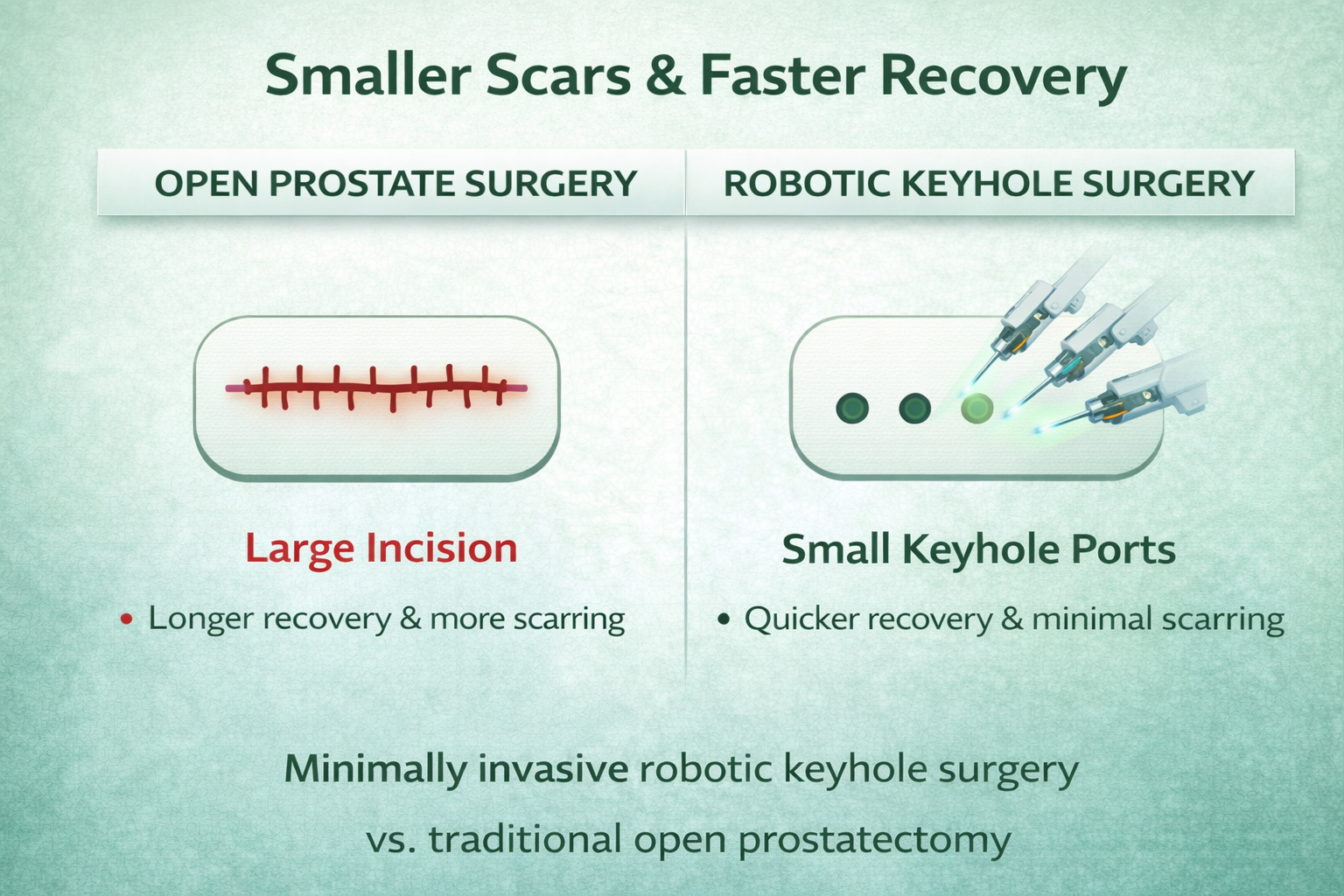
For decades, this was performed via traditional open surgery, which required a large abdominal incision. Because the prostate is buried deep within the narrow, confined space of the male pelvis—surrounded by a complex web of delicate nerves and blood vessels—open surgery was notoriously difficult. It often resulted in heavy bleeding, prolonged hospital stays, and high rates of permanent erectile dysfunction and urinary incontinence (urine leakage).
Enter Robotic-Assisted Surgery (advanced keyhole surgery). At Fortis Hospital Mohali, we utilize the 4th Generation Da Vinci Xi Surgical System, the most sophisticated robotic platform in the world. It has entirely transformed what is possible in the operating room.
How the Da Vinci Xi System Works
It is a common myth that the robot operates autonomously. In reality, the robotic system is purely an extension of the surgeon’s eyes and hands. Dr. Rohit Dadhwal is in 100% control at all times.
Instead of a large, painful incision, Dr. Dadhwal operates through four to five tiny "keyhole" ports, each less than a centimeter wide. He sits at an ergonomic console a few feet from the patient. Through the console, he views a breathtakingly clear, high-definition, 10x magnified, 3D image of the surgical field.
As he moves his hands at the console, the robotic system seamlessly translates his exact movements into the micro-movements of the miniature surgical instruments inside the patient’s body.
Why Robotics is the Ultimate Surgical Tool for Prostate Cancer
The male pelvis is a dark, cramped anatomical space. The prostate sits directly below the bladder, rests on the rectum, and is wrapped by the sphincter muscle (which controls urine flow) and the neurovascular bundles (which control erections). Navigating this area requires microscopic precision. Robotic surgery provides distinct, unmatched advantages:
- Seven Degrees of Freedom (Wrist-like Articulation): Human wrists have physical limitations. Standard laparoscopic instruments are rigid, like chopsticks. The Da Vinci’s robotic instruments, however, possess "EndoWrist" technology, offering seven degrees of motion. They can bend, rotate, and articulate far beyond the capabilities of the human hand, allowing Dr. Dadhwal to stitch, dissect, and operate flawlessly in the tightest corners of the pelvis.
- Tremor Filtration and Unmatched Stability: Even the most skilled surgeons have natural micro-tremors. The robotic system utilizes advanced software to filter out these tremors completely. The instruments move with absolute, mechanical stillness, ensuring that surgical cuts are flawlessly precise and adjacent healthy tissues remain untouched.
- Superior Cancer Eradication (Negative Margins): The primary goal of any cancer surgery is to remove the tumor entirely. The 10x 3D magnification allows the surgeon to clearly distinguish between cancerous tissue and healthy tissue. This precision dramatically increases the likelihood of achieving "negative surgical margins"—meaning no cancer cells are left behind, ensuring the highest possible oncological cure rate.
- Dramatically Reduced Blood Loss: Traditional open prostatectomy often involved significant bleeding, sometimes requiring blood transfusions. The enhanced 3D vision of the robotic system allows Dr. Dadhwal to identify and cauterize even the tiniest blood vessels before they bleed. Consequently, blood loss is minimal, and transfusions are exceptionally rare.
Nerve-Sparing Mastery: Protecting Your Quality of Life
The greatest fear most men have regarding prostate surgery is the loss of sexual function (erectile dysfunction) and the loss of bladder control (urinary incontinence/urine control issues). Robotic surgery is specifically designed to mitigate these risks through a technique called "Nerve-Sparing Prostatectomy."
Running intimately along the outer edges of the prostate gland are microscopic nerve bundles responsible for triggering erections. Similarly, the urinary sphincter muscle, which acts as the "valve" for the bladder, is attached directly to the apex of the prostate. In traditional open surgery, these structures were frequently damaged because the surgeon simply could not see them clearly in the bloody, confined surgical field.
With the Da Vinci Xi system, the surgical field is magnified 10 times. Dr. Dadhwal can physically see these delicate, hair-thin nerve bundles and carefully peel them away from the cancerous prostate millimeter by millimeter. By meticulously preserving the neurovascular bundles and leaving the maximum length of the sphincter muscle intact, robotic surgery vastly improves functional outcomes.
- Erectile Function: Patients undergoing nerve-sparing robotic surgery have a significantly higher probability of recovering erectile function compared to open surgery.
- Urinary Continence: The precise suturing of the bladder back to the urethra (anastomosis) ensures a watertight seal, leading to a much faster return of complete bladder control.
What to Expect: The Rapid Robotic Recovery Journey
Because robotic surgery is minimally invasive and inflicts incredibly little trauma on the body, the recovery process is astoundingly fast.
- Days 1 to 3: The Hospital Stay: Patients wake up with drastically less pain than open surgery patients. Most require only basic, mild painkillers. We encourage patients to get out of bed and walk the very next morning to promote blood flow. By day 2 or 3, the vast majority of patients are comfortably discharged to go home. A urinary catheter (urine tube) is left in place to allow the new internal bladder connection to heal.
- Weeks 1 to 2: Healing at Home: You will spend the first week resting and taking short walks. After 7 to 10 days, you will return to Fortis Mohali to have the catheter painlessly removed. Due to the tiny keyhole incisions, the risk of wound infection is nearly zero, and scarring is almost invisible.
- Weeks 3 to 6: Returning to Normalcy: Most men return to desk work and light daily activities within 2 to 3 weeks. After catheter removal, some mild urinary leakage is expected as the sphincter muscle strengthens. Dr. Dadhwal’s team will guide you through dedicated pelvic floor (Kegel) exercises. Because of the robotic precision used to preserve the sphincter, full urinary continence returns much faster. Sexual function recovery takes longer—typically 6 to 24 months as the spared nerves slowly "wake up" and heal, often supported by prescribed penile rehabilitation protocols.
Why Choose Fortis Hospital Mohali for Robotic Prostate Care?
When facing prostate cancer, the experience of your surgeon and the technology at their disposal dictate your future. Fortis Hospital Mohali is the unrivaled leader in robotic surgical oncology in North India.
- Pioneers in Robotics: We run North India's largest and most comprehensive robotic surgery program, having successfully performed over 3,000 robotic procedures.
- The Da Vinci Xi Advantage: We do not compromise on technology. The 4th Generation Da Vinci Xi is the absolute pinnacle of surgical robotics available today.
- Elite Surgical Leadership: Dr. Rohit Dadhwal brings unparalleled expertise to the region. With an MCh in Urology from the premier AIIMS (New Delhi) and deep specialization in Robotic Uro-Oncology, he combines elite academic pedigree with high-volume surgical mastery.
- Comprehensive Cancer Ecosystem: From advanced PSMA PET diagnostics to cutting-edge robotic surgery, radiation therapy, and post-operative rehabilitation, everything you need is under one roof.
- Uncompromising Safety: As a JCI (Joint Commission International) and NABH accredited institution, Fortis Mohali adheres to the strictest global standards for patient safety and clinical excellence.

Take Action Today: Your Path to a Cure
Prostate cancer does not have to be a life-limiting diagnosis. Through the power of early detection and the unmatched precision of robotic surgery, men can conquer this disease and return to the lives they love, whole and healthy.
If you are a man over the age of 50, or if you are over 45 with a family history of the disease, do not wait for symptoms to force your hand. A simple PSA blood test takes only minutes but can secure your future.
If you have been diagnosed with prostate cancer, remember that you have options, and you deserve the best technology available. Choose precision. Choose rapid recovery. Choose robotic surgery.
Schedule Your Expert Consultation
Do not leave your prostate health to chance. Book a comprehensive evaluation with Dr. Rohit Dadhwal to discuss PSA screening, MRI diagnostics, or the life-changing benefits of a robotic prostatectomy.
Contact Us – Fortis Hospital Mohali
For appointments, consultations, and diagnostic services, please contact:
📞 72728 72728
Our care team will assist you with:
Doctor appointments
Diagnostic and screening services
Health check-ups
Call now to book your appointment at Fortis Hospital, Mohali.
Categories
Clear allMeet the doctor

- Urology | Uro-Oncology | Paediatric Urology | Urology
-
 9 Years
-
 1100
1100
Related Blogs
View all



Adult Circumcision: Debunking Facts and Myths | Fortis Health Connect Blogs

Is Beer Good for Kidney Stones ? - Myths Vs Facts | Fortis Healthcare





FAQs

Keep track of your appointments, get updates & more!

