
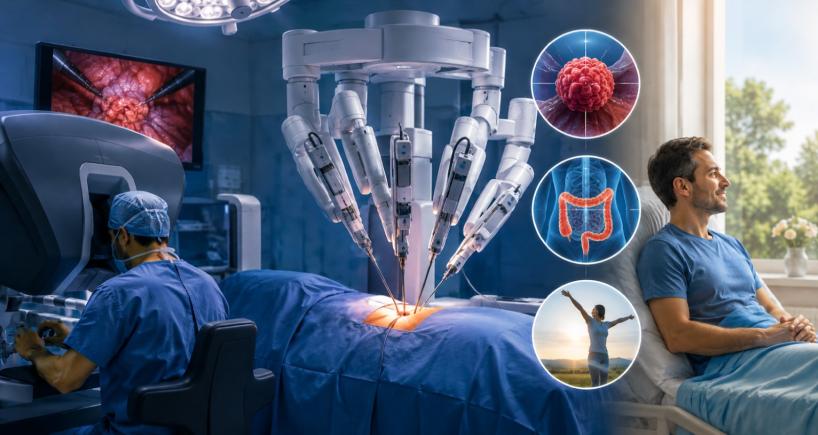


Robotic Cancer Surgery Benefits Procedure and Recovery
Robotic cancer surgery is a minimally invasive surgical technique in which the surgeon uses a robotic-assisted system to perform complex procedures with enhanced precision, flexibility, and control. It is suitable for selected cancers and may offer benefits such as smaller incisions, less blood loss, reduced pain, shorter hospital stays, and faster recovery. However, not every patient or every type of cancer is suitable for robotic surgery.
Robotic Cancer Surgery: Benefits, Procedure & Recovery
Hearing that you need cancer surgery can feel overwhelming. Along with concerns about the diagnosis itself, many patients wonder about the type of surgery they will undergo and how long recovery will take.
Over the past decade, robotic-assisted surgery has transformed the treatment of many cancers by enabling surgeons to perform highly precise operations through small incisions. While it is not the right choice for every patient, robotic surgery has become an important option for carefully selected cancers.
This guide explains how robotic cancer surgery works, its advantages, the procedure, recovery process, and when it may be recommended.
What Is Robotic Cancer Surgery?
Robotic cancer surgery is a minimally invasive surgical approach in which a specially trained surgeon operates using a robotic-assisted surgical system. Despite its name, the robot does not perform the surgery on its own. Every movement is controlled in real time by the surgeon.
The robotic system translates the surgeon's hand movements into precise movements of tiny surgical instruments inside the body. A high-definition, magnified 3D view of the surgical field allows the surgeon to operate with exceptional accuracy, especially in areas that are difficult to access through conventional surgery.
Key Takeaway
Robotic surgery is surgeon-controlled technology, not automated surgery. The surgeon remains in complete control throughout the procedure.
How Does Robotic Cancer Surgery Work?
During robotic-assisted surgery:
- The patient is given general anaesthesia.
- The surgeon makes a few small incisions instead of one large cut.
- A tiny camera and specialised surgical instruments are inserted through these incisions.
- The surgeon sits at a nearby console and controls the robotic arms.
- The robotic system filters hand tremors and enables highly precise movements.
- Once the procedure is completed, the instruments are removed, and the small incisions are closed.
The robotic system enhances the surgeon's capabilities but does not make decisions or act independently.
Which Cancers Can Be Treated with Robotic Surgery?
Robotic surgery may be an option for selected patients with certain solid tumours. Suitability depends on factors such as the type, stage, size, and location of the cancer, as well as the patient's overall health.
Robotic-assisted surgery may be considered for some cases of:
- Prostate cancer
- Kidney cancer
- Bladder cancer
- Colorectal cancer
- Rectal cancer
- Stomach cancer
- Oesophageal cancer
- Pancreatic cancer (selected cases)
- Liver cancer (selected cases)
- Gynaecological cancers
- Head and neck cancers
- Lung cancer (selected cases)
Not every cancer can be treated robotically. Your surgical oncologist will determine whether it is the most appropriate approach for your condition.
What Are the Benefits of Robotic Cancer Surgery?
For suitable patients, robotic-assisted surgery offers several potential advantages.
Greater Surgical Precision
The robotic system provides enhanced dexterity and precision, allowing surgeons to perform delicate procedures with greater control.
Smaller Incisions
Instead of one large incision, robotic surgery uses several small incisions, which may result in less tissue trauma.
Reduced Blood Loss
Greater precision may help minimise bleeding during surgery, although this varies depending on the procedure and individual patient.
Less Pain After Surgery
Smaller incisions often result in less post-operative discomfort, potentially reducing the need for pain medication.
Faster Recovery
Many patients are able to resume normal daily activities sooner compared with traditional open surgery, depending on the complexity of the operation.
Shorter Hospital Stay
Some robotic procedures may allow for a shorter hospital stay, although the duration varies according to the type of surgery and the patient's recovery.
Better Access to Difficult Areas
The robotic instruments can move with greater flexibility than the human wrist, enabling surgeons to work effectively in confined or complex anatomical spaces.
Robotic Surgery vs Open Surgery
Feature | Robotic Surgery | Open Surgery |
|---|---|---|
Incisions | Small | Larger |
Blood loss | Often less | May be greater |
Pain | Usually less | Often more |
Hospital stay | Often shorter | Usually longer |
Recovery | Generally quicker | May take longer |
Surgical access | Enhanced precision in confined spaces | Direct access through a larger incision |
The most appropriate approach depends on the cancer type, its location, and the patient's individual circumstances.
Is Robotic Surgery Better Than Laparoscopic Surgery?
Both robotic and laparoscopic surgery are minimally invasive techniques. However, robotic surgery offers some technological advantages in selected procedures.
Laparoscopic Surgery | Robotic Surgery |
|---|---|
Two-dimensional or high-definition view | High-definition 3D magnified view |
Straight instruments | Wristed instruments with greater range of motion |
Manual instrument control | Enhanced precision with robotic assistance |
Effective for many procedures | Particularly useful for complex surgeries in confined spaces |
Both approaches have an important role in modern cancer care. The choice depends on the specific procedure and the expertise of the surgical team.
Who Is a Good Candidate for Robotic Cancer Surgery?
You may be considered for robotic surgery if:
- Your cancer is localised.
- The tumour can be safely removed using a minimally invasive approach.
- Your overall health allows you to undergo surgery.
- Robotic surgery is expected to provide outcomes comparable to or better than other surgical approaches for your condition.
Your surgeon will evaluate imaging, biopsy reports, medical history, and overall fitness before recommending the most appropriate surgical option.
What Happens Before Robotic Cancer Surgery?
Before the procedure, you may undergo:
- Blood investigations
- CT scan, MRI, or PET-CT scan, if indicated
- Anaesthesia evaluation
- Review of current medications
- Assessment of heart and lung function, when required
- Nutritional assessment for selected patients
Your surgical team will explain the procedure, expected benefits, possible risks, and recovery plan before surgery.
What Can You Expect After Robotic Cancer Surgery?
Recovery depends on the type of cancer and the complexity of the operation.
Many patients can expect:
- Early mobilisation, often within a day of surgery
- Gradual return to eating, depending on the procedure
- Pain management tailored to individual needs
- Instructions on wound care and activity restrictions
- Follow-up appointments to monitor healing and discuss the pathology report
Although recovery may be faster than with open surgery, it is important to follow your surgeon's advice regarding physical activity and return to work.
Are There Any Risks?
Like all surgeries, robotic-assisted procedures carry potential risks, including:
- Bleeding
- Infection
- Reactions to anaesthesia
- Injury to nearby organs or structures
- Blood clots
- Need to convert to open surgery if required for patient safety
Your surgeon will discuss these risks in the context of your specific procedure.
Myths vs Facts About Robotic Cancer Surgery
Myth | Fact |
|---|---|
The robot performs the surgery on its own. | The surgeon controls every movement of the robotic system. |
Robotic surgery is suitable for every cancer. | It is recommended only for selected patients and cancers. |
Robotic surgery guarantees better outcomes. | Outcomes depend on the cancer type, stage, patient factors, and surgical expertise. |
Recovery is instant. | Recovery is often quicker than open surgery, but healing still takes time. |
Why Experience Matters in Robotic Cancer Surgery
The success of robotic-assisted surgery depends not only on advanced technology but also on the expertise of the surgical team. Careful patient selection, meticulous planning, and coordinated post-operative care are essential to achieving the best possible outcomes.
At Fortis Hospital, Shalimar Bagh, eligible patients are evaluated by a multidisciplinary team that includes surgical oncologists, medical oncologists, radiologists, anaesthesiologists, and other specialists. When appropriate, robotic-assisted surgery is offered as part of a personalised cancer treatment plan, supported by advanced diagnostic services, modern operation theatres, critical care facilities, and comprehensive rehabilitation.
Key Takeaways
- Robotic cancer surgery is a minimally invasive, surgeon-controlled technique.
- It may offer benefits such as smaller incisions, reduced pain, less blood loss, and faster recovery for selected patients.
- Not every cancer or every patient is suitable for robotic surgery.
- The decision depends on the type, stage, and location of the cancer, as well as the patient's overall health.
- A multidisciplinary evaluation helps determine the most appropriate treatment approach.
When Should You Consult a Surgical Oncologist?
You should seek expert advice if:
- You have been diagnosed with a cancer that may require surgery.
- You want to know whether robotic surgery is an option for your condition.
- You are considering a second opinion about your treatment plan.
- You would like to understand the differences between robotic, laparoscopic, and open surgery.
A detailed consultation can help you understand the most appropriate surgical approach based on your individual diagnosis.
Categories
Clear allMeet the doctor

- Gastroenterology and Hepatobiliary Sciences | Gastrointestinal Surgery | Metabolic & Bariatric Surgery | Robotic Surgery | GI, Minimal Access and Bariatric Surgery | GI Oncology
- Oncology | Oncology | Surgical Oncology | Robotic Surgery | GI Oncology
- General Surgery | General and Laparoscopic Surgery | General and Minimal Access Surgery | Bariatric Surgery | General Surgery | Robotic Surgery
-
 35 Years
-
 2500
2500
Related Blogs
View all









FAQs
Is robotic cancer surgery safe?
Yes. When performed by an experienced surgical team and for appropriately selected patients, robotic-assisted cancer surgery is considered a safe and well-established treatment option.
Will robotic surgery cure my cancer?
The goal of surgery depends on the type and stage of cancer. For some early-stage cancers, surgery may be curative. In other cases, it may be part of a broader treatment plan that includes chemotherapy or radiation therapy.
Is robotic surgery painful?
Patients often experience less post-operative pain compared with traditional open surgery, although individual experiences vary
How long does recovery take after robotic cancer surgery?
Recovery varies depending on the type of surgery and your overall health. Many patients return to routine activities sooner than after open surgery, but your surgeon will advise you on activity restrictions and follow-up care.
Is robotic surgery available for all cancers?
No. Robotic surgery is suitable only for selected cancers and patients. Your surgeon will determine whether it is the best option for your condition.

Keep track of your appointments, get updates & more!

