
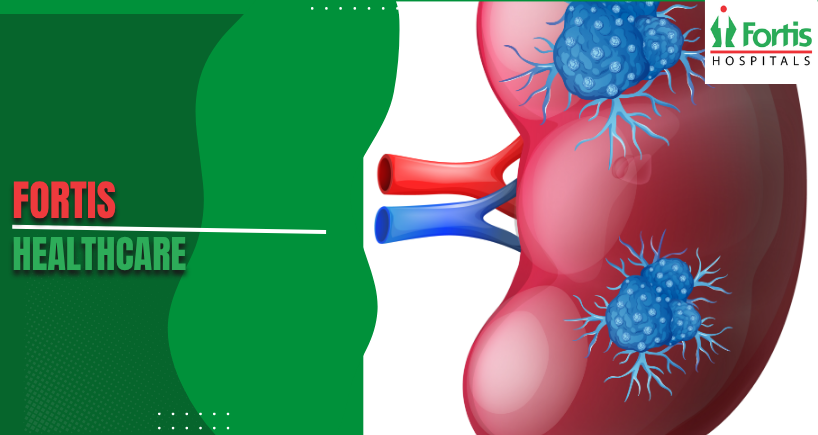


ROBOTIC PARTIAL NEPHRECTOMY FOR COMPLETELY ENDOPHYTIC RENAL TUMORS
A patient with a completely endophytic renal tumor, a high-complexity lesion entirely embedded within the kidney parenchyma, underwent a robotic partial nephrectomy at Fortis Hospitals, Bengaluru. Such tumors are particularly challenging as they are not visible externally and lie close to critical structures such as the renal hilum and collecting system. Using robotic technology with enhanced 3D visualization and precision, the surgical team performed meticulous hilar dissection and tumor excision while preserving maximum healthy kidney tissue. Intraoperative robotic ultrasound helped accurately identify tumor boundaries and guide precise resection. The procedure achieved complete tumor removal with negative margins, minimal blood loss, and optimal preservation of kidney function, highlighting the effectiveness of robotic surgery in managing complex renal tumors.
Complete endophytic renal tumors are challenging tumors fully contained within the renal parenchyma, often representing high-complexity cases scored as 3 points on the “E” (exophytic/endophytic) component of the RENAL nephrometry system. These masses, commonly renal cell carcinomas, pose risks of incomplete resection or excessive nephron loss during surgery.
Fig.1 RENAL Nephrometry Score
Diagnosis
E
ndophytic masses appear as non-protruding lesions on CT or MRI, with heterogeneous enhancement and potential deformation of the renal pelvis. The RENAL score quantifies complexity: R (radius), E (endophytic, 3 for complete), N (nearness to hilum), A (anterior/posterior), L (location), guiding surgical planning. Biopsy may confirm pathology but is not always needed preoperatively
Fig. 2,3,4. CT images of completely endophytic renal tumors.
Surgical Challenges
These tumors are invisible externally, increasing risks of positive margins (up to 13% in laparoscopic approaches) and prolonged warm ischemia time (WIT >25 min harms function).
These tumors carry increased risk of vascular and pelvicalyceal system injury and large defect requiring meticulous reconstruction. Robotic-assisted partial nephrectomy (RAPN) addresses limitations of open or laparoscopic methods via 3D visualization and dexterity.
Role of Robotic Surgery
RAPN enables precise hilar dissection and tumor excision for endophytic masses, matching open surgery’s oncologic outcomes (5-year metastasis-free survival ~96%, cancer-specific survival >93%) with less blood loss and shorter stays. In multicenter trials, RAPN achieved 0% positive margins and mean WIT of 20.3 min versus historical laparoscopic 25.2 min.
Intra-operative Ultrasound
A robotic ultrasound probe, wielded autonomously by the surgeon, identifies tumor borders invisible to the naked eye, optimizes resection margins, and maps vasculature to minimize WIT. It enhances precision during enucleation or excision, reducing ischemia and preserving function without needing an assistant.
Fig.5 Intra operative Drop down Ultrasound in progress to identify endophytic renal tumor during a robotic partial nephrectomy.
Procedure Steps
• Port placement and hilar exposure via transperitoneal approach.
• Intraoperative ultrasound to delineate tumor, confirm no multifocality.
• Selective clamping, tumor excision with adequate margin, renorrhaphy.
• Unclamping; typical warm ischemia time <25 min.
Fig. 6. Robotic enucleation of endophytic renal tumor.
Outcomes
Robot assisted partial nephrectomy for completely endophytic renal tumors yields trifecta success (negative margins, ≥90% eGFR preservation at 6 months, no major complications). Long-term CKD-free survival nears 95%, equ
Categories
Clear allMeet the doctor

- Urology | Uro-Oncology | Urology
- Organ Transplant | Kidney Transplant
-
 20 Years
-
 1800
1800
Related Blogs
View all



Adult Circumcision: Debunking Facts and Myths | Fortis Health Connect Blogs

Is Beer Good for Kidney Stones ? - Myths Vs Facts | Fortis Healthcare





FAQs

Keep track of your appointments, get updates & more!

