
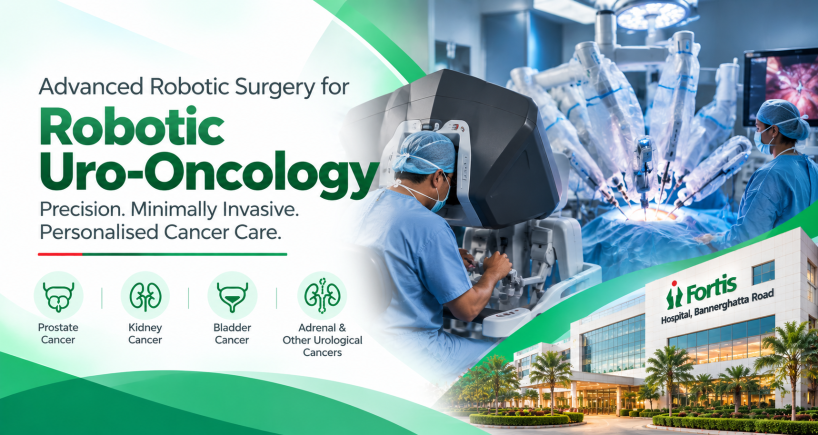


Robotic Uro-Oncology Advanced Robotic Surgery for Urological Cancers
Urological cancers can affect the prostate, kidneys, urinary bladder, adrenal glands, and other parts of the urinary system. With advancements in minimally invasive surgery, robotic-assisted techniques have become an important option for selected patients requiring complex uro-oncological procedures.
Robotic uro-oncology combines the expertise of specialised uro-oncologists with advanced robotic technology to perform precise and minimally invasive cancer surgeries.
For patients looking for robotic uro-oncology treatment in Bangalore, understanding the procedure, benefits, recovery, and available treatment options can help in making an informed decision.
What is Robotic Uro-Oncology?
Robotic uro-oncology refers to the use of robotic-assisted surgical technology for the treatment of urological cancers.
Unlike traditional open surgery, robotic surgery is performed through small incisions. The surgeon controls specialised robotic instruments from a console, allowing enhanced visualisation and precise movement during complex procedures.
Robotic-assisted surgery may be considered for selected patients with:
- Prostate cancer
- Kidney cancer
- Bladder cancer
- Adrenal tumours
- Ureteral tumours
- Other complex urological cancers
The suitability of robotic surgery depends on factors such as the type and stage of cancer, tumour location, overall health, previous treatments, and the treating surgeon's assessment.
Robotic Prostate Cancer Surgery
Robotic-assisted radical prostatectomy is one of the commonly performed robotic procedures for localised prostate cancer.
During the procedure, the prostate gland and, when required, surrounding tissues and lymph nodes are removed using robotic-assisted techniques.
The potential advantages of robotic prostate cancer surgery may include:
- Smaller surgical incisions
- Reduced blood loss
- Less postoperative discomfort
- Enhanced surgical precision
- Shorter hospital stays in appropriate cases
- Faster return to routine activities for some patients
An important objective of prostate cancer surgery is cancer control while preserving surrounding structures wherever medically appropriate.
Robotic Kidney Cancer Surgery
For selected patients with kidney tumours, robotic-assisted surgery can be used to perform partial nephrectomy or, in appropriate cases, radical nephrectomy.
A robotic partial nephrectomy aims to remove the tumour while preserving as much healthy kidney tissue as possible.
This approach may be particularly relevant when kidney function preservation is an important consideration.
Robotic Bladder Cancer Surgery
For selected patients with bladder cancer requiring extensive surgery, robotic-assisted techniques may be used for procedures such as radical cystectomy.
Depending on the patient's condition and treatment plan, the procedure may also involve lymph-node removal and reconstruction of the urinary tract.
Because bladder cancer surgery can be complex, treatment planning usually requires a multidisciplinary evaluation involving uro-oncology, oncology, radiology, pathology and other specialists as required.
Why Choose Robotic Surgery for Urological Cancer?
Robotic technology provides surgeons with enhanced visualisation and highly articulated instruments that can be useful when operating around delicate anatomical structures.
Potential advantages of robotic-assisted surgery include:
1. Enhanced Visualisation
The robotic system provides magnified, high-definition visualisation of the surgical field, helping the surgeon identify important anatomical structures.
2. Greater Instrument Precision
Robotic instruments are designed to provide precise movements in confined surgical spaces.
3. Minimally Invasive Approach
Robotic procedures generally use small incisions rather than a large open surgical incision.
4. Potentially Faster Recovery
Depending on the procedure and individual patient factors, minimally invasive surgery may facilitate earlier mobilisation and recovery.
5. Reduced Blood Loss
For certain procedures, robotic-assisted surgery may be associated with reduced blood loss compared with traditional open approaches.
However, robotic surgery is not automatically the right choice for every patient. The treatment approach should be determined after evaluating the cancer and the patient's individual medical condition.
Who May Be a Candidate for Robotic Uro-Oncology Surgery?
Robotic surgery may be considered for patients diagnosed with certain urological cancers, particularly when minimally invasive surgery is technically appropriate.
Your uro-oncology team may evaluate:
- Cancer type and stage
- Tumour size and location
- Whether the cancer has spread
- Kidney and urinary function
- Previous surgeries or treatments
- General health and medical conditions
- Suitability for minimally invasive surgery
A detailed diagnostic evaluation is essential before deciding on surgery.
Robotic Uro-Oncology at Fortis Hospital, Bannerghatta Road, Bengaluru
At Fortis Hospital, Bannerghatta Road, Bengaluru, patients with urological cancers can receive evaluation and treatment through a multidisciplinary approach involving specialists in uro-oncology, oncology, radiology, pathology and other relevant specialties.
The treatment plan is personalised according to the patient's diagnosis, cancer stage and overall health.
Patients can discuss whether robotic-assisted cancer surgery is appropriate for their condition with a qualified uro-oncology specialist.
When Should You Consult a Uro-Oncologist?
You should consider consulting a uro-oncology specialist if you have been diagnosed with or are being evaluated for:
- Prostate cancer
- Kidney cancer
- Bladder cancer
- Adrenal tumours
- Ureteral cancer
- A suspicious mass or tumour in the urinary system
- Recurring blood in the urine
- An abnormal imaging or biopsy report
Early specialist evaluation can help determine the appropriate diagnostic and treatment pathway.
Frequently Asked Questions About Robotic Uro-Oncology
Is robotic surgery safe for cancer treatment?
Robotic-assisted surgery is an established minimally invasive surgical approach for selected urological cancers. Its suitability depends on the patient's diagnosis, cancer stage, anatomy and overall health.
Is robotic surgery better than open surgery?
Robotic and open surgery have different advantages and limitations. The appropriate approach depends on the specific cancer and patient. Your surgeon can recommend the most suitable option after evaluation.
How long does robotic cancer surgery take?
The duration varies depending on the type and complexity of the procedure, the patient's anatomy and whether additional procedures are required.
How long does recovery take after robotic surgery?
Recovery varies from patient to patient and depends on the procedure performed, overall health and postoperative progress. Your surgeon will provide procedure-specific recovery guidance.
Can robotic surgery treat prostate cancer?
Yes. Robotic-assisted radical prostatectomy is used for selected patients with localised prostate cancer.
Can kidney cancer be treated with robotic surgery?
Yes. Selected kidney cancer patients may be candidates for robotic partial nephrectomy or radical nephrectomy, depending on the tumour and the patient's clinical condition.
Can bladder cancer be treated with robotic surgery?
For selected patients requiring radical cystectomy, robotic-assisted surgery may be an option. Treatment depends on the stage and characteristics of the bladder cancer.
Take the Next Step
A diagnosis of urological cancer can be overwhelming, but advances in robotic uro-oncology and minimally invasive cancer surgery have expanded treatment options for appropriately selected patients.
If you or a family member has been diagnosed with a urological cancer, consult a uro-oncology specialist to understand the available treatment options and whether robotic-assisted surgery may be appropriate.
Consult a Uro-Oncology Specialist at Fortis Hospital, Bannerghatta Road, Bengaluru.
Categories
Clear allRelated Blogs
View all



Adult Circumcision: Debunking Facts and Myths | Fortis Health Connect Blogs

Is Beer Good for Kidney Stones ? - Myths Vs Facts | Fortis Healthcare





FAQs
Is robotic surgery safe for cancer treatment?
Robotic-assisted surgery is an established minimally invasive surgical approach for selected urological cancers. Its suitability depends on the patient's diagnosis, cancer stage, anatomy and overall health.
Is robotic surgery better than open surgery?
Robotic and open surgery have different advantages and limitations. The appropriate approach depends on the specific cancer and patient. Your surgeon can recommend the most suitable option after evaluation.
How long does robotic cancer surgery take?
The duration varies depending on the type and complexity of the procedure, the patient's anatomy and whether additional procedures are required.
How long does recovery take after robotic surgery?
Recovery varies from patient to patient and depends on the procedure performed, overall health and postoperative progress. Your surgeon will provide procedure-specific recovery guidance.
Can robotic surgery treat prostate cancer?
Yes. Robotic-assisted radical prostatectomy is used for selected patients with localised prostate cancer.
Can kidney cancer be treated with robotic surgery?
Yes. Selected kidney cancer patients may be candidates for robotic partial nephrectomy or radical nephrectomy, depending on the tumour and the patient's clinical condition.
Can bladder cancer be treated with robotic surgery?
For selected patients requiring radical cystectomy, robotic-assisted surgery may be an option. Treatment depends on the stage and characteristics of the bladder cancer.

Keep track of your appointments, get updates & more!

