
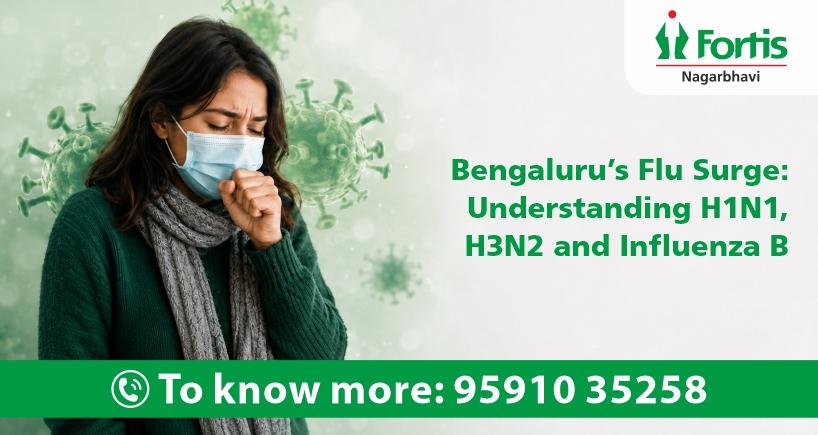


Seasonal Influenza Surge in Bengaluru - Understanding H1N1 H3N2 and Influenza B
Bengaluru is currently witnessing an increase in seasonal influenza and influenza-like respiratory illnesses. Seasonal influenza is predominantly caused by Influenza A—including H1N1 and H3N2—and Influenza B viruses, which can circulate throughout the year in tropical countries such as India.
What We Are Seeing Clinically
At Fortis Hospital, Nagarbhavi, our Pulmonology services have observed an approximately 30–40% increase in outpatient and inpatient patient load in recent weeks.
Most patients experience a self-limiting illness with fever, cough, sore throat, body aches, headache and fatigue. However, we are also seeing patients developing severe pneumonia, low oxygen levels and respiratory failure requiring intensive care, with a few requiring mechanical ventilation.
Influenza A & B
H1N1 and H3N2 are subtypes of Influenza A, while Influenza B is another important cause of seasonal influenza. All can cause significant respiratory illness, particularly in vulnerable individuals.
Warning Signs
Seek prompt medical attention for breathlessness, falling oxygen saturation, chest pain, persistent or worsening fever, severe weakness, confusion, or deterioration after initial improvement.
Who Is at Higher Risk?
Young children, adults aged 65 years and above, pregnant women, and people with asthma, COPD, heart disease, diabetes or weakened immunity have a higher risk of complications.
Early Treatment Matters
High-risk patients and those with severe or worsening illness should seek medical assessment early. Antiviral treatment, when indicated, is most beneficial when initiated promptly.
Prevention Matters
Annual influenza vaccination, regular hand hygiene, respiratory etiquette, good indoor ventilation, staying home when unwell and avoiding close contact with vulnerable individuals can help reduce transmission and complications.
Stay informed, stay vigilant and seek timely respiratory care.
Categories
Clear allMeet the doctor

- Pulmonology | Sleep Medicine
- Interventional Pulmonology | Interventional Pulmonology
-
 11 Years
-
 850
850
Related Blogs
View all







FAQs

Keep track of your appointments, get updates & more!

