
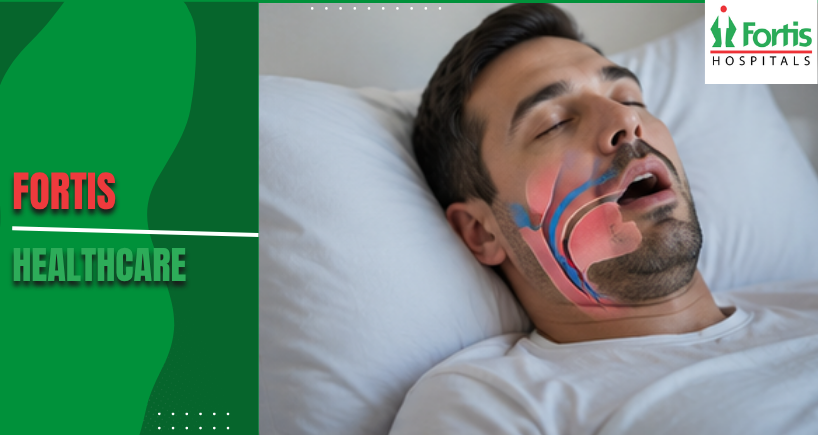


Snoring and Sleep Apnea A Hidden Cause of Heart and Lung Problems
Snoring is widely treated as a social inconvenience something a bed-partner endures, or a punchline at the breakfast table. But behind the noise lies a clinical reality that is frequently overlooked: in millions of people, loud or habitual snoring is the most audible symptom of Obstructive Sleep Apnea (OSA), a condition with well-established and serious consequences for the heart, lungs, and brain.
OSA occurs when the muscles of the upper airway relax during sleep, causing the throat to narrow or close completely. Breathing stops, oxygen levels fall, the brain triggers an emergency arousal, breathing resumes and the cycle repeats, sometimes hundreds of times a night. The person rarely remembers these micro-awakenings. What accumulates instead is a silent burden of cardiovascular strain, inflammation, and organ stress that worsens with every undiagnosed year.
How Large Is the Problem in India?
Considerably larger than most people and many doctors realise. A landmark polysomnographic study from AIIMS Bhopal, conducted on a population-based sample from 2019 to 2023, found that almost three-quarters of the Indian adults studied had at least mild OSA, with moderate-to-severe disease present in 30.5% — roughly one in three.¹ Those with the highest apnoea-hypopnoea indices were nearly twice as likely to have hypertension and more than twice as likely to have diabetes and metabolic syndrome compared to those with minimal sleep-disordered breathing.
Globally, OSA affects an estimated 936 million adults aged 30–69, with India among the top four countries by burden.² Yet despite this scale, OSA remains dramatically underdiagnosed — largely because neither patients nor their primary physicians connect disrupted sleep with cardiovascular disease.
What OSA Does to the Heart
Every obstructive event during sleep produces a cascade of physiological disturbances. Oxygen desaturation activates the sympathetic nervous system, driving surges in heart rate and blood pressure. Repeated nightly, this creates a pattern of sustained sympathetic over-activation that persists even during waking hours. Simultaneously, the large negative pressure swings generated during airway obstruction increase mechanical stress on the heart walls.
The cardiovascular consequences are substantial and well-documented. A 2023 NIH-supported study involving two large population cohorts found that for every measurable increase in hypoxic burden — the cumulative oxygen debt caused by apnoeic episodes — there was a 45% increase in the risk of a primary cardiovascular event.³ Across the broader literature, OSA is independently associated with systemic hypertension, coronary artery disease, heart failure, atrial fibrillation, and stroke. In cardiovascular clinics, OSA is identified in 40–80% of patients with these conditions — yet most arrive without a prior OSA diagnosis.⁴
Atrial fibrillation deserves particular attention. OSA promotes atrial remodelling through hypoxia, inflammation, and autonomic instability. Patients with untreated OSA who undergo catheter ablation for AF face substantially higher recurrence rates than those with treated disease.
What OSA Does to the Lungs
The pulmonary consequences are equally serious. Chronic intermittent hypoxia triggers pulmonary vasoconstriction, progressively elevating pressure in the pulmonary arterial system. Pulmonary hypertension — high blood pressure in the lung's own circulation — develops in a significant proportion of moderate-to-severe OSA patients and compounds right heart strain. OSA also worsens outcomes in patients with pre-existing COPD, a combination known clinically as overlap syndrome, which carries a markedly higher risk of hospitalisation and death than either condition alone.
Recognising OSA: Symptoms Beyond Snoring
Snoring is the most obvious sign, but OSA manifests across waking hours too. Seek evaluation if you or someone you know experiences:
- Witnessed pauses in breathing during sleep
- Waking with a gasping sensation or dry mouth
- Unrefreshing sleep despite adequate hours in bed
- Excessive daytime sleepiness — falling asleep while reading, watching television, or driving
- Morning headaches from overnight CO₂ retention
- Poorly controlled hypertension despite medication
- Recurrent atrial fibrillation or unexplained heart failure
Current guidelines recommend routine OSA screening in all patients with resistant hypertension, refractory atrial fibrillation, or a history of stroke — regardless of whether they snore.⁵
Diagnosis and Treatment
Overnight polysomnography (PSG) remains the gold standard for OSA diagnosis, quantifying the severity of airway obstruction and its impact on oxygen saturation and sleep architecture. Home-based sleep testing is increasingly available and appropriate for uncomplicated cases.
The primary treatment is Continuous Positive Airway Pressure (CPAP) therapy a bedside device that delivers gentle pressurised air through a mask to keep the airway open throughout the night. CPAP reduces apnoeic episodes, improves nocturnal oxygenation, lowers blood pressure, and reduces atrial fibrillation recurrence. Weight reduction, positional therapy, and mandibular advancement devices are useful adjuncts. In December 2024, tirzepatide a dual GIP/GLP-1 receptor agonist received FDA approval for moderate-to-severe OSA in adults with obesity, the first pharmacological treatment for the condition.
The treatment works but only if patients use it. Studies from Indian centres report CPAP adherence rates as low as 30%, driven by cost, discomfort, and limited awareness.⁶ Addressing these barriers through patient education, device subsidies, and teleconsultation follow-up is an urgent public health priority.
Snoring is not harmless background noise. In a substantial proportion of people, it signals a condition that silently strains the heart, inflames the arteries, and elevates the lungs' vascular pressure — night after night, year after year. The good news is that OSA is diagnosable with a single overnight test and treatable with a device that fits on a bedside table. What is required is the recognition that broken sleep is a medical symptom, not a personality trait.
References
- Goyal A, Pakhare A, Pavirala ST, Lahiri A, Shrivastava N, Bohra A, et al. Prevalence and association analysis of obstructive sleep apnea in India: Results from BLESS cohort. Sleep Med. 2025;125:128–135. doi:10.1016/j.sleep.2024.11.029
- Benjafield AV, Ayas NT, Eastwood PR, Heinzer R, Ip MSM, Morrell MJ, et al. Estimation of the global prevalence and burden of obstructive sleep apnoea. Lancet Respir Med. 2019;7(8):687–698. doi:10.1016/S2213-2600(19)30198-5
- Labarca G, Vena D, Hu W, Heilbrunn ES, Jain S, Krauss J, et al. Sleep apnea physiological burdens and cardiovascular morbidity and mortality. Am J Respir Crit Care Med. 2023;208(7):802–812. doi:10.1164/rccm.202209-1808OC
- Vitello MV, Smyth CA, Weaver EM, Javaheri S, Martinez-Garcia MA. Sleep apnea: The slept-upon cardiovascular risk factor. J Clin Med. 2025. doi:10.3390/jcm (PMC12562078)
- Slowik JM, Sankari A, Collen JF. Obstructive sleep apnea. In: StatPearls [Internet]. Treasure Island (FL): StatPearls Publishing; 2025. Available from: https://www.ncbi.nlm.nih.gov/books/NBK459252/
- Goyal A, Agrawal A. Barriers to CPAP use in India: An exploratory study. J Clin Sleep Med. 2017;13(12):1385–1392. doi:10.5664/jcsm.6830
Categories
Clear allMeet the doctor

- Pulmonology | Pulmonology
-
 18 Years
-
 2000
2000
Related Blogs
View all






FAQs

Keep track of your appointments, get updates & more!

