
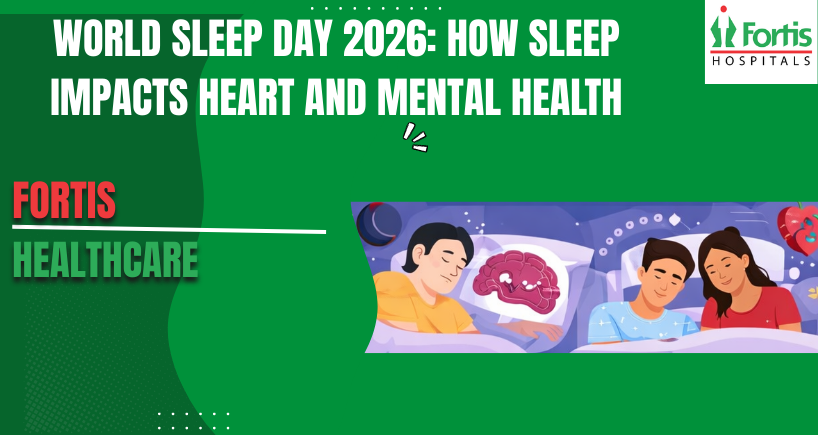


World Sleep Day 2026: How Sleep Impacts Heart and Mental Health
Sleep takes up approximately one-third of a person’s life, and yet most adults consider it the first thing to give up when they become busy. Many people now operate with only five or six hours of sleep, and do so routinely, without realising that this is a health issue.
World Sleep Day 2026 brings attention back to what research over the years has made clear: sleep isn’t simply time for the body to recover. It’s during sleep that the brain stores memories, the heart and blood vessels experience their least stressful period, and the immune system does work it cannot do when we are awake. Regularly failing to get enough sleep has known effects.
What the Body Does During Sleep That Waking Cannot Replicate
During deep, slow-wave sleep, the brain eliminates waste products via the glymphatic system – a pathway only found in 2013. During this phase, cerebrospinal fluid goes through brain tissue, taking away proteins, including amyloid-beta, which builds up in Alzheimer’s disease. Ongoing sleep restriction lowers this cleaning process, night after night.
During sleep, levels of cortisol and adrenaline fall to their lowest, letting the cardiovascular system properly rest. Healthy people’s blood pressure goes down ten to twenty percent while they sleep; this is termed ‘nocturnal dipping’. Those who don’t have this dip – because of sleep apnoea, insomnia, or not enough sleep – have a greater risk of cardiovascular problems, even when daytime blood pressure is taken into account.
Studies of sleep medicine regularly show that adults getting under six hours of sleep each night have much higher rates of high blood pressure, type 2 diabetes, obesity, and death from any cause relating to the heart, compared to people getting seven to nine hours. This remains true even when accounting for exercise, diet and social background. How long someone sleeps is, on its own, a cardiovascular risk.
Sleep and Mental Health: A Two-Way Relationship
Insomnia can be both a result of, and a reason for, depression, anxiety, and bipolar disorder. Depressed individuals frequently suffer from disturbed sleep – they often rise early, and then cannot return to sleep. When insomnia is dealt with in depressed people, their spirits lift better than with medication for depression by itself. The relationship really goes both ways; it isn’t a one-sided thing.
Sleep and mental health share the same chemical processes in the brain. Serotonin, dopamine, and noradrenaline each govern both emotional state and the pattern of sleep. Medication that influences these systems will, of course, alter sleep, and that’s the reason sleep status is usually part of a psychiatric assessment where enough money is available.
When someone is anxious, they are much more likely to be too aware at bedtime, and so it becomes harder to get to sleep – and, at the same time, the emotional pain of being awake is made worse. If untreated, this spiral – where bad sleep worsens anxiety, and anxiety worsens sleep – goes on and on. The therapy for insomnia using thoughts and behaviour addresses both parts of this spiral, and is the treatment suggested first in medical directions.
The Importance of Sleep for Health Across Different Life Stages
Teenagers have a naturally changed circadian rhythm, tending towards later sleep and wake times than adults. School starting times that go against this change make ongoing sleep debt in teenagers which affects school work, emotional control, and mental health in ways that can be measured. This isn’t laziness; it’s biology.
Older people experience changes in sleep patterns, including less deep sleep, waking up more often during the night, and waking earlier. These changes are normal but make worse the effects of medical problems and medicines common in old age. Thinking that less sleep is natural in old age and so doesn’t need medical attention leads to insomnia being undertreated in a group already at greater health risk.
Pregnant women suffer a lot of sleep disruption from physical pain, needing to urinate often, and hormonal changes. Poor sleep during pregnancy is linked to hypertension during pregnancy, long labour, and greater rates of depression after giving birth. Sleep quality is a real and important part of care before birth, not a minor issue.
Obstructive Sleep Apnoea: Underdiagnosed and Broadly Damaging
Obstructive sleep apnoea is when the airway repeatedly collapses partly or fully during sleep, causing a drop in oxygen, broken sleep, and the sympathetic nervous system being activated multiple times an hour. A lot of people with serious apnoea snore loudly but don’t realise the pauses in breathing which show it. Their bed partners often notice the pattern before they do.
The heart problems of untreated sleep apnoea include high blood pressure that doesn’t respond to drugs, atrial fibrillation, a higher risk of stroke, and worsening heart failure. The sleep medicine section does overnight polysomnography to diagnose sleep-related breathing problems and measure how bad they are before suggesting CPAP therapy or surgery to open the airway.
Continuous positive airway pressure therapy – delivered through a mask during sleep – keeps the airway open by providing gentle air pressure. Sticking to the treatment is the main problem. Newer devices with pressure auto-adjustment, data tracking, and heated humidifiers have greatly improved long-term use compared to older CPAP equipment.
Building Sleep Quality With Evidence-Based Approaches
Sleep hygiene caters to a set of behaviours and environmental steps that support consistent, and good sleep. Keeping the same sleep patterns and wake times even at the weekend makes the circadian rhythm more effective than any single thing to help sleep. Morning light and darkness in the evening are the two strongest outside signs for circadian timing.
Alcohol is often used to help people fall asleep, but regularly lowers sleep quality throughout the night. It lowers REM sleep in the first half of the night and causes a ‘rebound’ effect in the second half, leading to lighter, more broken sleep generally. Regularly depending on alcohol to start sleep also carries the risk of needing more over time.
Categories
Clear allRelated Blogs
View all







Keep track of your appointments, get updates & more!

