
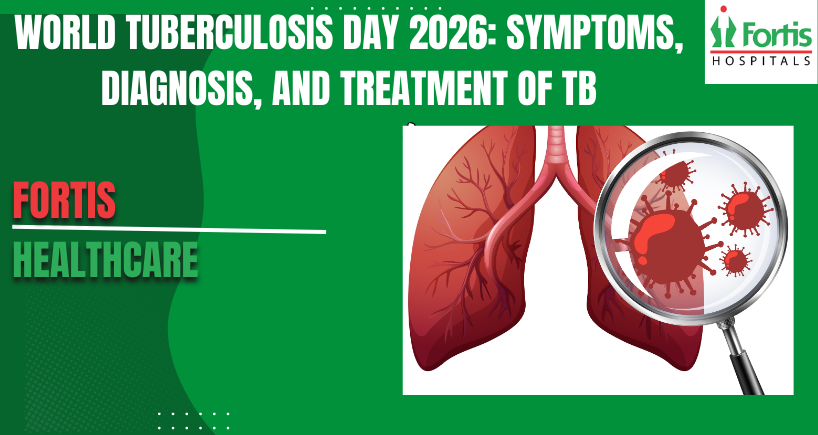


World Tuberculosis Day 2026: Symptoms, Diagnosis, and Treatment of TB
In 2023, one million, two hundred and fifty thousand people died from TB; it is still the world’s second biggest killer among infectious illnesses – after HIV – and mostly harms those who are working. India has around twenty-six per cent of all TB cases worldwide, and is at the same time, a nationally known and always hard public health problem.
World Tuberculosis Day 2026 will be the 144th year since 1882, when Robert Koch found the germ causing the illness. More than one hundred years on, a late finding of the disease is still the main thing stopping TB being wiped out; the best thing anyone can do to make this finding quicker is to know what the sickness is – how it shows itself, and when it is at its first stage.
How TB Spreads and Why It Persists
Mycobacterium tuberculosis spreads via really small airborne drops produced when an infected individual coughs, talks, or sings. The particles are able to remain in the air in badly aired rooms for a while. Most spread of the disease is due to being in a building for a long time, and isn’t from quick meetings. People who live with someone who has TB and can pass it on, are most at risk of getting it.
However, not all people who are exposed to the bacteria will get ill. Most people’s immune systems keep the bacteria under control, causing a latent TB infection – where the bacteria is there, but isn’t growing or causing any symptoms of being unwell. About ten out of every hundred people who have latent infection will, eventually, get active TB; the biggest danger is in the first two years after being exposed, and in those whose immunity is lowered by HIV, diabetes, poor food, or drugs that lower the immune system.
Pulmonology state that the factors causing the continuation of TB in India are crowded living conditions, insufficient food, a high prevalence of diabetes – which increases a person’s risk of TB by a factor of three – inadequate ventilation in both work and home environments, and the delay between when initial symptoms appear and when people seek medical attention. Addressing even a single one of these issues will reduce the transmission of infection; simultaneously dealing with multiple issues will have a substantial impact on the health of the public.
TB Symptoms and Diagnosis: Recognising the Clinical Picture
A cough that lasts longer than two weeks is the main symptom, and the reason to get a TB check. At first the cough is dry and goes on and on, but it later produces phlegm. Coughing up blood – haemoptysis – causes doctors to strongly suspect TB, even if it only happens once. Soaking night sweats, unexplained weight loss of more than five percent of body weight, and a low-grade fever which lasts for weeks are the general symptoms which go with the cough in lung disease.
TB can also affect the lymph nodes, the pleura, the spine, the brain, the kidneys, and almost any other part of the body. TB lymphadenitis – the most common form of TB which isn’t in the lungs – shows as firm, matted swelling of the lymph nodes, most often in the neck. Tuberculous meningitis causes a very bad headache, a stiff neck, and a change in awareness; even with treatment, it can cause death if diagnosis is delayed.
Testing a sputum sample under a microscope is the most easily available first test, finding acid-fast bacilli in the phlegm coughed up. It is more likely to find something when the disease is advanced. Nucleic acid amplification tests – including GeneXpert MTB/RIF – find TB DNA and at the same time show if there is resistance to rifampicin within two hours. In places where this technology is available, this has greatly sped up both the diagnosis of TB and the finding of drug resistance.
Drug-Sensitive and Drug-Resistant TB: A Critical Distinction
TB which responds to first-line drugs is treated with a six-month course of isoniazid, rifampicin, pyrazinamide, and ethambutol. Taking the drugs for all six months is essential. If treatment isn’t complete, bacteria which are not killed will survive, multiply, and become the main type of bacteria. This is how drug resistance is made, and why finishing the treatment is as important medically as starting it.
Tuberculosis treatment which is drug-resistant is much more difficult. Multi-drug resistant TB – defined as resistance to at least isoniazid and rifampicin – needs second-line treatments lasting nine to eighteen months, depending on the exact pattern of resistance. Side effects – including loss of hearing, nerve damage in the arms and legs, and mental illness – are more common with second line drugs, and need active monitoring.
The lung department deals with both drug-sensitive and drug-resistant TB cases, with culture-based drug susceptibility testing guiding the choice of treatment, and regular clinical checks to find side effects, how well the treatment is working, and things stopping people from taking their medicine, before they lead to treatment failing.
TB and HIV: Managing Two Interconnected Epidemics
HIV lowers the T-cell immunity which normally keeps TB under control, making people with HIV twenty to thirty times more likely to develop active TB than people without HIV. TB is the main cause of death for people around the world who have HIV. Checking for TB at every HIV clinic visit, and for HIV in every TB patient, is the least which should be done in places where there are a lot of cases.
Patients who have both illnesses need both antiretroviral therapy and anti-TB treatment at the same time. Because of interactions between rifampicin and many antiretroviral drugs, the treatment plan needs to be changed. Immune reconstitution inflammatory syndrome – where improving immune function strangely makes TB symptoms worse in the weeks after starting HIV treatment – needs careful clinical recognition and dealing with.
Contact Tracing, Latent TB, and Prevention
Tracing and checking the people who live with someone with active TB finds latent infection and secondary active cases before they show symptoms and become infectious. Children under five who live with someone with TB are at particular risk of going from exposure to active disease, and benefit from preventative treatment whether or not testing confirms latent infection.
Preventative treatment for latent TB infection, using isoniazid for six months, or shorter treatments based on rifampicin, lowers the risk of developing the disease by sixty to ninety percent. This is not used enough in India, compared to how much good it could do. Increasing the giving of preventative treatment through the national TB elimination programme to all identified people at high risk is one of the clearest chances to lower the amount of disease in the future.
Categories
Clear allRelated Blogs
View all






Keep track of your appointments, get updates & more!

