
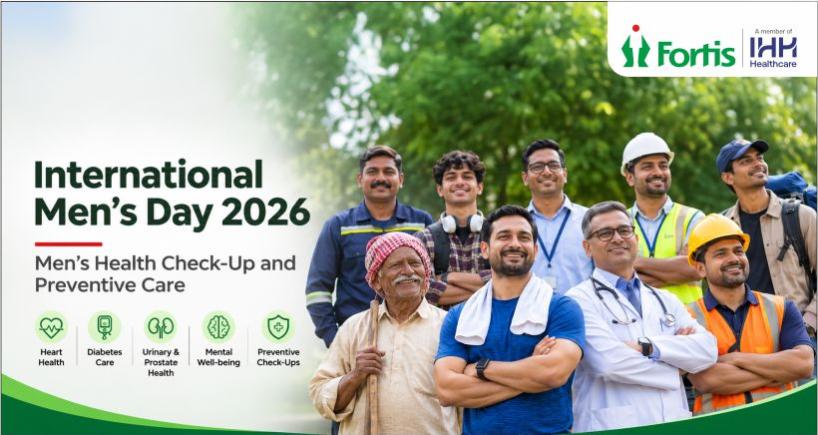


International Mens Day 2026 - Mens Health Check-Up and Preventive Care
A busy work schedule, long hours at the office and family responsibilities can make it easy to put personal health on hold. Many men continue with their daily routines without realising that their blood pressure, blood sugar or cholesterol levels may already be outside the healthy range.
The difficulty is that some common health conditions do not cause noticeable symptoms in their early stages. By the time a person feels unwell, the condition may already require medical attention.
Observed on 19 November every year, International Men's Day draws attention to men's physical health, mental well-being and the importance of supporting healthier lives. The 2026 theme, "The Future Is Everyone," also encourages a more inclusive approach to health and well-being.
It is a good opportunity for men to look beyond occasional medical visits and consider whether they are keeping up with their preventive health needs.
Why Should Men Pay More Attention to Their Health?
A man's health is influenced by several factors, including age, family medical history, daily habits and existing health conditions.
For example, someone who spends most of the day sitting, smokes regularly or has a family history of diabetes may have different health risks from someone with an active lifestyle and no known medical concerns.
Some areas that deserve attention include:
- Heart health: High blood pressure and elevated cholesterol can increase the risk of cardiovascular disease.
- Blood sugar: Type 2 diabetes may develop without obvious early symptoms.
- Kidney and urinary health: Changes in urination, discomfort or blood in the urine should not be ignored.
- Prostate health: Urinary difficulties and other prostate-related symptoms need appropriate medical evaluation.
- Sexual and reproductive health: Fertility concerns and difficulties with sexual function can have physical or psychological causes.
- Mental well-being: Persistent stress, anxiety, low mood and sleep problems can affect everyday life.
India's national programme for the prevention and control of non-communicable diseases includes population-based screening for selected conditions among adults aged 30 years and above. However, screening recommendations are not identical for everyone. Age, symptoms and individual risk factors matter.
Health Problems Men Should Not Ignore:
Certain symptoms are easy to dismiss, particularly when they develop gradually. However, recurring or unexplained changes in health deserve medical attention.
High Blood Pressure and Heart Disease
High blood pressure is often called a silent condition because it may not produce noticeable symptoms. High cholesterol can also increase cardiovascular risk.
A blood pressure measurement and appropriate assessment of cardiovascular risk can help identify problems that may otherwise go unnoticed.
Type 2 Diabetes
Frequent thirst, increased urination, tiredness and unexplained weight changes can sometimes be associated with diabetes. However, many people experience no obvious symptoms.
Blood glucose and HbA1c tests may be recommended by a doctor to assess blood sugar levels and identify diabetes.
Prostate and Urinary Conditions
Waking up repeatedly at night to urinate, a weak urine stream, difficulty passing urine or seeing blood in the urine are reasons to seek medical advice.
These symptoms can have different underlying causes. A urologist can assess the condition and recommend suitable investigations.
Sexual and Reproductive Health Concerns
Erectile difficulties, reduced sexual function and fertility concerns are medical issues that deserve attention rather than embarrassment.
Such problems can be associated with diabetes, hormonal changes, cardiovascular conditions, stress or other health factors. Finding the underlying cause is an important part of choosing the right treatment.
Stress, Anxiety and Sleep Problems
Mental health deserves the same attention as physical health. Continuous work pressure, personal responsibilities and poor sleep can affect a man's emotional and physical well-being.
Persistent changes in mood, frequent anxiety, loss of interest in everyday activities or ongoing sleep difficulties should not be dismissed as simply part of a busy lifestyle.
Which Health Check-Up Tests May Men Need?
There is no single health check-up package that is suitable for every man. A doctor should consider age, medical history, family history, lifestyle and existing symptoms before recommending investigations.
Depending on individual needs, a preventive health assessment may include:
- Blood pressure measurement: To check for hypertension.
- Blood glucose or HbA1c: To assess blood sugar levels and diabetes risk.
- Lipid profile: To evaluate cholesterol levels and cardiovascular risk.
- Kidney function tests: When a person's medical history or health assessment indicates a need.
- Liver function tests: When clinically appropriate.
- Prostate evaluation: Based on age, symptoms, risk factors and a discussion with the doctor about the suitability of screening.
For example, a man with a family history of diabetes may need a different assessment from someone experiencing urinary difficulties. Similarly, prostate cancer screening is not automatically necessary for every man.
The purpose of a medical assessment is to identify the investigations that are relevant to the individual, rather than undergoing unnecessary tests.
Everyday Habits That Can Make a Difference to Men's Health:
A preventive health plan does not end with a doctor's consultation. Daily habits also influence long-term well-being.
Here are five practical steps men can work towards:
Make Time for Physical Activity
Walking, cycling, swimming or other suitable activities can help improve cardiovascular fitness. Adults should aim for 150–300 minutes of moderate-intensity physical activity each week, according to WHO recommendations.
Pay Attention to Everyday Food Choices
Include vegetables, seasonal fruits, whole grains, pulses and suitable protein sources in regular meals. Limit excessive intake of highly processed foods and foods high in salt and added sugar.
Stay Away from Tobacco
Smoking and smokeless tobacco can adversely affect overall health. Avoiding tobacco is an important step towards reducing preventable health risks.
Do Not Treat Sleep as Optional
Maintain regular sleeping and waking times. Persistent difficulty sleeping, loud snoring or excessive daytime tiredness may need medical assessment.
Take Mental Well-being Seriously
Make time for family, supportive relationships and activities that help manage stress. Speak with a healthcare professional when emotional difficulties begin affecting everyday life.
Men's Health Check-Up at Fortis Hospital Manesar, Gurugram
Choosing the right healthcare service starts with understanding what your body needs. A consultation with a doctor can help identify risk factors, discuss symptoms and determine whether further investigations are necessary.
At Fortis Hospital Manesar, Gurugram, patients can explore the following healthcare services:
Internal Medicine
For general medical consultations, preventive health assessments and evaluation of conditions such as diabetes, hypertension and other common health concerns.
Urology
For assessment and management of urinary difficulties, prostate-related concerns and other urological conditions.
Preventive Health Check-Ups
Men can explore the available health check-up packages and discuss suitable investigations with a healthcare professional before choosing a package.
You can explore these hospital resources:
- Male Health Check-Up Packages at Fortis Hospital Manesar
- Internal Medicine Doctors at Fortis Hospital Manesar
- Urologist Doctors at Fortis Hospital Manesar
For men living or working in Manesar, IMT Manesar and nearby areas of Gurugram, access to appropriate medical guidance can make it easier to take the next step towards better health.
Make Your Health a Priority This International Men's Day:
Good health should not become a priority only when something goes wrong. Paying attention to changes in the body, discussing health concerns and choosing appropriate preventive assessments can make a meaningful difference over time.
This International Men's Day, encourage the men in your family to take their health seriously. A timely consultation today can be an important step towards a healthier tomorrow.
Categories
Clear allMeet the doctor

- Urology | Urology | Uro-Oncology | Robotic Surgery
- Organ Transplant | Kidney Transplant
-
 17 Years
-
 1500
 Available at 1 different locations

Related Blogs
View all



Adult Circumcision: Debunking Facts and Myths | Fortis Health Connect Blogs

Is Beer Good for Kidney Stones ? - Myths Vs Facts | Fortis Healthcare




FAQs
Where can I get a men's health check-up in Manesar, Gurugram?
Men looking for a health check-up in Manesar, Gurugram can explore the preventive health check-up services at Fortis Hospital Manesar. The available packages and recommended tests can be discussed with a healthcare professional based on age, medical history and individual health requirements.
What is included in a men's health check-up package?
A men's health check-up may include blood pressure measurement, blood glucose or HbA1c testing, cholesterol assessment and other investigations depending on the selected package. Additional tests may be recommended by a doctor according to individual health risks.
How much does a men's health check-up cost at Fortis Hospital Manesar?
The cost depends on the selected health check-up package and the investigations included. Patients should check the current package details with Fortis Hospital Manesar before booking, as package prices and inclusions may vary.
At what age should men start getting regular health check-ups?
Men should discuss preventive health assessments with a doctor according to their age and health risks. India's national programme includes screening for selected non-communicable diseases among adults aged 30 years and above. Men with existing health concerns or a family history of certain conditions may need earlier assessment.
Which medical tests should men above 30 consider?
Depending on individual health requirements, men above 30 may be advised to undergo blood pressure measurement, blood glucose or HbA1c testing and a lipid profile. Kidney function, liver function and other investigations may be recommended when clinically indicated.
Can men have diabetes or high blood pressure without experiencing symptoms?
Yes. Both diabetes and high blood pressure can develop without obvious early symptoms. Appropriate screening and medical assessment can help identify these conditions before noticeable health problems develop.
How often should men undergo a preventive health check-up?
The frequency depends on age, medical history, existing health conditions and individual risk factors. Some men may need more frequent monitoring, while others may require less frequent assessments. A doctor can recommend a suitable check-up schedule.
Which doctor should I consult for prostate or urinary problems?
A urologist evaluates urinary difficulties, prostate-related concerns and other conditions affecting the urinary and male reproductive systems. Symptoms such as difficulty passing urine, a weak urine stream or blood in the urine should be medically assessed.
Should I get a health check-up even if I feel completely healthy?
A person can have certain health conditions without experiencing noticeable symptoms. Preventive health assessments can help identify selected risk factors and guide appropriate medical advice. The tests required should be based on individual health needs rather than undergoing every available investigation.

Keep track of your appointments, get updates & more!

