
General Surgery at Fortis Hospitals is committed to providing comprehensive surgical care using the latest advancements in medical technology. Our team of experienced and highly skilled surgeons specialize in a wide range of procedures, from routine appendectomies and hernia repairs to complex gastrointestinal surgeries and advanced laparoscopic techniques. With a patient-centric approach, we prioritize safety, precision, and quick recovery, ensuring personalized treatment plans tailored to each individual's needs.
Our state-of-the-art facilities are equipped with cutting-edge surgical equipment, enabling minimally invasive procedures that reduce pain, minimize scarring, and promote faster healing. At Fortis, we strive to deliver excellence in surgical care, ensuring the highest standards of quality and patient satisfaction.
The introduction of Robotic Surgery to the field of Gynecology has resulted in major changes in surgical management of gynecological conditions USFDA approved Robotic Surgical System in 2005 for gynecological surgery and since then it has been rapidly adopted by Gynae Onco Surgeons (Gynae Oncologists) and Gynecologists across the world.
Robotic arms are designed such as to provide the operating surgeon with finer movements and better reach to complex, hard to reach areas thus delivering greater precision and further enhancing their dexterity.
The robot comprises of three components: A surgeon’s console, a patient-side cart with four robotic arms and a high-definition three-dimensional (3D) vision system. Your robotic surgeon operates on you! She uses the narrow, lighted scope and miniature instruments which are controlled through the robotic system. Due to this system, surgeons can treat several conditions that are related to women’s reproductive organs.
At Fortis Hospitals, minimally invasive colorectal procedures are performed using cutting-edge robotic technology. To improve patient outcomes, reduce recovery time, and enhance patient satisfaction, we strive to provide our patients with the most advanced surgical techniques.
Robot-assisted colorectal surgery involves the use of a state-of-the-art robotic platform that combines the precision and versatility of robotic technology with the skill of our experienced surgeons. Through the use of robotic arms and specially designed instruments, surgical team can view the surgical field in three dimensions, in high definition, and with precision, control
Fortis Institute of Robotic Surgery - Shalimar Bagh, New Delhi
About Fortis Hospital, Shalimar Bagh, New Delhi
Fortis Hospital, Shalimar Bagh, is a 262-bed comprehensive medical facility on a 7.34-acre campus, offering top-notch medical services and patient care through its skilled team. It's a centre of excellence, providing state-of-the-art technology in Cardiac Bypass Surgery, Interventional Cardiology, and other specialized fields. The hospital is supported by cutting-edge laboratories conducting a range of investigative tests.
Fortis Hospital, Shalimar Bagh, excels in Robotic Surgery, integrating cutting-edge technology for advancements in visualization, precision, control, and dexterity during complex procedures, benefiting patients with quicker recovery, smaller scars, reduced blood loss, and faster return to normal activities. The hospital's advanced robotic system enables precise surgeries in challenging areas like the highly vascular pelvic region and neck, ensuring optimal outcomes through minimally invasive procedures.
CENTRE OF EXCELLENCE FOR ROBOTIC SURGERY
Fortis Hospital Mohali | da Vinci Xi Robotic Surgery Program
TECHNOLOGY delivers precision, only in the hands of an EXPERT.
Behind every robotic surgery at Fortis Mohali is a surgeon whose years at the console turn advanced technology into precise, patient-centred care.
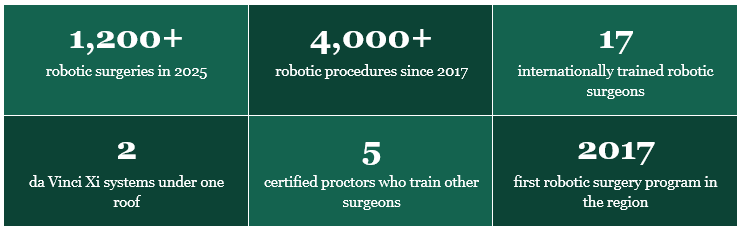
Over 1,200 da Vinci robotic surgeries in 2025 — the second-highest volume in India, as certified by Intuitive®, makers of the da Vinci Xi surgical system.
India’s second — and first non-metro — Total Program Observation (TPO) site, designated by Intuitive in 2026.
Key Highlights
- First in the region to introduce da Vinci robotic surgery (2017)
- First in the region to run two da Vinci Xi systems concurrently
- 5 Certified Proctors — expert surgeons who train other surgeons in robotic technique
- 8 surgeons TR300-trained (advanced training, 300+ robotic procedures) and 1 surgeon TR500-trained (500+ robotic procedures)
- Six surgical specialties — gynaecology, urology, surgical oncology, ENT/head & neck, general & GI, and breast & endocrine surgery — plus robotic kidney transplant
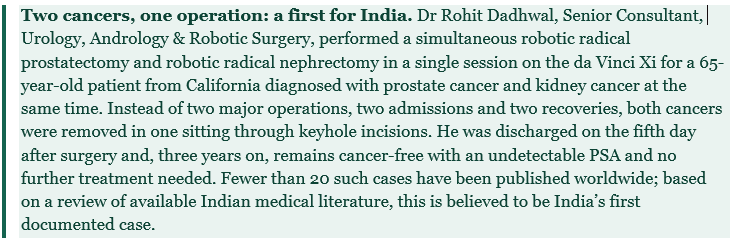
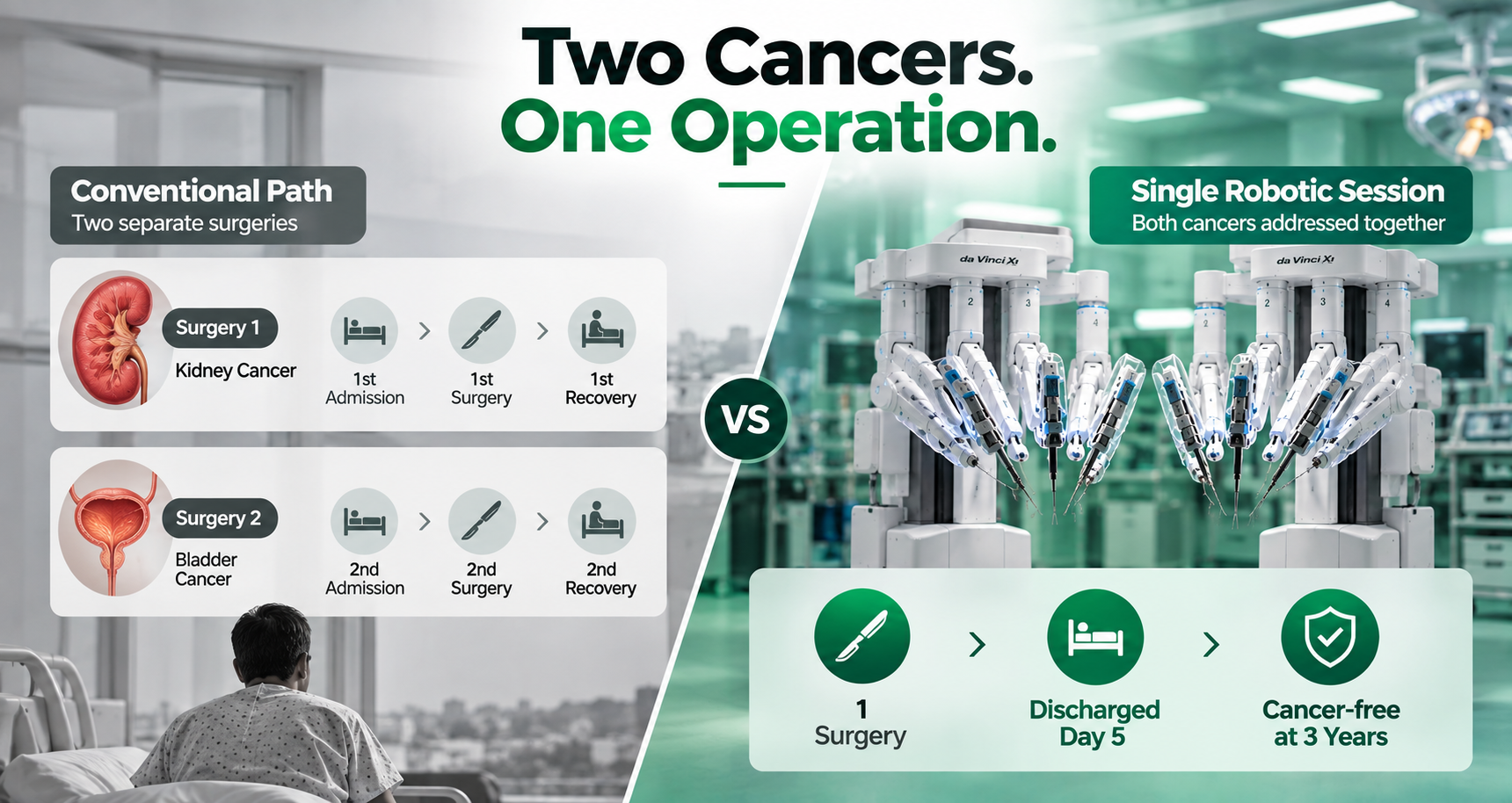
- India’s first documented simultaneous robotic surgery for prostate and kidney cancer — both cancers removed in a single sitting
- Robotic pelvic floor reconstruction — a high-volume program of mesh-based prolapse repair performed through the abdomen, not the vagina
Robotic Surgery at Fortis Hospital, Mohali
INTRODUCTION
Centre of Excellence for Robotic Surgery
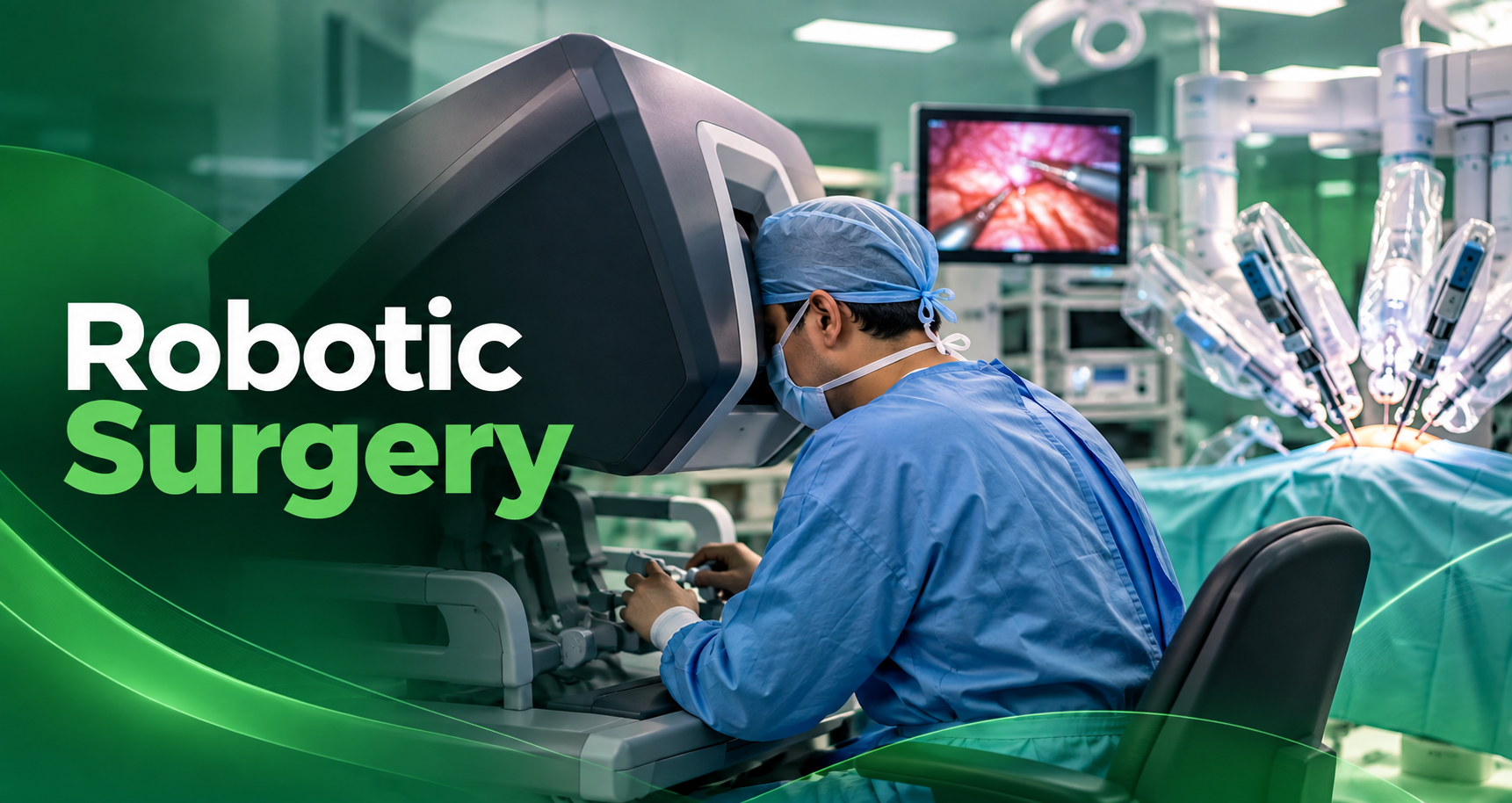
At Fortis Hospital Mohali, robotic surgery is defined by the expertise behind the console. We introduced da Vinci robotic surgery to the region in 2017, when it was still a new idea for most patients in India. Nine years on, two da Vinci Xi Surgical Systems support soft-tissue surgery across gynaecology, urology, surgical oncology, ENT/head & neck, general & GI, breast & endocrine and transplant surgery — delivered by 17 internationally trained surgeons who have together performed more than 4,000 robotic procedures.
That experience has allowed our teams to:
Refine complex robotic techniques across multiple specialties
Build standardised protocols for case selection, surgery and recovery
Train other surgeons as Intuitive-certified proctors
Serve as a reference site where other hospitals observe how a complete robotic program runs
What robotic surgery can mean for patients, compared with open surgery
Smaller incisions and less visible scarring
Less pain and blood loss
A shorter hospital stay and earlier mobility
Lower risk of wound infection
Better chances of preserving continence, sexual function, speech, swallowing and organ function, depending on the procedure
Precise dissection around tumours, nerves and blood vessels
Benefits vary by patient and procedure. Your surgeon will explain what to expect in your case.
RECOGNISED BY INTUITIVE
India’s Second Total Program Observation (TPO) Site
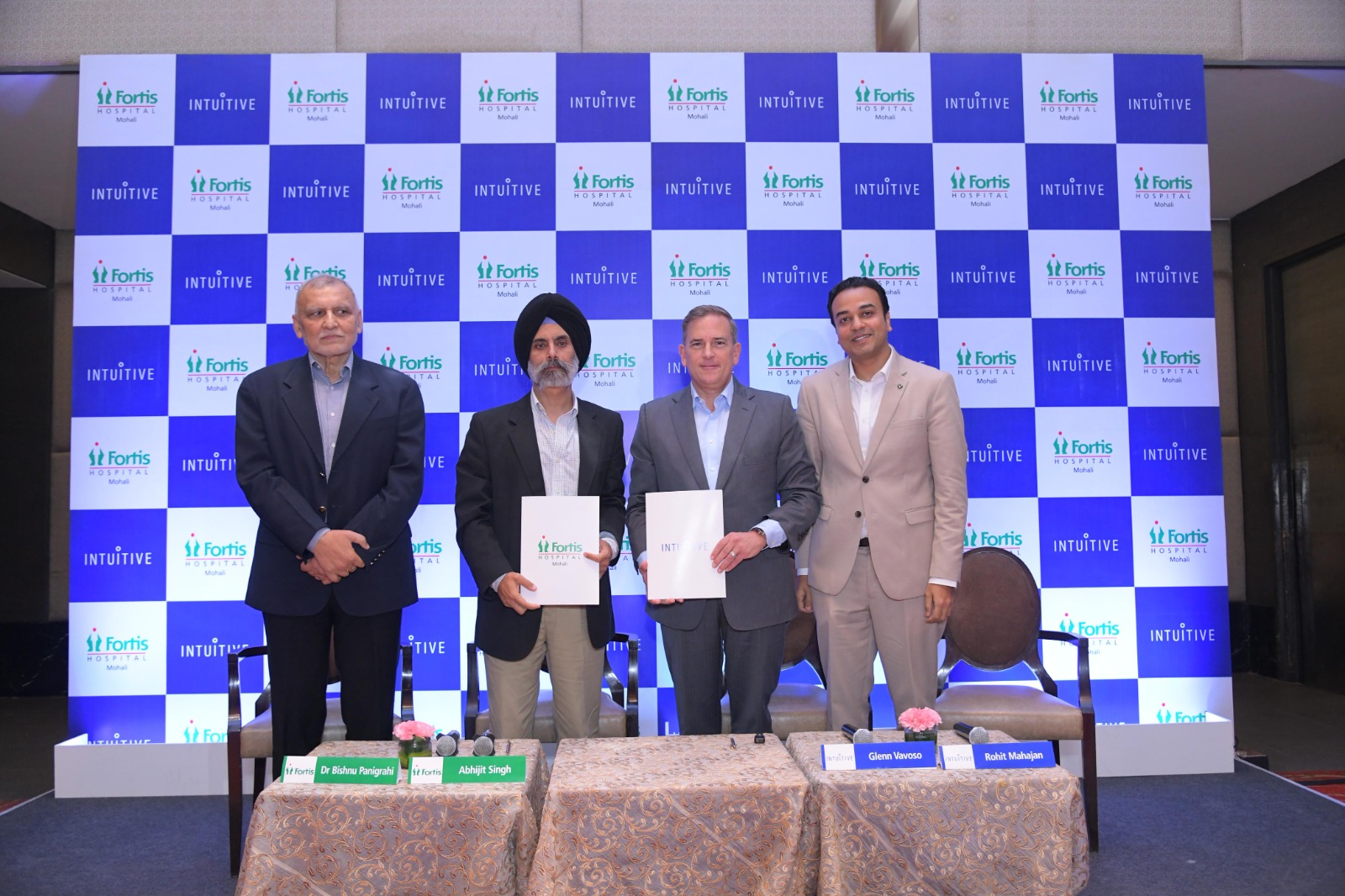
In July 2026, Intuitive — the maker of the da Vinci system — designated Fortis Mohali as India’s second, and first non-metro, Total Program Observation (TPO) site. The designation was formalised through an MOU signed on 9 July 2026 in the presence of Glenn Vavoso, Senior Vice President, Intuitive APAC, and Rohitt Mahajan, Vice President & General Manager, Intuitive India.
As a TPO site, Fortis Mohali hosts surgical teams from other hospitals who come to observe how an established robotic program runs end to end — from patient selection and theatre workflow to team coordination and post-operative care.
For patients, it is independent recognition of the systems, training and teamwork behind every robotic surgery performed here.
Follow our robotic surgery program — surgeon insights, milestones and patient stories — on LinkedIn: Fortis Mohali Robotics
OUR TECHNOLOGY
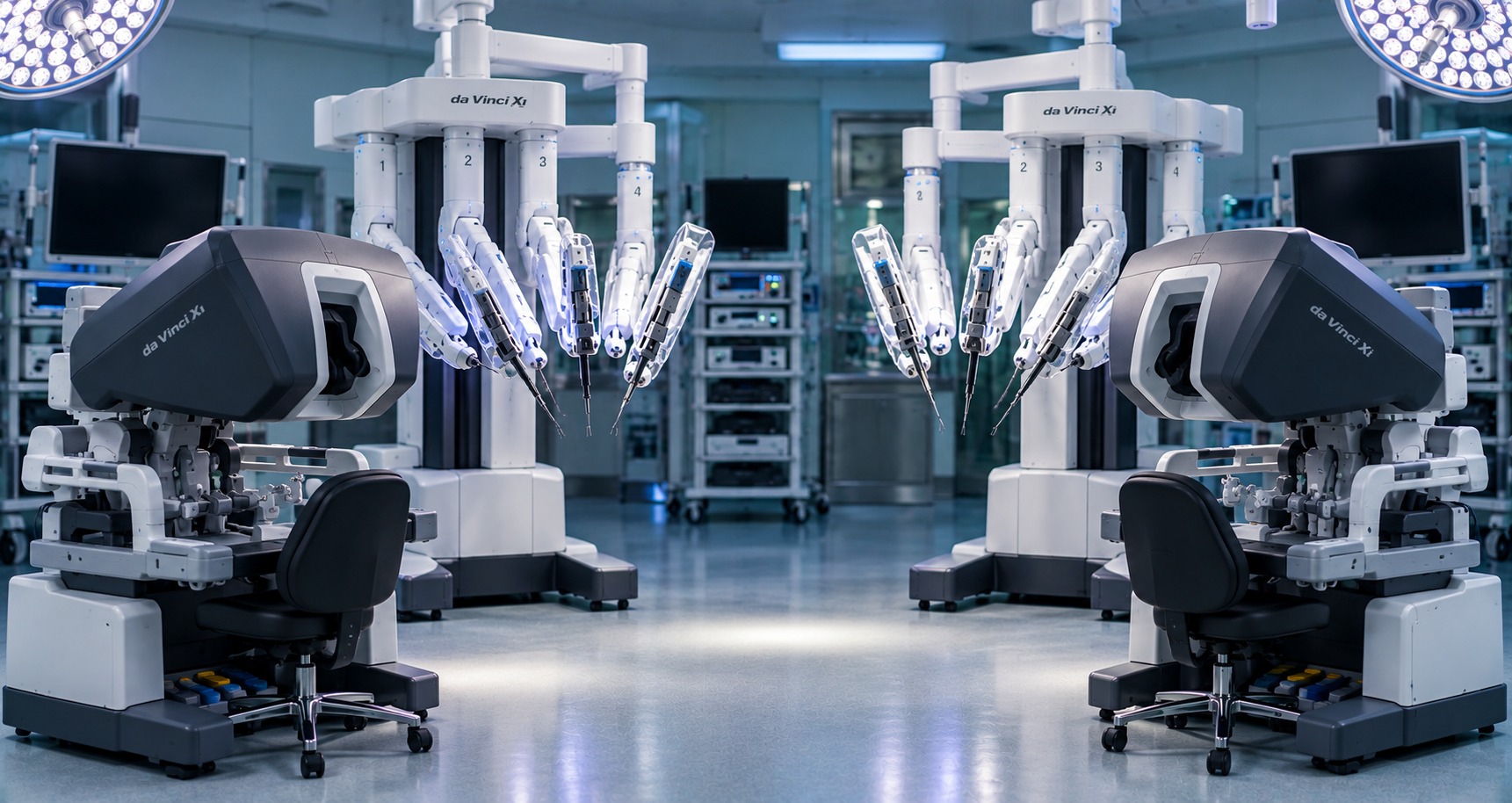
Two da Vinci Xi Robotic Surgical Systems Under One Roof
The da Vinci Xi is a robotic-assisted surgical system. The surgeon sits at a console a few feet from the patient and controls every movement of the instruments; the system translates the surgeon’s hand movements into smaller, precise movements inside the body. The robot does not operate on its own.
Applications: Gynaecology, Urology, Surgical Oncology, ENT (Head & Neck), General & GI Surgery, Breast & Endocrine Surgery, Transplant Surgery
Key capabilities
3D high-definition vision, up to 10x magnification — a detailed view of nerves, vessels and tissue planes
Tremor filtration — filters out natural hand tremor for steadier, finer movements
Wristed instruments — bend and rotate with a range of motion greater than the human wrist
Precise suturing in deep or narrow spaces — such as the pelvis, behind the pubic bone and the upper abdomen
Better protection of nerves, vessels and organs — helping minimise damage to surrounding tissue
Running two systems concurrently — a first in the region — lets us schedule complex cases without long waits and keep robotic capacity available across specialties.
ROBOTIC SPECIALTIES & CONDITIONS TREATED
A. Robotic Gynaecology (Women’s Health)
For complex gynaecological conditions, robotic surgery allows precise dissection deep in the pelvis — helping surgeons remove disease while protecting the uterus, ovaries, bladder, bowel and nerves. It is particularly valuable for fertility-sparing surgery, severe endometriosis and pelvic floor reconstruction with mesh.
Benign conditions
Uterine fibroids — Robotic Myomectomy
Multiple or large fibroids — Robotic Myomectomy with multilayer uterine reconstruction
Adenomyosis — Robotic Hysterectomy, or uterus-preserving Robotic Adenomyomectomy
Endometriosis (Stage III/IV) — Robotic Excision
Ovarian cysts — Robotic Cystectomy / Oophorectomy
Ovarian torsion — Robotic Detorsion with ovarian preservation
Ectopic pregnancy — Robotic Ectopic Surgery
Pelvic adhesions — Robotic Adhesiolysis
Tubal disease — Robotic Salpingectomy / Salpingo-oophorectomy
Pelvic Organ Prolapse & Robotic Mesh Surgery
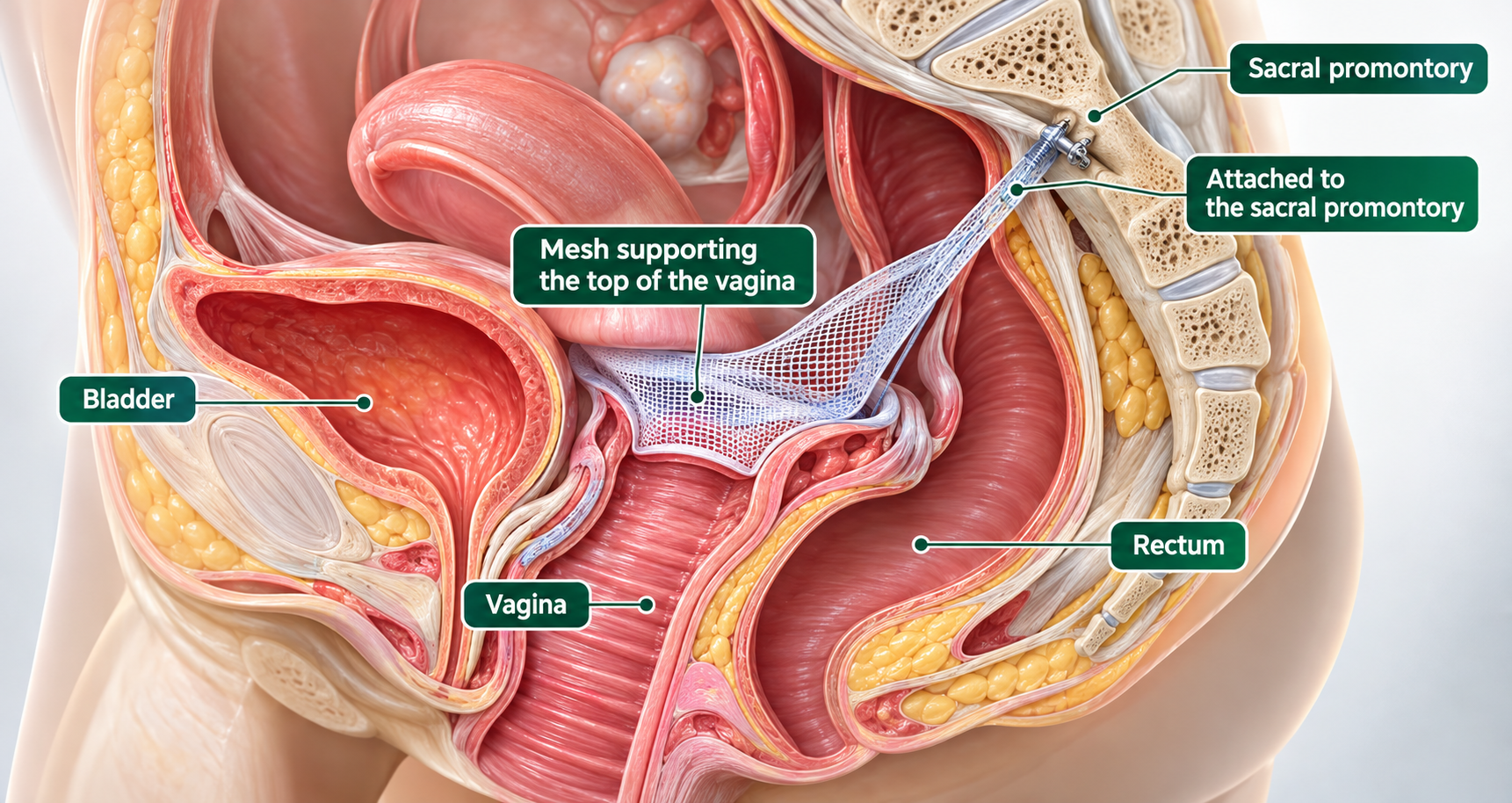
Pelvic organ prolapse happens when the muscles and ligaments supporting the uterus, bladder, bowel or top of the vagina weaken — often after childbirth, with age or after menopause — and these organs descend into or beyond the vagina. Women may notice a bulge or heaviness, urinary leakage, difficulty emptying the bladder or bowel, or discomfort during intercourse.
In robotic mesh surgery, the surgeon lifts the prolapsed organs back to their natural position and holds them there with a lightweight, medical-grade synthetic mesh, fixed to a strong anchor point — usually the ligament over the sacrum (tailbone) — through small keyhole incisions in the abdomen. Robotic precision helps with the fine dissection and secure suturing this deep pelvic repair requires.

Our robotic mesh procedures
- Vaginal vault prolapse (after hysterectomy) — Robotic Sacrocolpopexy with mesh
- Uterine prolapse, uterus-preserving — Robotic Sacrohysteropexy with mesh
- Uterine prolapse, with hysterectomy — Robotic Supracervical Hysterectomy with Sacrocervicopexy (mesh fixed to the preserved cervix)
- Uterine or vault prolapse where sacral access is difficult — Robotic Pectopexy (mesh fixed to the pectineal ligament on the pelvic side wall)
- Anterior and apical prolapse — Robotic Lateral Suspension with mesh
- Multi-compartment prolapse (uterus or vault, bladder and rectum) — Robotic comprehensive pelvic floor reconstruction, including combined Sacrocolpopexy with Ventral Mesh Rectopexy alongside our colorectal surgeons
- Prolapse with urinary leakage — Robotic Sacrocolpopexy with a continence procedure in the same sitting, where indicated
Who may benefit
Women with prolapse that affects daily life, prolapse that has returned after a previous repair, vault prolapse after hysterectomy, and sexually active women who wish to preserve vaginal length and function.

Gynaecological cancers
- Uterine (endometrial) cancer — Robotic Hysterectomy with surgical staging
- Cervical cancer — Robotic Radical Hysterectomy in carefully selected early-stage cases, after tumour board review; open surgery remains the recommended approach for many patients
- Ovarian cancer — Robotic Staging and Robotic Cytoreductive Surgery in selected cases
- Complex gynaecological cancers — Robotic Debulking in selected cases
Fertility-preserving surgery
For young women with fibroids, endometriosis, ovarian cysts or early cervical cancer, robotic precision helps surgeons remove disease while preserving healthy ovarian tissue and the structure of the uterus.
Fertility-sparing Myomectomy — removing fibroids while preserving the uterus for future pregnancy
Endometriosis excision with ovarian preservation — removing disease while protecting ovarian reserve
Ovarian Cystectomy with tissue preservation — removing cysts while retaining as much healthy ovarian tissue as possible
Ovarian Detorsion in girls and young women — saving a twisted ovary that might otherwise be lost
Adenomyomectomy — removing adenomyosis while maintaining the structure of the uterus
Robotic Radical Trachelectomy — for selected early cervical cancers, removing the cervix while preserving the uterus
Advantages
Fertility protection — fine, magnified dissection helps protect reproductive organs and ovarian reserve
Minimal visible scarring — small incisions, often at the navel and below the bikini line
Fewer adhesions than open surgery — lowering the risk of scar tissue that can affect fertility
Faster return to routine — most women resume normal activities within 2–3 weeks
Durable prolapse repair — mesh placed through the abdomen restores natural anatomy
Preserved vaginal length and function — an important consideration in prolapse surgery for sexually active women
B. Robotic Urology (Kidney, Prostate & Bladder)
Many urological operations take place in tight spaces close to the nerves that control continence and sexual function. Robotic magnification and wristed instruments help surgeons remove disease while protecting these structures and saving healthy kidney tissue.
Conditions & robotic procedures
Prostate cancer — Robotic Radical Prostatectomy
Kidney cancer — Robotic Partial Nephrectomy (transperitoneal or retroperitoneal approach) / Tumour Enucleation / Radical Nephrectomy
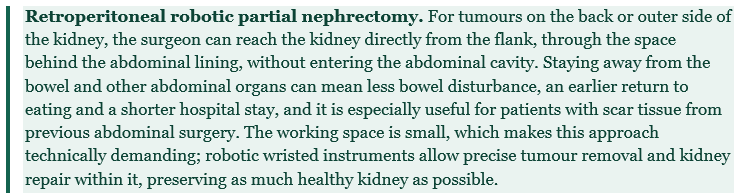
Kidney tumours on the back or side of the kidney — Robotic Retroperitoneal Partial Nephrectomy
Renal masses — Robotic Tumour Resection
Prostate and kidney cancer diagnosed together — Simultaneous Robotic Radical Prostatectomy and Radical Nephrectomy in a single sitting
Bladder cancer — Robotic Radical Cystectomy, including intracorporeal neobladder formation
Kidney failure — Robotic Kidney Transplant
PUJ obstruction — Robotic Pyeloplasty
Ureteric strictures — Robotic Ureteric Reimplantation
Adrenal tumours — Robotic Adrenalectomy
IVC tumour thrombus — Robotic IVC Thrombectomy
Advantages
Nerve-sparing techniques that help preserve sexual and urinary function
Precise tumour margins while saving healthy kidney tissue
Retroperitoneal access for suitable kidney tumours, avoiding the abdominal cavity
Combined procedures in one sitting for selected patients with more than one condition
Lower blood loss and a shorter hospital stay than open surgery
Earlier catheter removal and recovery
C. Robotic ENT & Head & Neck Surgery
For tumours of the throat, voice box and neck, robotic surgery reaches areas that are difficult to access conventionally — often through the mouth — avoiding large incisions in the face and neck.
Head & neck oncology
Oropharyngeal tumours — TORS (Trans-Oral Robotic Surgery) for tumours of the tonsil, base of tongue and posterior pharyngeal wall
Supraglottic tumours — Robotic Supraglottic Laryngectomy (the extent depends on tumour location)
Thyroid cancer (selected cases) — Robotic Thyroidectomy via BABA, RABIT or retroauricular approaches
Deep neck space tumours — Robotic access and resection
Neck metastases — Robotic Neck Dissection via robotic infraclavicular approach (RIA), to remove lymph nodes for cancer control
Robotic sleep surgery
Obstructive sleep apnoea — Robot-assisted Uvulopalatopharyngoplasty (UPPP), reshaping the soft palate and uvula to open the airway
Base-of-tongue obstruction — Robot-assisted Base of Tongue Reduction, removing excess tissue that blocks the airway during sleep
Benign head & neck conditions
Salivary gland disorders — Robotic Submandibular Gland Excision via infraclavicular approach, avoiding a visible neck scar
Advantages
No external facial scars — access through the mouth or small, hidden incisions
Better chances of preserving speech and swallowing
Reduced need for a temporary tracheostomy in many patients
Faster return to eating and a shorter hospital stay — many patients eat normally within days
Access to deep spaces that are difficult to reach with conventional instruments
Precise tissue reduction for sleep apnoea with less trauma to surrounding tissue
D. Robotic Onco-Surgery (Chest, Abdomen & Pelvis)
For many cancers of the chest, abdomen and pelvis, robotic surgery pairs the thoroughness of open surgery with the recovery benefits of keyhole surgery, giving surgeons a magnified 3D view for precise tumour removal and lymph node dissection. Each case is planned with our multidisciplinary cancer team.
Oesophageal cancer
Robotic Oesophagectomy with cervical oesophagogastric anastomosis — removal of the oesophagus with reconstruction
Gastric (stomach) cancer
Robotic Total Gastrectomy with D2 Lymphadenectomy and Roux-en-Y Oesophago-jejunostomy — complete stomach removal with thorough lymph node clearance
Robotic Distal/Partial Gastrectomy with D2 Lymphadenectomy — removal of the lower stomach with lymph node clearance
Liver and bile duct cancers
Robotic Left Lateral Segmentectomy — precise removal of a liver segment
Robotic Wedge Resection of Liver — targeted removal of liver tumours
Robotic Bile Duct Excision with Roux-en-Y Hepatico-jejunostomy — bile duct surgery with reconstruction
Pancreatic cancer
Robotic Whipple’s Procedure (Pancreaticoduodenectomy) — the standard operation for tumours of the pancreatic head
Robotic Distal Pancreatectomy with Splenectomy — for tumours of the pancreatic body and tail
Colorectal cancer
Robotic Right Hemicolectomy — right colon cancer
Robotic Transverse Colectomy — transverse colon cancer
Robotic Left Hemicolectomy — left colon cancer
Robotic Anterior Resection — upper rectal cancer
Robotic Low Anterior Resection (LAR) with Total Mesorectal Excision (TME) — lower rectal cancer with sphincter preservation
Robotic Abdominoperineal Resection (APR) — very low rectal cancers
Robotic Total Proctocolectomy with Ileostomy — removal of the colon and rectum
Robotic Restorative Proctocolectomy with Ileal Pouch-Anal Anastomosis (IPAA) — sphincter-preserving removal of the colon and rectum
Robotic cytoreductive surgery
Cytoreductive surgery aims to remove all visible tumour from the abdomen and pelvis, which is central to treating cancers that have spread within the abdominal cavity. In selected patients — particularly those with limited-volume disease or a good response to chemotherapy — this can be performed robotically, with a magnified view of the peritoneal surfaces and a faster recovery, so that further treatment can begin sooner. Suitability is decided by our multidisciplinary tumour board.
Advanced ovarian cancer — Robotic Interval Cytoreductive Surgery after chemotherapy, in selected patients
Limited peritoneal spread from colorectal, appendiceal or other abdominal cancers — Robotic Cytoreductive Surgery in selected patients
Localised recurrence of gynaecological or abdominal cancers — Robotic Secondary Cytoreduction
Robotic surgery for gynaecological and urological cancers is also listed under Robotic Gynaecology and Robotic Urology above.

Advantages
Thorough lymph node dissection for accurate staging and cancer clearance
Magnified view of the peritoneal surfaces in cytoreductive surgery, helping identify and remove small tumour deposits
Clear visualisation to help achieve tumour-free margins
Magnified view for complex HPB (hepato-pancreato-biliary) surgery deep in the abdomen
Precise suturing for pancreatic, biliary and bowel reconstruction
Faster recovery than open surgery, so chemotherapy or radiotherapy, when needed, can often start sooner
Function preservation — for example, sphincter preservation in low rectal cancer
Recovery benefits that matter for older and higher-risk patients
E. Robotic General & GI Surgery
Conditions & robotic procedures
Inguinal hernia — Robotic Hernioplasty
Ventral/umbilical hernia — Robotic Mesh Repair
Recurrent hernia — Robotic Redo Repair
Gallbladder disease — Robotic Cholecystectomy
Obesity — Robotic Sleeve Gastrectomy / Gastric Bypass
Metabolic syndrome — Robotic Gastric Bypass
GERD — Robotic Fundoplication
Achalasia — Robotic Heller Myotomy
Diaphragmatic hernia — Robotic Repair
Advantages
Same-day or next-day discharge in selected cases
Precise suturing in deep spaces, such as around the food pipe and diaphragm
Secure mesh placement for durable hernia repair
Faster recovery with fewer wound complications than open surgery
Precision for complex bariatric and metabolic procedures
F. Robotic Breast & Endocrine Surgery
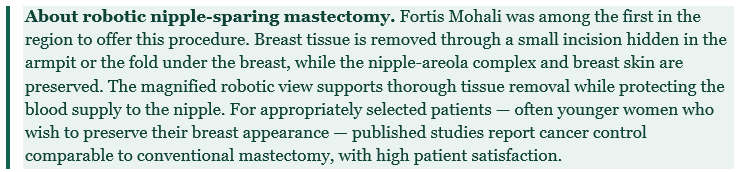
Robotic techniques allow breast and endocrine operations through small incisions hidden in the armpit, behind the ear or under the breast — combining complete treatment with better cosmetic results.
Breast surgery
Breast cancer — Robotic Nipple-Sparing Mastectomy (removing breast tissue while preserving the nipple and breast skin for reconstruction)
Breast cancer with reconstruction — Robotic Mastectomy with Immediate Reconstruction
Thyroid surgery
Thyroid cancer — Robotic Thyroidectomy (total or partial, without a neck scar)
Thyroid nodules/goitre — Robotic Thyroidectomy
Graves’ disease — Robotic Total Thyroidectomy
Parathyroid surgery
Hyperparathyroidism — Robotic Parathyroidectomy (removing overactive glands that regulate calcium)
Parathyroid adenoma — Robotic Parathyroid Adenoma Excision
Adrenal surgery
Adrenal tumours — Robotic Adrenalectomy (removing adrenal tumours that may disturb hormone balance)
Phaeochromocytoma — Robotic Adrenalectomy (removing an adrenaline-producing tumour)
Cushing’s syndrome — Robotic Adrenalectomy
Advantages
No visible neck or chest scars — incisions hidden in the armpit, behind the ear or in natural creases
Better cosmetic outcomes — especially important for younger patients
Nipple preservation in breast cancer — maintaining natural breast appearance while treating the cancer
Less post-operative pain than open surgery
Faster return to normal activities — most patients resume work within 1–2 weeks
Magnified 3D view — helps identify and protect the parathyroid glands and the recurrent laryngeal (voice) nerve
An advantage in patients with higher BMI — particularly in adrenal surgery
About Fortis Hospital, Mohali
PATIENT BENEFITS OF ROBOTIC SURGERY
Why Choose Robotic Surgery at Fortis Mohali?
Compared with open surgery, robotic surgery can offer:
Smaller incisions and minimal scars — better cosmetic results
Less pain and less need for strong painkillers — a more comfortable recovery
Lower blood loss and infection risk
Shorter hospital stay — home sooner
Better functional outcomes — helping preserve continence, sexual function, speech and mobility
Precision in cancer surgery — magnified vision for tumour removal and lymph node dissection
Faster return to work and daily life
WHY FORTIS MOHALI?
One of India’s Highest-Volume da Vinci Programs
Since 2017, Fortis Mohali has performed more than 4,000 robotic procedures. In 2025 alone, we performed over 1,200 da Vinci robotic surgeries — the second-highest volume in India, as certified by Intuitive. In 2026, Intuitive designated Fortis Mohali as India’s second Total Program Observation site. Our distinction lies not only in volume but in breadth: complex cancer resections, fertility-preserving and pelvic floor surgery, scarless endocrine surgery, advanced urology, head and neck oncology and intricate GI reconstruction — delivered by internationally trained surgeons working together across specialties.
What this means for you
Surgeon experience — 17 internationally trained robotic surgeons, including 5 certified proctors who train other surgeons
Complex firsts — including India’s first documented simultaneous robotic surgery for prostate and kidney cancer
Volume that supports outcomes — published research links higher surgical volume with lower complication rates for many complex procedures
Two robots, shorter waits — capacity to schedule complex cases promptly
Team-based care — surgeons, anaesthesiologists, oncologists, critical care and nursing teams working to shared protocols
Quality you can verify — JCI-accredited since 2007 and NABH-accredited
Regional leadership
First in the region to introduce da Vinci robotic surgery (2017), and first to run two da Vinci systems concurrently.
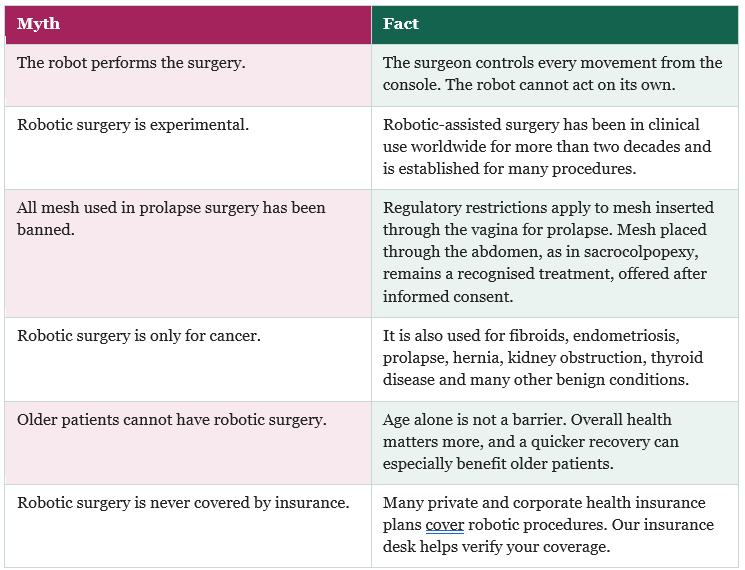
MYTH VS FACT
FINAL CALL TO ACTION
Precision of robotics. Expertise of experience.
Experience matters. Volume matters. Expertise matters.
Talk to our robotic surgery team about whether robotic surgery is right for you. At Fortis Mohali, you are cared for by one of India’s highest-volume da Vinci programs — where advanced technology is guided by years of surgical experience.
CONTACT INFORMATION
Phone: +91 72728 72728
Location: Fortis Hospital Mohali, Sector 62, Phase VIII, Sahibzada Ajit Singh Nagar (Mohali), Punjab 160062
Fortis Institute of Robotic Surgery - Noida
About Fortis Hospital, Noida
Fortis Hospital, Noida, is a reputable healthcare facility in Uttar Pradesh with modern infrastructure, 200+ beds, and cutting-edge technology. It is a Center of Excellence for Cardiac Sciences, Oncology, Orthopaedics, and Emergency Trauma Care Services. The hospital, part of the Fortis Healthcare Group, focuses on compassionate patient care and clinical excellence to "Save and Enrich lives."
Fortis Hospital, Noida, has recently introduced a Robotic Surgery department, revolutionizing the surgical experience for our patients by incorporating cutting-edge robotic technology. This integration has led to significant advancements in visualization, precision, control, and dexterity.
By utilizing robotic assistance in our surgical procedures, our patients have experienced a host of benefits, such as faster recovery times, reduced scarring, minimized blood loss, and decreased post-operative discomfort. Additionally, this advanced technology enables patients to resume their daily activities more quickly, leading to shorter hospital stays.
Fortis Hospital Vashi, Navi Mumbai,, is renowned for its exceptional Robotic Surgery procedures. The state-of-the-art technology has advanced visualization, precision, control, and dexterity during complex surgeries. Equipped with an advanced robotic system, the hospital performs intricate procedures with unmatched accuracy, particularly in challenging areas like the highly vascular pelvic region and neck.
Robotic assistance provides patients with faster recovery times, reduced scarring, minimized blood loss, and decreased post-operative discomfort. Patients can swiftly resume daily activities, leading to shorter hospital stays. Leveraging extensive expertise, the hospital has successfully conducted numerous minimally invasive surgeries using robotic technology, ensuring optimal patient outcomes.
About Hiranandani Fortis Hospital, Vashi, Mumbai
Fortis Hospital Vashi, Navi Mumbai, is a prestigious JCI-accredited medical centre with more than 300 beds, renowned doctors, and a reputation as Maharashtra's largest multi-organ transplant centre. The hospital houses Central Vashi's first advanced surgical robot and a pioneering bone marrow transplant unit. Its specialists provide comprehensive care across super specialties, including Cardiology, Urology, Neurosciences, Oncology, and Critical Care.
Fortis Hospital, Mulund, is renowned for its exceptional Robotic Surgery procedures. The state-of-the-art technology has advanced visualization, precision, control, and dexterity during complex surgeries. Equipped with an advanced robotic system, the hospital performs intricate procedures with unmatched accuracy, particularly in challenging areas like the highly vascular pelvic region and neck.
Robotic assistance provides patients with faster recovery times, reduced scarring, minimized blood loss, and decreased post-operative discomfort. Patients can swiftly resume daily activities, leading to shorter hospital stays. Leveraging extensive expertise, the hospital has successfully conducted numerous minimally invasive surgeries using robotic technology, ensuring optimal patient outcomes.
About Fortis Hospital, Mulund, Mumbai
Fortis Hospital, Mulund, is a prestigious JCI-accredited medical centre with more than 300 beds, renowned doctors, and a reputation as Maharashtra's largest multi-organ transplant centre. The hospital houses central Mumbai's first advanced surgical robot and a pioneering Bone Marrow Transplant Unit. Its specialists provide comprehensive care across super specialties, including Cardiology, Urology, Neurosciences, Oncology, and Critical Care.
Fortis Institute of Robotic Surgery - BG Road, Bengaluru
About Fortis Hospital BG Road Bangalore
Fortis Hospital on Bannerghatta Road in Bengaluru is a well-equipped medical facility with 284 beds and top-notch infrastructure. It is staffed by highly skilled doctors, paramedical, and support personnel, focusing on evidence-based practices for quality care. The hospital specializes in super-specialty tertiary care across 40 medical fields, including Cardiac Sciences, Neurology, Oncology, and Robotic Surgery. With over 150 doctors and 800 para-medical staff, it offers services like Emergency Care, Organ Transplants, and Preventive Care. Fortis Hospital has earned accreditation from NABH four times and JCI five times. It is recognized as one of the top five global destinations for medical tourism by MTQUA, making it a standout in the healthcare industry.
Fortis Hospital, Bannerghatta Road, excels in Robotic Surgery, achieving significant progress in visualization, precision, control, and dexterity, transforming the surgical experience for patients. Robotic assistance offers benefits like faster recovery, reduced scarring, minimized blood loss, and decreased post-operative discomfort, enabling quicker return to daily activities and shorter hospital stays. With an advanced robotic system, the hospital performs intricate procedures with unmatched accuracy, especially in challenging areas like the highly vascular pelvic region and neck. Leveraging extensive expertise, the hospital conducts successful minimally invasive surgeries using robotic technology for optimal patient outcomes
FORTIS INSTITUTE OF ROBOTIC SURGERY
Discover minimally invasive, robotic-assisted surgery
A better and safer option for you and your surgeon
Minimally invasive surgery means smaller incisions, less blood loss, faster recovery and less pain. Unlike the other techniques of MIS, i.e. Laparoscopic Surgery, Robotics surgery has the advantages of 3D vision, intuitive movements of the surgical instruments, and better precision to help achieve the best outcomes across surgical specialities.


