
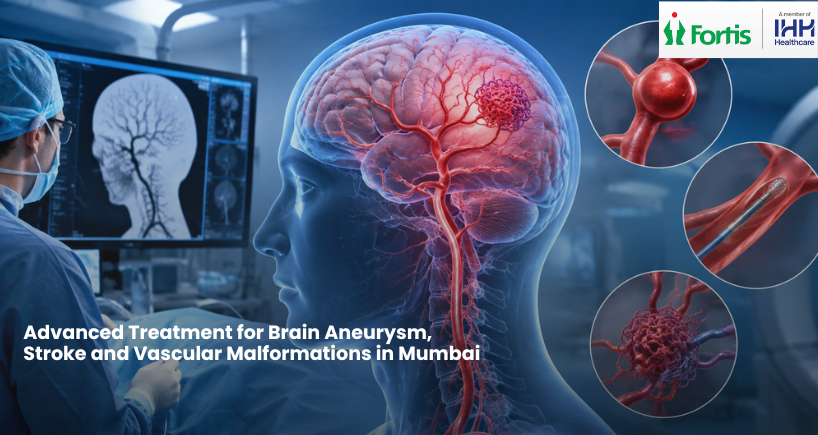


Advanced Neurovascular Treatments in Mumbai
Neurovascular Disorders: Modern Treatments That Save Lives
A complex system of blood vessels tirelessly nourishes our brain and spinal cord every second of our lives. When these blood vessels become blocked, weakened, malformed or diseased, the consequences can be devastating. Thankfully, advances in neurovascular and endovascular medicine now allow many of these conditions to be treated with minimally invasive procedures, often without the need for open brain surgery.
Here are some of the most important neurovascular conditions which can now be treated by modern endovascular techniques.
Brain Aneurysms: Hidden Weak Spots
A brain aneurysm is a ballooning out of the wall of a blood vessel in the brain. Most aneurysms are asymptomatic for years and are often diagnosed incidentally during scans performed for other indications.
The danger is when an aneurysm bursts, causing bleeding around the brain (subarachnoid hemorrhage) – a life-threatening emergency requiring immediate treatment.
symptoms include
- Sudden, severe “worst headache of life”
- Vomiting
- Neck stiffness
- Loss of consciousness
- Double vision
- Drooping eyelid
- Occasionally, aneurysms may cause symptoms before rupture by pressing on nearby nerves.
Treatment
Many aneurysms these days can be treated through a tiny puncture in the wrist or groin. Sophisticated catheters passed through the blood vessels can seal the aneurysm with coils, flow diverters or specialized stents, avoiding the need for open brain surgery in many patients.
Early diagnosis and treatment can make a big difference in outcomes.”
Ischemic Stroke: Time is Brain
A stroke occurs when blood flow to a part of the brain is suddenly blocked. Stroke, which kills brain cells within minutes, is now one of the leading causes of disability and death globally.
Warning signals
Remember: BE FAST : -
- Balance problems
- Eyesight changes
- Face drooping
- Arm weakness
- Speech difficulty
- Time to call emergency services
Treatment
Clot-busting drugs can reopen blocked arteries if patients reach hospital promptly.
With big vessel blockages, there’s a procedure called a mechanical thrombectomy, which lets specialists physically remove the clot with tiny devices passed through the arteries. This treatment has revolutionized stroke care and can greatly reduce long-term disability if done in time.
Time is truly brain.
Brain Arteriovenous Malformations (AVM)
An arteriovenous malformation (AVM) is a complicated jumble of arteries and veins in which the blood flow bypasses the normal capillary network. These fragile vessels can rupture, leading to bleeding in the brain.
Signs and symptoms
- Brain hemorrhage
- Seizures
- Persistent headaches
- Weakness or numbness
- Visual disturbances
Treatment
Treatment depends on the size and location of the AVM. Endovascular embolization is the insertion of tiny catheters into the abnormal vessels and the injection of special materials to block the abnormal blood flow. This may be done alone or with surgery or radiosurgery.
Cerebral Dural Arteriovenous Fistulas (DAVFs)
A Dural arteriovenous fistula is an abnormal connection between the arteries and veins in the covering of the brain (the dura). These abnormal connections develop later in life unlike AVMs and can sometimes worsen over time.
Signs and Symptoms
- Pulsating noise in the ear (pulsatile tinnitus)
- Headaches
- Eye swelling or redness
- Vision problems
- Brain hemorrhage
- Stroke-like symptoms
Treatment
Most DAVFs can be treated using minimally invasive embolization techniques where liquid embolic agents are delivered precisely into the abnormal connection to permanently close it.
Spinal Cord Vascular Malformations
Abnormal blood vessels around the spinal cord are uncommon but can cause gradual damage to the spinal cord by blocking normal blood flow or bleeding.
Symptoms
- Progressive leg weakness
- Difficulty walking
- Numbness
- Bladder or bowel problems
- Back pain
These symptoms often mimic common spinal disorders, so diagnosis may be delayed.
Treatment:
Depending on the type of lesion many spinal vascular malformations can be treated with endovascular embolization or microsurgery. Early diagnosis greatly improves the chances for neurological recovery.
Pediatric Vascular Malformations
Children can be born with abnormal blood vessels in the brain, spinal cord, face, or other parts of the body. Some are harmless, while others can cause serious medical problems.
Possible symptoms
- Seizures
- Headaches
- Developmental delay
- Bleeding
- Enlarging vascular swellings
- Heart failure in newborns with large vascular malformations
Treatment
Management involves a multispecialty team including pediatric neurologists, neurosurgeons, neurointerventionists, anesthetists and intensive care specialists. Modern minimally invasive techniques permit safe treatment for many children with excellent results.
Carotid Artery Stent
The carotid arteries are the main blood vessels that supply the brain. Cholesterol deposits can narrow these arteries and increase the risk of stroke.
Who is at risk
- Diabetes-
- High blood pressure-
- Smoking-
- High cholesterol
- Older age
Symptoms
Many patients are asymptomatic until they have a stroke. Others may experience temporary weakness , trouble speaking , or temporary loss of vision .
Treatment
Carotid stenting is a less invasive option than surgery for selected patients. A stent is placed within the narrowed artery to restore blood flow and reduce the risk of future stroke.
Careful selection of patients is essential for optimal outcomes.
Intracranial Stent
Sometimes the narrowing occurs in the arteries within the brain itself. This condition, known as intracranial atherosclerotic disease, is a leading cause of stroke, particularly in Asian populations.
Symptoms
- Recurrent transient ischemic attacks (TIAs)
- Repeated strokes despite medication
- Weakness
- Speech difficulty
- Dizziness
Treatment
Most patients are managed medically with medications and lifestyle changes initially, but selected patients with recurrent symptoms despite optimal medical therapy may benefit from intracranial angioplasty and stenting. These highly specialized procedures are done only in selected cases by experienced neurointervention teams.
Tumor Embolization
Some tumors are very well supplied by blood vessels, making them difficult to remove surgically because of the amount of bleeding that occurs.
How embolization works
Prior to surgery, tiny particles or liquid embolic materials can be injected through a catheter to selectively block blood vessels supplying the tumor.
That makes the blood loss much less, the operation time shorter and the removal of the tumor safer.”
Tumor embolization is frequently used for selected brain tumors, head and neck tumors, spinal tumors and other highly vascular lesions.
The Future of Neurovascular Management
The field of neurovascular intervention has changed dramatically over the last 20 years. Many conditions that once required major surgery are now treatable through tiny catheters that are inserted through the wrist or the groin, meaning shorter hospital stays, faster recovery and excellent clinical outcomes.
Early diagnosis remains the most important element for successful treatment. Seek urgent medical attention if you or a loved one suddenly experience neurological symptoms such as weakness, speech difficulty, severe headache, vision loss or unexplained numbness. Prompt evaluation from an experienced neurovascular team can make the difference between disability or recovery.
Modern medicine has provided us with powerful tools to treat complex diseases of the brain and spinal cord. Timely intervention can save not just lives, but quality of life.
Categories
Clear allMeet the doctor

- Neurointerventional Radiology | Neurointerventional Radiology
-
 20 Years
-
 2000
2000
Related Blogs
View all

Non-Surgical Treatment For Uterine Fibroid
Stenting for Carotid Artery Disease : Why you need a Second opinion in Mohali

Neurovascular and Neurointerventional Radiology Hospital in Mumbai
Tingling Numbness or a Mini-Stroke? When Carotid Artery Disease Needs Attention

FAQs

Keep track of your appointments, get updates & more!

