
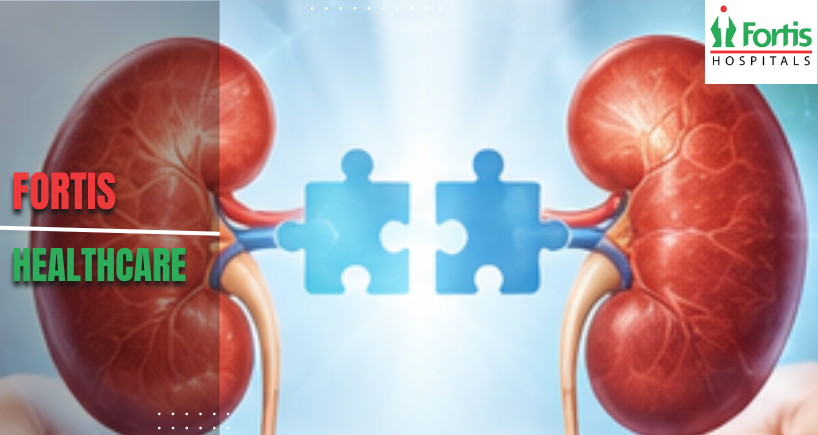


Finding a Match Overcoming Challenges in Kidney Replacement
Kidney failure can bring a range of physical, emotional, and practical challenges, especially when dialysis is no longer enough to meet a patient's long-term needs. For suitable patients, a kidney transplant may offer an alternative to ongoing dialysis. However, finding a suitable donor and completing the transplant process involves several important steps.
Kidney matching is not based on a single factor. Blood group, tissue compatibility, antibody levels, medical suitability, donor health, and other factors are considered before transplantation. Understanding how this process works can help patients and families make informed decisions while waiting for a suitable kidney.
Navigating the National Waitlist
When a living donor is not available, eligible patients may be placed on a waiting list for a kidney from a deceased donor.
The allocation process varies by country and transplant system. In India, deceased-donor kidneys are allocated through the authorised organ donation and transplantation system, with factors such as blood group, medical suitability, waiting time, and other allocation criteria considered according to applicable policies.
Waiting times can vary considerably. Blood group can influence how quickly a suitable organ becomes available, but it is not accurate to assume that people with a particular blood group will always wait longer. The availability of suitable organs and the allocation rules also play an important role.
While waiting, patients are generally expected to remain medically fit for transplantation. Regular appointments, prescribed medicines, appropriate nutrition, physical activity as advised by the healthcare team, and management of conditions such as diabetes or high blood pressure can all be important.
Patients should also remain in contact with their transplant centre and follow instructions about how they can be reached if a suitable organ becomes available.
Exploring Living Donor Options
A living-donor kidney transplant may be possible when a healthy person is medically and ethically suitable to donate one kidney.
People can generally live healthy lives with one functioning kidney, which is why living kidney donation is possible after careful medical evaluation. However, not every person who volunteers can become a donor. Donors undergo detailed assessments to protect their own health and determine whether donation is appropriate.
A living donor may be a relative, spouse, friend, or another person who meets the legal and medical requirements for donation.
One potential advantage of living donation is that the transplant can often be planned in advance rather than waiting for an organ from a deceased donor. In many cases, living-donor kidneys also have favourable outcomes, although results vary between individuals.
The donor and recipient undergo separate medical assessments, and the decision to proceed must prioritise the donor's safety and voluntary consent.
Understanding Kidney Matching
Kidney compatibility involves much more than simply finding someone with the same blood group.
Doctors may consider:
- ABO blood group compatibility
- HLA tissue typing
- Antibody levels in the recipient
- Crossmatch testing
- Donor and recipient medical conditions
- The donor's overall health and suitability
- Other transplant-specific factors
A crossmatch test helps determine whether the recipient's immune system is likely to react strongly against cells from the potential donor.
A positive crossmatch can indicate a high risk of rejection and may mean that the donor-recipient pair is not suitable for a conventional transplant.
Overcoming Blood Type Incompatibility
Blood group incompatibility does not always mean that living donation is impossible.
In selected circumstances, transplant centres may consider ABO-incompatible transplantation using specialised medical protocols. These can involve treatments designed to reduce harmful antibodies before transplantation, followed by close monitoring after surgery.
Another option for some donor-recipient pairs is kidney paired exchange, also known as kidney swap.
For example, suppose Person A is willing to donate to their spouse, Person B, but the two are not compatible. Another donor-recipient pair may face a similar problem. Through an approved paired-exchange programme, the donors can potentially donate to the other recipients, creating a compatible exchange.
Paired exchange does not guarantee that a transplant will be possible, but it can expand opportunities for patients who have a willing but incompatible living donor.
Preparing for Kidney Transplantation
Once a suitable donor is identified, both donor and recipient undergo extensive evaluation.
The recipient may have blood tests, imaging studies, cardiac assessment, infection screening, and other investigations to determine whether transplantation is appropriate.
The donor also undergoes detailed testing to ensure that donation can be performed safely and that the remaining kidney is expected to provide adequate function.
A transplant coordinator helps organise appointments, investigations, documentation, and communication between the different members of the transplant team.
This multidisciplinary approach can involve nephrologists, transplant surgeons, anaesthetists, nurses, coordinators, pharmacists, dietitians, and other specialists.
Understanding Rejection Risks
After transplantation, the immune system recognises the transplanted kidney as tissue that is not naturally part of the recipient's body. This can lead to organ rejection.
To reduce this risk, transplant recipients usually need lifelong immunosuppressive medicines. The specific combination and doses are individualised and may change over time.
Regular follow-up is essential because rejection can sometimes occur without obvious symptoms. Blood tests and other assessments allow the transplant team to monitor kidney function and identify potential problems.
Patients should take their prescribed medicines exactly as directed and should never stop or change immunosuppressive medication without speaking to their transplant team.
If a dose is missed, patients should follow the instructions provided by their transplant centre rather than assuming that taking an extra dose is appropriate.
Preventing Complications After Transplantation
Immunosuppressive medicines help protect the transplanted kidney, but they also reduce certain aspects of the immune response. This can increase susceptibility to infections and may contribute to other long-term complications.
For this reason, transplant recipients require regular monitoring.
Doctors may monitor:
- Kidney function
- Blood pressure
- Blood glucose and cholesterol
- Drug levels where appropriate
- Signs of infection
- Possible rejection
- Cardiovascular risk factors
- Other medication-related complications
Patients may also receive specific advice regarding vaccinations, food safety, exercise, sun protection, and infection prevention.
Tracking Long-Term Health After Transplantation
The goal of kidney transplantation is not simply to complete the surgery. Long-term care is essential for maintaining the health of the transplanted kidney and the recipient.
Many successful transplant recipients experience greater freedom from dialysis and may be able to return to work, education, family activities, and other aspects of daily life. However, recovery and quality-of-life improvements vary between individuals.
A kidney transplant does not remove the need for medical care. Regular blood tests, follow-up appointments, medication management, and healthy lifestyle habits remain important throughout life.
Dietary recommendations also change over time and should be personalised. Patients should not assume that every food restricted during dialysis will remain restricted after transplantation. Their transplant team or renal dietitian can provide appropriate guidance based on kidney function, medications, blood tests, and other health conditions.
Choosing the Right Transplant Centre
Kidney transplantation requires coordinated care before, during, and after surgery. When evaluating a transplant centre or Best Hospital in Noida, patients may consider:
- Experience of the transplant and nephrology teams
- Living- and deceased-donor transplant services
- Donor evaluation facilities
- Access to critical care and diagnostic services
- Transplant coordination and follow-up
- Management of rejection and infections
- Availability of supporting specialties
- Long-term patient monitoring
Patients and families should discuss the expected benefits, risks, alternatives, costs, and follow-up requirements with their transplant team before making decisions.
Final Thoughts
Finding a suitable kidney donor can be one of the most challenging parts of the transplant journey, but modern transplantation offers several pathways for eligible patients. Living donation, deceased-donor transplantation, paired exchange, and selected approaches for blood group incompatibility may provide options depending on the individual's circumstances.
Successful transplantation also depends on long-term care. Taking immunosuppressive medicines as prescribed, attending regular follow-ups, maintaining a healthy lifestyle, and promptly reporting concerning symptoms can help protect the transplanted kidney.
With appropriate evaluation and ongoing medical support, kidney transplantation can provide many suitable patients with an opportunity to live with greater independence from dialysis while continuing to receive the care needed for long-term health.
Categories
Clear allRelated Blogs
View all






FAQs

Keep track of your appointments, get updates & more!

