
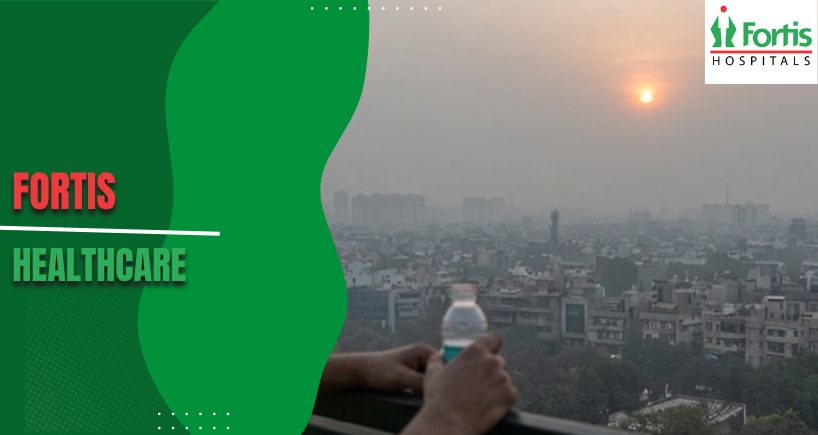


Kidney Disease and Delhi Pollution What the Latest Research Says and How to Protect Your Kidneys
Every winter, Delhi's air quality crisis dominates headlines. AQI levels spike into the "hazardous" category for days at a time. Most coverage focuses on the respiratory impact lungs, asthma, COPD. But a growing body of research is pointing to a less-discussed organ that Delhi's pollution is quietly damaging: the kidney.
This is not a fringe concern. Peer-reviewed studies published in the Journal of the American Society of Nephrology and The Lancet have established a significant link between long-term exposure to fine particulate matter (PM2.5) and accelerated kidney function decline. For the 30 million people living in Delhi NCR where PM2.5 levels routinely exceed safe limits by 10–15 times during peak pollution months this research has direct clinical relevance.
Here is what the evidence actually shows, and what the best nephrologists in Delhi recommend to protect kidney health in a heavily polluted urban environment.
How air pollution damages the kidneys
The PM2.5 pathway
Fine particulate matter — particles measuring 2.5 micrometres or less in diameter is small enough to pass through the lungs and enter the bloodstream directly. Once in circulation, PM2.5 triggers systemic inflammation, oxidative stress, and endothelial dysfunction (damage to the inner lining of blood vessels).
The kidneys are among the most vascular organs in the human body they receive approximately 20–25% of cardiac output. They are therefore particularly vulnerable to any process that damages blood vessels or triggers inflammatory responses in the circulation.
Chronic low-level kidney inflammation nephritis accelerates the decline of glomerular filtration rate (GFR) even in people who do not have diabetes or hypertension. Research suggests that for every 10 μg/m³ increase in long-term PM2.5 exposure, the risk of CKD increases by approximately 25–35%.
Heavy metal exposure through polluted air and water
Delhi's pollution is not only airborne. Industrial emissions in the NCR region contribute heavy metals lead, cadmium, and arsenic to both air and groundwater. Chronic low-level exposure to cadmium and lead is a recognised cause of tubular kidney damage, a form of kidney injury that is distinct from glomerular damage caused by diabetes or hypertension, and often goes undetected on standard kidney function tests.
The inflammation-CKD cycle
Once CKD begins regardless of the initial cause systemic inflammation accelerates its progression. Air pollution's role is therefore double: it may initiate kidney damage, and it worsens existing CKD by sustaining the inflammatory environment that drives disease progression.
What the latest research says: key findings relevant to Delhi patients
A 2019 study published in the Journal of the American Society of Nephrology analysed data from over 2.4 million US veterans and found that patients living in areas with higher PM2.5 concentrations had a measurably higher incidence of CKD and end-stage renal disease, independent of other risk factors.
A 2020 analysis in The Lancet Planetary Health, examining data from 66 countries, found that ambient air pollution was responsible for approximately 1.3 million cases of CKD globally in 2019 placing it among the significant modifiable risk factors for kidney disease.
Indian-specific data from ICMR and regional studies suggest that urban populations in North India particularly Delhi NCR face a convergence of pollution, dietary risk factors, and high diabetes and hypertension prevalence that creates a compounded CKD risk profile greater than any single factor alone.
How to protect your kidneys from pollution damage in Delhi
1. Use high-quality air filtration indoors
HEPA-grade air purifiers reduce indoor PM2.5 concentrations by 70–90%. Given that most Delhi residents spend the majority of their time indoors, maintaining clean indoor air is the single most practical intervention for reducing long-term PM2.5 exposure. This is especially important during November-January when outdoor AQI reaches its worst levels.
2. Wear N95 masks during peak pollution periods
Standard surgical masks do not filter PM2.5. N95 respirators which filter at least 95% of particles 0.3 microns and larger provide meaningful protection when outdoor exposure is unavoidable. Patients with existing CKD, diabetes, or cardiovascular disease should treat N95 masks as non-optional during high AQI days.
3. Maintain kidney-protective hydration
Adequate hydration supports the kidney's ability to filter and excrete inflammatory compounds. Delhi nephrologists consistently recommend a daily fluid intake of at least 2.5–3 litres for patients at risk. This is particularly important in the summer months when sweat losses reduce effective circulating volume and concentrate urine.
4. Monitor kidney function annually if you live in high-risk zones
Patients living in Delhi NCR with any of the following should have annual kidney function tests (serum creatinine, eGFR, and urine albumin-to-creatinine ratio):
- Age above 40
- Diabetes or prediabetes
- Hypertension
- Family history of kidney disease
- Heavy smokers
Annual monitoring is not excessive caution it is the minimum standard for living in a high-pollution environment with background CKD risk factors.
5. Consult a nephrologist if your GFR is declining without a clear cause
If your eGFR has been declining over successive annual tests but you do not have diabetes or uncontrolled blood pressure, ask your physician for a nephrology referral. Environmental nephrotoxicity is an underdiagnosed cause of CKD that requires a specialist assessment to identify and address.
Conclusion
Delhi's pollution crisis is not just a lung problem. The kidneys of every long-term Delhi resident are exposed to a chronic, low-level inflammatory burden that the most recent nephrology research associates with measurable increases in CKD risk.
The good news is that some of this risk is modifiable through indoor air filtration, appropriate masking, good hydration, and annual kidney function monitoring. Finding the best nephrologist in Delhi for a proactive assessment is not an overcautious step for a city where the air quality data demands more than passive concern.
Categories
Clear allMeet the doctor

- Organ Transplant | Kidney Transplant
- Nephrology | Nephrology
-
 14 Years
-
 1500
1500
Related Blogs
View all





FAQs
Can living in Delhi actually cause kidney disease?
Pollution alone is unlikely to cause CKD in healthy people, but long-term PM2.5 exposure is a significant compounding risk factor alongside diabetes, hypertension, and genetic predisposition.
How exactly does air pollution damage the kidneys?
PM2.5 enters the bloodstream through the lungs, triggering systemic inflammation and vascular damage — the kidneys, as highly vascular organs, are particularly vulnerable to this process.
Should I move out of Delhi if I have CKD?
Discuss this with your nephrologist — indoor air filtration, N95 masking, and good hydration can mitigate much of the risk without relocation for most patients.
What AQI level is dangerous for kidney patients?
AQI above 150 is a concern; above 300 (Hazardous), avoid outdoor exposure entirely and run HEPA air purifiers indoors continuously.

Keep track of your appointments, get updates & more!

