
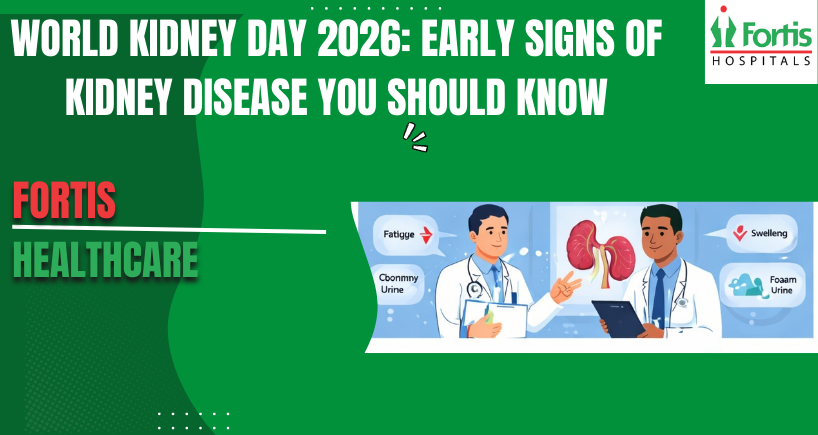


World Kidney Day 2026: Early Signs of Kidney Disease You Should Know
Your kidneys on an average - filter two hundred litres of blood daily. They control blood pressure, activate vitamin D, balance fluids as well as make red blood cells too. Most people only look for them when a problem is clearly visible – which is usually years after it began.
World Kidney Day 2026 is all about the people living with kidney disease who have not been diagnosed yet. Two of every five adults with significant loss of kidney function have no signs or symptoms, no recent bloodwork, and no reason to think damage is building up inside. Addressing this needs understanding what to watch for.
How Kidney Disease Develops Without Obvious Signals
Kidneys have a large ability to cope with damage. If a section of the filtering system is failing, healthy nephrons increase their effort to make up for it. Blood tests can still be in the normal range even with as much as fifty percent of kidney function lost. This ability to compensate is remarkable, but can also be misleading to doctors.
Nephrology doctors say diabetes and high blood pressure are the two conditions causing most chronic kidney disease around the world. Both steadily harm kidney blood vessels, and both are usual in urban and rural communities in India. Anyone managing either of these conditions without regular kidney function checks is overlooking an important aspect of their treatment.
Repeated urinary infections, long-term use of NSAIDs, birth defects in kidney structure, autoimmune illnesses such as lupus, and some inherited illnesses – including polycystic kidney disease – all cause kidney damage in different ways. Deciding which of these applies to a patient helps shape both treatment and monitoring plans.
Symptoms That Appear When Disease Is Already Present
Feeling very tired is often one of the first things people notice. Waste building up in the body affects energy in cells and mental sharpness before noticeable signs appear. Most people put this tiredness down to lack of sleep, stress, or a heavy workload, not kidney function, as it doesn’t obviously point to a kidney problem.
Swelling in the ankles, and around the eyes, happens when the kidneys cannot control fluid levels. Swelling in the lower legs is slow to develop, and easily put down to being on your feet all day. Puffiness around the eyes – which is most obvious in the mornings – is a more specific sign, and should be checked by a doctor instead of being considered normal.
Changes in urination are among the most useful chronic kidney disease early signs. Foamy urine suggests protein is leaking through damaged filters. Urine which is darker than normal, changes in how often you go, and needing to urinate at night show changes in how the kidneys concentrate and deal with fluid over a day.
Screening, Blood Tests, and What the Numbers Mean
Serum creatinine – used to work out estimated glomerular filtration rate – is the usual way to measure how well the kidneys are filtering. An eGFR of sixty or higher is generally normal in adults. Readings from thirty to sixty show moderate loss of function. Below fifteen shows end-stage disease, and the need to plan for dialysis or a transplant.
A urine albumin-to-creatinine ratio finds protein in the urine – one of the earliest signs of stress on the kidneys that can be measured. Both tests are cheap, need no preparation, and together give a good first idea of kidney health. Anyone with diabetes, high blood pressure, obesity, or a family history of kidney disease should be tested every year, at a minimum.
kidney doctors use blood tests with urine examination and ultrasound scans to find not just how much function has been lost, but also what is likely to be the basic cause, which decides whether the disease can be slowed with the correct treatment.
Kidney Disease Symptoms That Indicate Advanced Involvement
Feeling sick, a loss of appetite, and a metallic taste in the mouth happen when urea and creatinine build up to levels the body’s ability to cope can no longer handle. These symptoms often send patients to stomach doctors or general practitioners first, because they do not obviously point to kidney damage without a blood test to prove it.
Kidney disease symptoms affecting the heart include rapidly worsening high blood pressure, fluid build-up causing breathlessness, and irregular heartbeats from imbalances in potassium and sodium. The kidneys precisely control electrolyte levels, and if this control fails, heart problems appear. Chronic kidney disease greatly increases the risk of heart problems, beyond what blood pressure alone would show.
Anaemia in kidney disease happens because the kidneys make erythropoietin – the hormone which stimulates red blood cell production. As kidney function falls, erythropoietin production falls, and anaemia develops independently of iron or diet. Unexplained anaemia in an adult – especially with any of the other symptoms described – needs kidney function tests before other causes are investigated.
Slowing Progression and Protecting What Remains
Keeping blood pressure below one hundred thirty over eighty is the most effective way to slow down kidney disease. ACE inhibitors and ARBs are the best drug classes because they lower pressure inside the nephrons as well as lowering overall blood pressure. Their benefit in kidney disease caused by diabetes is well known.
Reducing sodium in the diet lowers the load on fluid control and helps blood pressure goals. In advanced disease, potassium and phosphate restriction become necessary. A kidney dietitian can give individual advice which general healthy eating guidance does not replace – especially when many diet changes need to be balanced at the same time.
Categories
Clear allRelated Blogs
View all






Keep track of your appointments, get updates & more!

