
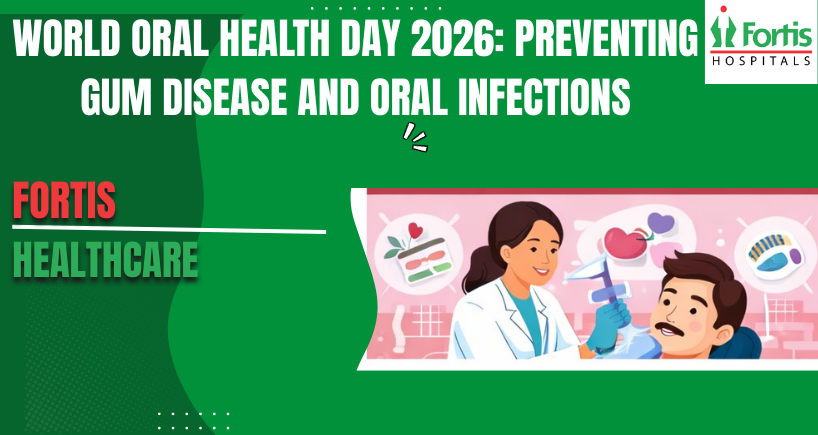


World Oral Health Day 2026: Preventing Gum Disease and Oral Infections
Bleeding when you brush isn’t usual. Many people don’t worry about it, thinking it’s just something which sometimes occurs and clears up on its own. It hardly ever does, and for many adults it is in fact the very first obvious sign of a condition that has been developing beneath the gums for quite a while.
Generally, oral wellbeing isn’t considered as important in discussions of general wellbeing, despite the fact that connections between the two have been displayed with heart disease, difficulties from diabetes, inappropriate pregnancy outcomes, and lung infections. World Oral Health Day 2026 emphasises that the mouth is not apart from general wellbeing: what begins in the gums does not always stay in the gums.
What Gum Disease Is and How It Progresses
The earliest phase of gum disease is gingivitis, which is marked by inflammation of the gum tissues around the teeth. Bacterial plaque at the gum line causes an immune reaction which leads to redness, swelling, and bleeding when touched. At this point, the condition is entirely curable with a professional cleaning and regular care at home.
If gingivitis isn’t treated, it goes on to become periodontitis. Bacterial poisons and the inflammation they cause destroy the bone and tissues supporting the teeth. Pockets develop between the tooth and gum, growing deeper as bone is lost. At this stage, gum disease prevention moves from being simply curable to being managed, as bone that’s been lost doesn’t grow back unless surgery is used.
Things that increase risk, other than not cleaning your mouth well, include smoking, which lowers blood flow to the gums and hides inflammation, making the disease seem less serious than it is. Diabetes weakens the immune response and the body’s ability to repair tissues, greatly speeding up the breakdown of the gums. Pregnancy hormones make the gums react more strongly to plaque, making any gingivitis much worse in the second and third three-month periods.
The Systemic Connections That Make Oral Care a Medical Priority
Periodontal – that is, gum – bacteria, and the inflammatory things they produce, enter the bloodstream via inflamed gum tissue. Both dental and cardiac research consistently demonstrate associations between severe periodontitis and increased chances of cardiac disease, even controlling for typical risk factors such as smoking and diabetes. Though the precise mechanisms are still the subject of investigation, the connection is well established.
People who don’t control their diabetes well have a higher rate of serious periodontitis, and treating gum disease in diabetic patients improves blood sugar levels to a small, but important extent. This relationship goes both ways. Bacteria in the mouth also cause lung infections in people who get oral fluids into their lungs – a particularly big concern for weak or hospital patients.
Problems in pregnancy, like premature birth and low birth weight, are linked to periodontitis which hasn’t been treated. The substances causing inflammation in infected gum tissue can affect the biological processes which control when labour begins. Dental care during pregnancy is safe, and is specifically recommended during the second three months, when treatment is most comfortable and risk is at its lowest.
Oral Infections: Types, Causes, and When to Seek Care
A dental abscess happens when bacterial infection reaches the pulp of the tooth, or the bone around it. Pain that throbs, gets worse when you lie down, and doesn’t get better with normal painkillers means the pulp is involved. Swelling of the face that goes below the jaw, or toward the eye, shows an infection spreading and needing emergency attention the same day, not a booked appointment in a fortnight.
Oral candidiasis, a fungal infection that looks like white patches on the tongue, the inside of the cheeks, or the roof of the mouth, happens most often in people taking antibiotics or corticosteroids, those with diabetes which isn’t well controlled, and people with a weak immune system. Treating oral infections deals with the reason why someone is likely to get them, as well as the infection itself, because antifungal treatment on its own, without fixing what makes someone vulnerable, reliably leads to it coming back.
Herpetic gingivostomatitis, the first oral infection with herpes simplex virus, causes a lot of painful sores across the mouth and gums, usually with a fever and trouble eating. It’s most common in young children and needs specific antiviral treatment when it’s serious. Regular cold sores at the edge of the lips are the same virus becoming active again from being hidden in the trigeminal ganglion.
Protecting Teeth from Erosion and Structural Damage
The dental team deals with complicated oral health cases where there’s a link to general medical conditions, including patients on blood thinners needing teeth taken out, cancer patients needing dental checks before chemotherapy, and people with serious periodontitis and uncontrolled general illness.
Acid wearing away, or erosion, gradually removes enamel from teeth through being regularly exposed to acidic foods, fizzy drinks, and stomach acid in people with acid reflux or eating disorders. Unlike decay, erosion affects tooth surfaces in a way which shows where the acid is coming from. Enamel doesn’t rebuild completely once it’s badly damaged, making preventing it far more valuable than fixing it.
Tooth grinding, or bruxism, usually happens while you’re asleep and causes wearing of the biting surfaces, pain in the jaw, and headaches when you wake up. A lot of people don’t know they grind until a dentist finds the wear pattern. Custom mouthguards protect teeth during sleep, and finding out what stress or sleep disorder is causing the behaviour deals with the reason for it, rather than just protecting against what it does.
Maintaining Oral Health Through Practical Daily Habits
The way you brush is more significant than how frequently you do. Plaque is taken away from the tooth itself and from where the gums meet the tooth by a brush with soft bristles, held at an angle of forty-five degrees to the gums and moved in small circles. Using a medium- or hard-bristled brush, and going side to side, wears down enamel but does not much affect the plaque which remains mostly under the gum.
Cleaning between the teeth, using floss or interdental brushes depending on how much space there is, removes plaque from surfaces a toothbrush can’t get to. Gum disease starts in these spaces between the teeth before anywhere else. Using mouthwash instead of, rather than in addition to, cleaning between the teeth leaves the most important area unaddressed and gives a false feeling of being complete in the oral hygiene routine.
Categories
Clear allRelated Blogs
View all




Keep track of your appointments, get updates & more!

