
Comprehensive Neurology Care at Gleneagles Hospitals, Chennai
At Gleneagles Hospitals, Chennai, we are dedicated to providing comprehensive neurology care tailored to meet the unique needs of our patients. Our expert team of neurologists and healthcare professionals is committed to delivering the highest quality of care through advanced diagnostic techniques, innovative treatments, and compassionate support for a wide range of neurological disorders.
Your Trusted Neurology Department
● Minimally invasive surgery for advanced epilepsy
● Neuro and spine surgeries expertise
● Management of drug-resistant epilepsy
● Pediatric neuro and developmental care
● Neuro-critical care and anesthesia management
Our Services & Specialized Procedures
Our Team of Experts
FAQs
-
What types of neurological conditions do you treat at Gleneagles Hospital, Chennai?We treat a wide range of conditions including epilepsy, stroke, migraines, Parkinson's disease, multiple sclerosis, dementia, and more.
-
What diagnostic tests are available?Our neurology department offers tests such as EEGs, EMGs, nerve conduction studies, MRIs, CT scans, and more to accurately assess your neurological health.
-
What should I expect during my first consultation?During your first visit, a neurologist will review your medical history, conduct a physical examination, and may recommend specific diagnostic tests based on your symptoms.
-
Are there non-surgical treatment options available?Yes, many neurological conditions can be managed with medications and lifestyle modifications tailored to your individual needs.
-
How can I schedule an appointment with a neurologist?You can schedule an appointment by calling us or filling out the appointment request form on our website. Our team will assist you in finding a suitable time for your consultation.
Brain Stroke Recovery Journey - Patient Story
When a loved one faces a medical emergency, timely care can make all the difference. Mr. Dharmendra shares his uncle Mr. Ram Daur Gupta’s journey after acute brain stroke treatment under Dr. Sonal Gupta at Fortis Hospital, Shalimar Bagh—highlighting rapid intervention and compassionate care.
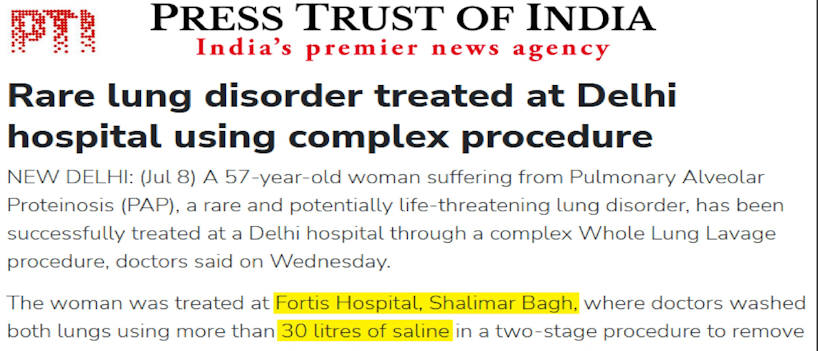


Fortis Hospital Shalimar Bagh Successfully Treats 57-Year-Old Woman with Rare Lung Disease Through Complex Whole Lung Lavage Procedure.
Treated by:
Dr. Vikas Maurya
Pulmonology and Critical care
| Fortis Hospital, Shalimar Bagh, New Delhi
Jul 23, 2026
In a rare reported case, Doctors at Fortis Hospital, Shalimar Bagh have successfully treated a 57-year-old woman suffering from Pulmonary Alveolar Proteinosis (PAP), an extremely rare and potentially life-threatening lung ailment in which abnormal accumulation of protein and fat-like substances in the air sacs of the lungs severely impairs breathing. The team of doctors led by Dr. Vikas Maurya, Senior Director & HOD, Respiratory Medicine & Respiratory Critical Care, Fortis Hospital Shalimar Bagh successfully performed a complex Whole Lung Lavage procedure, using over 30 litres of saline to wash both lungs and remove the accumulated material. The patient made a remarkable recovery and was discharged in a stable condition two days after the whole procedure in both lungs.
The patient had a history of diabetes and hypertension and was presented in the hospital with severe respiratory distress, including persistent cough, fever, and oxygen saturation levels as low as 83% on room air. She was dependent on 5 - 6 litres of oxygen per minute and had been bedridden for over a month, despite undergoing treatment in her hometown Bihar and later in Kanpur. Upon admission at Fortis Shalimar Bagh, a CT scan revealed that the lung tissues were severely damaged by the disorder. Given her critical condition and risk of progressive respiratory failure, the medical team immediately opted for Whole Lung Lavage - considered the gold standard treatment for PAP.
The procedure, often referred as a “power wash” for the lungs, involves sequentially washing each lung with large volumes of sterile fluid under general anesthesia, while the other lung continues to support breathing. The team of doctors performed the procedure in two stages, one week apart. During the first session, over 11 litres of fluid were used to wash the lung, followed by more than 20 litres in the second session, successfully removing large amounts of proteinaceous material. Post-procedure, the patient demonstrated significant improvement. Following the first lavage, her oxygen requirement reduced significantly, and following the second session, she was completely weaned off oxygen support, maintaining normal oxygen saturation levels on room air.
Giving details of the case, Dr. Vikas Maurya, Senior Director & HOD - Respiratory Medicine & Respiratory Critical Care, Fortis Hospital Shalimar Bagh, said, “Pulmonary Alveolar Proteinosis is an extremely rare and potentially life-threatening lung disorder that is often difficult to diagnose and manage. The condition leads to progressive breathlessness, persistent cough, chest discomfort, and severe oxygen deficiency, which can eventually result in respiratory failure if left untreated. Whole Lung Lavage remains the gold standard treatment for PAP; however, it is a highly specialised and resource-intensive procedure that is performed only at select tertiary care centres due to the expertise, infrastructure, anaesthesia support, trained physiotherapist and multidisciplinary coordination required. Each lung lavage can take over 5-6 hours and carries significant risks, particularly in patients who are already dependent on oxygen support. Through meticulous planning, close collaboration between our respiratory, anaesthesia, physiotherapy and critical care teams, and strict adherence to clinical protocols, we were able to successfully perform the procedure and achieve an excellent clinical outcome for the patient.”
Mr. Naveen Sharma, Facility Director, Fortis Hospital Shalimar Bagh, said, “This successful outcome reflects the advanced respiratory care capabilities and multidisciplinary expertise available at Fortis Hospital Shalimar Bagh. Managing rare and complex conditions such as Pulmonary Alveolar Proteinosis requires specialised infrastructure, clinical excellence, and coordinated care. Cases like these reinforce the importance of early diagnosis and timely access to advanced treatment, which can significantly improve patient outcomes and quality of life.”
Meet the doctor
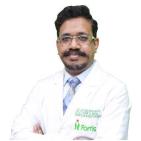
Dr. Vikas Maurya
Senior Director & HOD - Respiratory Medicine & Respiratory Critical Care | Fortis Shalimar Bagh
- Pulmonology | Pulmonology | Sleep Medicine | Pulmonology and Critical care | Interventional Pulmonology
-
 25 Years
-
 1500
Treated at Hospital

Fortis Hospital, Shalimar Bagh, New Delhi
4.6

4.6


Read more about
Pulmonology and Critical care
28 Doctor available at
19 locations
Does High PSA Means Cancer?
A high PSA level does not always mean cancer. PSA can increase due to several conditions, including prostate enlargement, infection, inflammation, or age-related changes. Proper evaluation and timely consultation are important to understand the actual cause.
In this video, Dr. R. K. Gopala Krishna, Director, Urology & Uro-Oncology, Fortis Hospital & Kidney Institute, explains what a high PSA level means, when further tests may be needed, and why early screening and medical guidance are important for prostate health.