
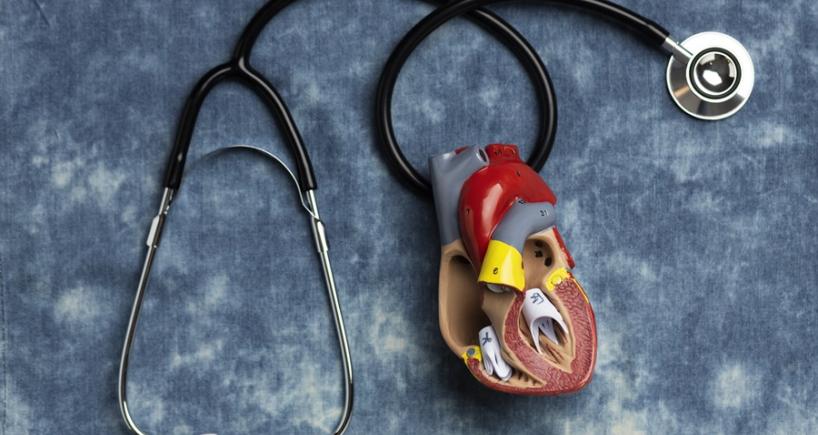


Time Management in the Cardiac Cycle: Critical Phases Explored
Introduction
The human heart is an impressive work of biological design, conducting a rhythmic movement of contractions and relaxations to guarantee consistent blood flow throughout the body. This blog delves into the time-bound stages of the cardiac cycle and reveals their importance in sustaining our well-being.
The cardiac cycle comprises diastole and systole as its two phases. Diastole refers to the process of ventricular filling, while systole pertains to ventricular contraction and ejection. Both phases occur on the right and left sides of the heart, although the pressures experienced during these phases are distinct.
Here is a comprehensive explanation of both phases, elucidating their distinct roles in the cardiac cycle.
The Heart’s Relaxation and Filling Phases
The duration of diastole and systole can vary depending on individual factors and physiological conditions. However, in a typical healthy adult, the duration of a diastole is generally longer than that of systole.
During Diastole:
Blood returning from the superior and inferior vena cava enters the heart, specifically the right atrium, within a fraction of a second. As blood flows into the right atrium, its pressure gradually increases. This phase may last for about 0.2 to 0.4 seconds.
When the pressure within the right atrium surpasses that of the right ventricle, the tricuspid valve opens naturally, permitting the flow of blood into the right ventricle. This process typically takes around 0.1 to 0.2 seconds.
Simultaneously, oxygenated blood returning from the lungs fills the left atrium. The duration of this process is similar to the duration of filling of the right atrium.
As the pressure in the left atrium rises, the mitral valve opens, enabling blood to flow into the left ventricle. This phase lasts for approximately 0.1 to 0.2 seconds.
Overall, the diastole phase, including the filling of both atria and ventricles, may last around 0.5 to 0.8 seconds.
During Systole:
The depolarization of the atria causes contraction of atrial muscles, forcing blood to flow from the atria into their respective ventricles. This process typically occurs rapidly, within milliseconds.
During isovolumetric contraction, the ventricles contract, but both the pulmonary and aortic valves remain closed as the ventricles lack sufficient force to open them. This phase may last for about 0.05 to 0.1 seconds.
With ventricular contraction, semilunar valves open, elevating the blood pressure in the ventricle. This process occurs quickly, usually within milliseconds.
The diastole phase begins anew as the heart muscle relaxes, initiating another cardiac cycle.
Overall, the systole phase, including atrial contraction, ventricular contraction, and ejection of blood into the arteries, may last for approximately 0.1 to 0.3 seconds.
Disorders Affecting the Cardiac Cycle
Disorders affecting the cardiac cycle can disrupt its harmonious rhythm, leading to significant health implications. One such disorder is an electrolyte imbalance, where alterations in electrolyte levels interfere with the heart’s electrical signals, potentially causing arrhythmias and irregular heartbeats. Additionally, heart failure, characterized by the heart’s inability to pump blood effectively, compromises the efficiency of the cardiac cycle. Systolic heart failure weakens the contraction of the left ventricle, while diastolic heart failure results from inadequate ventricular relaxation, often due to myocardial thickening. Depending on the affected compartment, these alterations manifest through symptoms such as shortness of breath or pedal edema.
Clinical assessment plays a crucial role in diagnosing cardiac disorders. Cardiac auscultation helps identify murmurs indicative of underlying pathology, with the timing of murmurs during systole or diastole providing valuable diagnostic clues. Palpitation and simple observation also show changes in cardiac pressure and contraction, indicating jugular venous distention or peripheral edema.
Furthermore, cardiac imaging, particularly echocardiography, is pivotal in diagnosis. Echocardiography provides insights into cardiac wall motion, valve function, and blood flow dynamics. By interpreting echocardiographic findings within the context of the cardiac cycle, clinicians can accurately diagnose conditions such as heart failure, pericardial effusion, or valvular abnormalities.
Conclusion
Understanding the critical phases of the cardiac cycle is paramount in managing cardiovascular health. By recognizing deviations from the norm and leveraging diagnostic modalities, healthcare professionals can effectively assess and treat cardiac pathology, ensuring optimal patient outcomes.
Popular Searches :
Hospitals: Cancer Hospital in Delhi | Best Heart Hospital in Delhi | Hospital in Amritsar | Hospital in Ludhiana | Hospitals in Mohali | Hospital in Faridabad | Hospitals in Gurgaon | Best Hospital in Jaipur | Hospitals in Greater Noida | Hospitals in Noida | Best Kidney Hospital in Kolkata | Best Hospital in Kolkata | Hospitals in Rajajinagar Bangalore | Hospitals in Richmond Road Bangalore | Hospitals in Nagarbhavi Bangalore | Hospital in Kalyan West | Hospitals in Mulund | Best Hospital in India | | Cardiology Hospital in India | Best Cancer Hospital in India | Best Cardiology Hospital in India | Best Oncology Hospital In India | Best Cancer Hospital in Delhi | Best Liver Transplant Hospital in India
Doctors: Dr. Rana Patir | Dr. Rajesh Benny | Dr. Rahul Bhargava | Dr. Jayant Arora | Dr. Anoop Misra | Dr. Manu Tiwari | Dr. Praveer Agarwal | Dr. Arup Ratan Dutta | Dr. Meenakshi Ahuja | Dr. Anoop Jhurani | Dr. Shivaji Basu | Dr. Subhash Jangid | Dr. Atul Mathur | Dr. Gurinder Bedi | Dr. Monika Wadhawan | Dr. Debasis Datta | Dr. Shrinivas Narayan | Dr. Praveen Gupta | Dr. Nitin Jha | Dr. Raghu Nagaraj | Dr. Ashok Seth | Dr. Sandeep Vaishya | Dr. Atul Mishra | Dr. Z S Meharwal | Dr. Ajay Bhalla | Dr. Atul Kumar Mittal | Dr. Arvind Kumar Khurana | Dr. Narayan Hulse | Dr. Samir Parikh | Dr. Amit Javed | Dr. Narayan Banerjee | Dr. Bimlesh Dhar Pandey | Dr. Arghya Chattopadhyay | Dr. G.R. Vijay Kumar | Dr Ashok Gupta | Dr. Gourdas Choudhuri | Dr. Sushrut Singh | Dr. N.C. Krishnamani | Dr. Atampreet Singh | Dr. Vivek Jawali | Dr. Sanjeev Gulati | Dr. Amite Pankaj Aggarwal | Dr. Ajay Kaul | Dr. Sunita Varma | Dr. Manoj Kumar Goel | Dr. R Muralidharan | Dr. Sushmita Roychowdhury | Dr. T.S. MAHANT | Dr. UDIPTA RAY | Dr. Aparna Jaswal | Dr. Ravul Jindal | Dr. Savyasachi Saxena | Dr. Ajay Kumar Kriplani | Dr. Nitesh Rohatgi | Dr. Anupam Jindal |
Specialties: Heart Lung Transplant | Orthopedic | Cardiology Interventional | Obstetrics & Gynaecology | Onco Radiation | Neurosurgery | Interventional Cardiology | Gastroenterologist in Jaipur | Neuro Physician | Gynecologist in Kolkata | Best Neurologist in India | Liver Transfer |
Categories
Clear allRelated Blogs
View all







Keep track of your appointments, get updates & more!

