
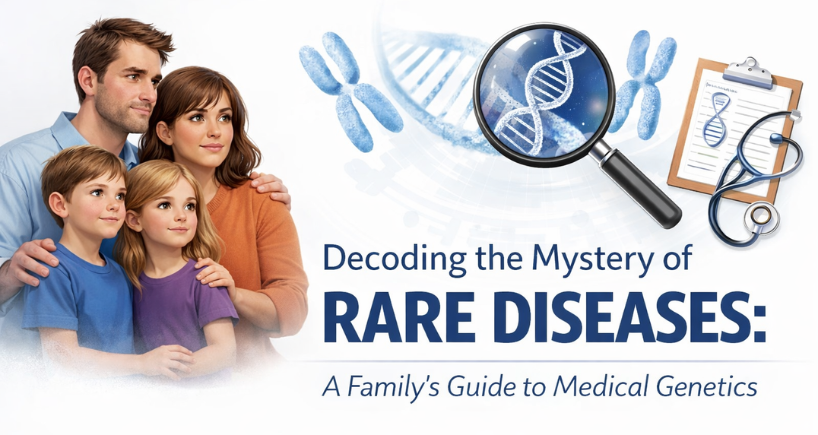


Decoding the Mystery of Rare Diseases: A Family’s Guide to Medical Genetics
The Only Comprehensive Genetic Services Center in North India Region
When Your Child's Diagnosis Defies Answers: The Role of Medical Genetics
Imagine being told your newborn failed the routine metabolic screening. Or watching your toddler miss developmental milestones (like sitting or walking late) while specialists struggle to explain why. Perhaps you've experienced heartbreaking pregnancy losses (recurrent miscarriages), and no one can tell you why it keeps happening. Or maybe you've been told your child has a 'rare disease' but you can't find a doctor in the region who specializes in treating it.
These are the moments when medical genetics becomes not just relevant — but life-changing.
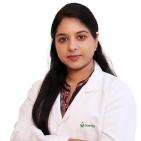
I'm Dr. Ravneet Kaur, and as North India's only DM Medical Genetics specialist practicing in the Tricity region, I witness daily how genetic diagnoses transform uncertainty into actionable treatment plans. Whether it is a family worried about hereditary diseases or a couple seeking genetic counseling, precise diagnosis prevents recurrence in families and, most importantly, saves lives through early intervention.
At Fortis Hospital Mohali's Institute of Genomic Medicine, we've established the region's first and only comprehensive genetic consultation center. We bring world-class diagnostic and treatment capabilities for rare genetic disorders to families who previously had to travel to Delhi or even abroad for specialized care.
What is Medical Genetics? Understanding the Science Behind Your Genes
Medical genetics is the branch of medicine that focuses on diagnosing, managing, and preventing inherited disorders caused by changes in our genetic material — our DNA. While every child inherits genes from both parents, sometimes these genes carry variations (mutations) that can cause health problems.
Medical genetics encompasses:
- Diagnosing genetic conditions through specialized DNA testing and clinical evaluation.
- Providing genetic counselling to families at risk of inherited disorders.
- Managing treatable genetic conditions with disease-specific therapies.
- Offering reproductive genetics services including prenatal diagnosis (testing during pregnancy).
- Cancer genetics and hereditary cancer risk assessment.
- Coordinating long-term surveillance for genetic syndromes.
What makes medical genetics unique is its dual focus: we're both detectives uncovering the genetic cause of mysterious symptoms, and physicians actively treating and managing these conditions once diagnosed.
My Journey to Bringing Medical Genetics to North India
After completing my MBBS and MD in Pediatrics, I pursued senior residency at prestigious institutions including GMCH-32 Chandigarh and VMMC & Safdarjung Hospital, New Delhi. But it was my experience with children suffering from undiagnosed rare diseases that ignited my passion for medical genetics.
I pursued a DM in Medical Genetics at All India Institute of Medical Sciences (AIIMS), New Delhi — one of India's most rigorous training programs in this super-specialty. Subsequently, I served as Assistant Professor at PGIMER & Dr. RML Hospital, New Delhi, where I managed complex cases and contributed to advancing the field through research (with over 10 publications in international journals and 4 book chapters).
Why I chose to bring this expertise to Fortis Mohali: For years, families in Punjab, Haryana, Himachal Pradesh, and North India faced an impossible choice: travel repeatedly to Delhi for genetic consultations (expensive, exhausting, and disruptive) or go without specialized care altogether. I established the genetic consultation program at Fortis Mohali to eliminate this gap — bringing AIIMS-level genetic services to the Tricity region.
Who Needs Genetic Consultation? Recognizing the Red Flags
You should consider genetic evaluation if you notice these signs. Many parents search for a "child development specialist" or "genetic doctor" when they see:
For Children & Infants
- Developmental delay or intellectual disability (slow learning) without clear cause.
- Autism spectrum disorder, especially with physical abnormalities.
- Recurrent fractures suggesting possible Osteogenesis Imperfecta (brittle bone disease).
- Muscle weakness or progressive loss of motor skills (signs of Muscular Dystrophy).
- Seizures not responding to standard medications (Genetic Epilepsy).
- Abnormal newborn metabolic screening results.
- Failure to thrive (child not gaining weight) despite adequate nutrition.
- Unusual facial features or multiple birth defects.
- Frequent infections suggesting immune deficiency.
- Bleeding tendency or blood disorders (like Thalassemia).
For Couples & Families
- Multiple pregnancy losses (two or more miscarriages/abortions).
- Previous baby with birth defects or malformations.
- Family history of genetic conditions or intellectual disability.
- Consanguineous marriages (marriage between first cousins or close blood relatives).
- Infertility requiring assisted reproductive technology (IVF genetics).
- Abnormal ultrasound findings during pregnancy (Level 2 scan anomalies).
- Abnormal prenatal screening tests (Double marker, Quad screen, NIPT).
For Adults
- Family history of young-onset cancer (breast, ovary, colon cancer before age 50).
- Personal history of cancer at a young age.
- Multiple family members with the same type of cancer (Hereditary Cancer).
- Sudden cardiac deaths in the family (especially in young people).
- Family history of early heart attacks, strokes.
- Diagnosis of hereditary connective tissue disorder (Marfan syndrome, Ehlers-Danlos).
Treatable Genetic Disorders: Why Early Diagnosis Saves Lives
One of the most rewarding aspects of medical genetics is that many genetic conditions — once considered untreatable — now have disease-modifying therapies. Early diagnosis allows us to start treatment before irreversible damage occurs.
Inborn Errors of Metabolism (IEM): Time-Sensitive Interventions These are genetic disorders affecting how the body processes nutrients. Many are treatable if caught early through newborn screening or prompt clinical diagnosis.
Conditions we diagnose and manage:
- Phenylketonuria (PKU) — managed with special low-phenylalanine diet.
- Maple Syrup Urine Disease — requires specialized formula and monitoring.
- Homocystinuria — treated with vitamin B6, B12, betaine.
- Galactosemia — lactose-free diet prevents intellectual disability.
- Urea cycle disorders — protein restriction and medications prevent brain damage.
- Glycogen storage disorders — frequent feeding, cornstarch therapy.
- Organic acidemias — dietary management and supplements.
- Biotinidase deficiency — simple biotin supplementation prevents devastating outcomes.
- Pyridoxine-dependent epilepsy — seizures controlled with vitamin B6.
- MTHFR deficiency — folate supplementation.
For many of these conditions, the difference between early diagnosis and delayed diagnosis is the difference between normal development and severe intellectual disability. This is why newborn screening exists — and why follow-up with a medical geneticist is critical when screening is abnormal.
Lysosomal Storage Disorders: Disease-Modifying Enzyme Replacement These are rare conditions where enzymes that break down complex molecules are deficient. We now have FDA-approved enzyme replacement therapies for several:
- Gaucher disease — enzyme replacement dramatically improves outcomes.
- Pompe disease — early treatment preserves muscle function, especially critical in infantile-onset.
- Fabry disease — prevents kidney failure, heart disease, stroke.
- Mucopolysaccharidosis (MPS) Types I, II, IVA, VI — slows progression, improves quality of life.
- Niemann-Pick disease Type B — enzyme therapy available.
These therapies are expensive but transformative. At Fortis Mohali, we coordinate insurance approval, arrange therapy administration, and monitor response — providing comprehensive care for these ultra-rare conditions.
Neuromuscular Disorders: Breakthrough Treatments Spinal Muscular Atrophy (SMA): Once universally fatal in infants, SMA now has three disease-modifying therapies: nusinersen (Spinraza), onasemnogene abeparvovec (Zolgensma — gene therapy), and risdiplam (Evrysdi). Early diagnosis through genetic testing allows treatment before motor neurons are lost — the difference between a child who never sits versus one who walks.
Duchenne Muscular Dystrophy (DMD): While not curable, early diagnosis enables:
- Corticosteroid therapy prolonging walking ability.
- Cardiac and pulmonary monitoring preventing sudden death.
- Access to mutation-specific therapies (exon-skipping drugs) when eligible.
- Participation in clinical trials of gene therapy.
Hematological Genetic Disorders: Management & Cure
- Thalassemia — regular transfusions, iron chelation, bone marrow transplant.
- Sickle cell disease — hydroxyurea, newer therapies, curative transplant options.
- G6PD deficiency — avoidance of trigger medications prevents hemolysis.
- Congenital anemias — diagnosis guides transfusion strategy, transplant candidacy.
Endocrine Genetic Disorders
- Congenital adrenal hyperplasia — lifelong hormone replacement prevents life-threatening crises.
- Congenital hypothyroidism — early thyroid hormone prevents intellectual disability.
- Maturity-onset diabetes of the young (MODY) — some types controlled with oral medications instead of insulin.
- Familial hypercholesterolemia — aggressive lipid-lowering prevents early heart attacks.
Genetic Disorders Requiring Structured Surveillance
Not all genetic conditions have disease-modifying treatments, but early diagnosis still matters enormously because it enables surveillance programs that detect complications early when they're most treatable.
Cancer Predisposition Syndromes Families with hereditary cancer syndromes benefit from:
- Familial Adenomatous Polyposis (FAP) — colonoscopy screening prevents colon cancer.
- Lynch syndrome — screening for colon, endometrial, ovarian cancers.
- Li-Fraumeni syndrome — intensive multi-organ screening protocol.
- Hereditary Breast and Ovarian Cancer (BRCA1/BRCA2) — MRI screening, risk-reducing surgeries.
Cardiac Channelopathies: Preventing Sudden Death These are genetic heart rhythm disorders causing sudden cardiac death in otherwise healthy young people:
- Long QT syndrome — beta-blockers, pacemakers, avoiding trigger medications.
- Brugada syndrome — ICD placement, fever management.
- Catecholaminergic polymorphic ventricular tachycardia (CPVT) — beta-blockers, exercise restriction.
Neurocutaneous Syndromes
- Neurofibromatosis — monitoring for tumors (optic gliomas, malignant transformation).
- Tuberous sclerosis — surveillance for kidney tumors, brain lesions, cardiac rhabdomyomas.
Chromosomal & Developmental Disorders
- Down syndrome — cardiac screening, thyroid monitoring, leukemia surveillance.
- Turner syndrome — heart defects, growth hormone therapy, fertility preservation.
- Klinefelter syndrome — testosterone replacement, educational support.
Reproductive & Prenatal Genetics: Preventing Recurrence
One of the most impactful aspects of genetic consultation is helping couples who've experienced pregnancy losses or babies with birth defects understand why it happened and whether it will recur.
Pre-Conceptional Genetic Counselling We help couples before pregnancy if they have:
- Family history of genetic conditions.
- Previous baby with birth defects or genetic disorder.
- Consanguineous marriage (first cousins or closer).
- Carrier status for recessive conditions (Thalassemia, SMA, Cystic Fibrosis).
- Advanced maternal age concerns.
Prenatal Diagnosis Services When prenatal testing suggests problems, we provide:
- Interpretation of abnormal ultrasound findings.
- Counselling on abnormal serum screening or NIPT (Non-Invasive Prenatal Testing) results.
- Amniocentesis coordination and result interpretation.
- Detailed fetal anatomy assessment.
- Risk counselling for the next pregnancy.
Fetal Autopsy & Recurrence Risk Assessment When couples experience pregnancy termination or perinatal loss, detailed fetal examination and autopsy provide critical information:
- Identifying the genetic cause.
- Determining recurrence risk (is it 25%, 50%, or <1%?).
- Enabling prenatal diagnosis in subsequent pregnancies.
- Providing closure through understanding.
Our Genetic Consultation Process at Fortis Mohali
Step 1: Comprehensive Clinical Evaluation Genetic consultations are detailed — typically 60-90 minutes for new patients. I take a thorough three-generation family history, perform a detailed physical examination looking for subtle signs of genetic conditions, and review all prior medical records and test results.
Step 2: Genetic Testing Strategy Based on clinical suspicion, we recommend targeted testing:
- Chromosomal microarray (for intellectual disability, autism, multiple anomalies).
- Single gene testing (when a specific condition is suspected).
- Gene panels (groups of related genes, e.g., epilepsy panel, cardiomyopathy panel).
- Whole Exome Sequencing (when diagnosis is elusive despite extensive workup).
- Biochemical testing (metabolic screening, enzyme assays).
- Specialized testing (FISH, methylation studies for imprinting disorders).
Step 3: Result Interpretation & Genetic Counselling Genetic test results can be complex — variants of uncertain significance, incidental findings, carrier status. I help families understand:
- What the result means for the patient.
- Implications for other family members.
- Recurrence risk in future pregnancies.
- Available treatment or surveillance options.
Step 4: Treatment Coordination & Long-Term Management For treatable conditions, we:
- Initiate disease-specific therapy (special diets, enzyme replacement, medications).
- Coordinate with subspecialists (metabolic dietitians, cardiologists, oncologists).
- Monitor treatment response with repeat testing.
- Adjust therapy based on biochemical parameters.
- Provide long-term follow-up through childhood and into adult transition.
Why Fortis Mohali's Institute of Genomic Medicine is Unique
We are the only center in the North India region offering:
- DM Medical Genetics specialist (AIIMS-trained) available locally.
- Comprehensive genetic testing menu (access to all major genetic testing laboratories).
- Disease-modifying therapies for rare genetic conditions (enzyme replacement, specialized formulas).
- Prenatal diagnosis services including amniocentesis.
- Multidisciplinary care coordination (metabolic dietitians, genetic counselors, subspecialists).
- Fetal autopsy and recurrence risk counseling.
- Cancer genetics and hereditary cancer risk assessment.
- Carrier screening programs (especially important for consanguineous couples).
Previously, families in Chandigarh, Mohali, Panchkula, and surrounding regions had to travel repeatedly to Delhi for genetic consultations — expensive, time-consuming, and often delayed diagnosis and treatment initiation. Now, comprehensive genetic services are available locally.
Real Impact: How Genetic Diagnosis Changes Outcomes
Case scenarios we encounter regularly:
- The 2-month-old with persistent vomiting diagnosed with Urea Cycle Disorder — started on protein restriction and medications, now developing normally at age 3.
- The couple with three prior pregnancy losses due to chromosomal translocation — successfully delivered a healthy baby after IVF with Preimplantation Genetic Testing (PGT).
- The 5-year-old with progressive muscle weakness diagnosed with SMA — started on nusinersen therapy, preserved motor function.
- The teenager with recurrent fractures diagnosed with Osteogenesis Imperfecta — bisphosphonate therapy reduced fracture rate by 80%.
- The family with three members dying suddenly in their 30s — identified Long QT syndrome, screened all relatives, placed ICDs in affected individuals, prevented further deaths.
These aren't hypothetical success stories — they're the transformative outcomes that happen when rare diseases are diagnosed early and managed by specialists with expertise in medical genetics.
Frequently Asked Questions
How do I know if my family needs genetic testing? If you have unexplained symptoms, developmental delays (late walking/talking), recurrent pregnancy losses, family history of genetic conditions, or consanguineous marriage (marriage within the family), genetic evaluation is worthwhile. During consultation, I assess whether testing is appropriate and what type would be most informative.
Is genetic testing covered by insurance? Coverage varies by insurance provider and policy. Many major insurance companies now cover medically indicated genetic testing. Our team helps with insurance pre-authorization and navigates coverage issues.
How long does genetic testing take? It depends on test complexity. Chromosomal microarray: 2-3 weeks. Single gene testing: 3-4 weeks. Whole Exome Sequencing: 6-12 weeks. I set realistic expectations during consultation.
What if testing doesn't find an answer? Even with advanced testing, we don't always identify the genetic cause. However, we still provide management guidance, monitor for emerging treatments, and may recommend repeat testing as technology advances.
Are treatments for rare genetic diseases available in India? Yes. Many disease-modifying therapies (enzyme replacement, special formulas) are available in India. At Fortis Mohali, we coordinate access to these therapies and manage patients long-term.
Should family members also be tested? Often yes. Once we identify a genetic condition, cascade screening of family members can identify those at risk and enable preventive measures. I provide specific recommendations based on inheritance pattern.
Schedule Your Genetic Consultation
Whether you're a parent concerned about your child's development, a couple experiencing recurrent pregnancy losses, an adult with a family history of hereditary cancer, or a physician referring a patient with a suspected genetic condition — comprehensive genetic consultation is now available locally at Fortis Mohali.
As North India's only practicing DM Medical Genetics specialist in the Tricity region, I'm committed to bringing world-class diagnostic and treatment capabilities for rare genetic disorders to families who deserve answers, hope, and access to life-changing therapies.
Early diagnosis matters. For many treatable genetic conditions, the window of opportunity for intervention is narrow. Don't let geography delay your child's diagnosis or your family's path to understanding.
Every diagnosis begins with asking the right questions. Every rare disease family deserves access to expert genetic consultation. World-class medical genetics is now available in North India.
Contact Us – Fortis Hospital Mohali
For appointments, consultations, and diagnostic services, please contact:
📞 72728 72728
Our care team will assist you with:
Doctor appointments
Diagnostic and screening services
Health check-ups
Call now to book your appointment at Fortis Hospital, Mohali.
Categories
Clear allMeet the doctor
- Medical Genetics | Medical Genetics
- Paediatrics | Paediatrics
-
 9 Years
-
 1500
1500
Related Blogs
View all
Unraveling the power of genes: A lot more than how you look

Breakthrough Discoveries in Genetic Research: Unlocking the Secrets of DNA and Heredity

CHIP Mutations in Hematology: The Silent Forecasters of Risk

Genomics in Hematology: Redefining Diagnosis and Therapy at Fortis Institute of Genomic Me...
Why NIPT Matters in Your Pregnancy The Simple Blood Test That Gives You Answers from 10 We...


Keep track of your appointments, get updates & more!

