
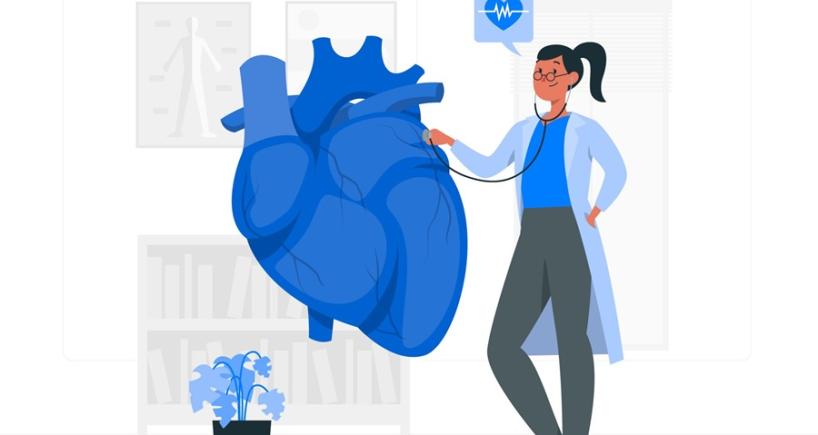


Understanding Heart Blockage: Types, Diagnosis, and Treatment
About Heart Blockages
Heart blockage happens when the electrical signals from the heart’s top chambers don‘t travel properly to the lower chambers. Read on to learn more about heart blockage types, symptoms, diagnosis, and treatment.
Types of Heart Blockages
In the majority of cases of heart blocks, the signals slow down but do not entirely stop. Heart blocks are generally classified as first-, second-, or third-degree.
- First-Degree Heart Block: It is the least critical. The speed of electrical signals slowly reduces as they travel from the atria to the ventricles.
- Second-Degree Heart Block: It denotes that the electrical signals are intermittently failing to conduct between the atria and ventricles. There are two subclasses of second-degree heart block:
- Mobitz Type I: The electrical signals become slower and slower between beats. Eventually, the heart skips a beat.
- Mobitz Type II: The electrical signals, at certain times, reach the ventricles, and at certain times, they do not.
- Third-Degree Heart Block: It is the most serious. Here, electrical signals do not travel from the atria to the ventricles at all. There is a total failure of electrical conduction.
Recognizing Heart Blockage Symptoms
Symptoms rely on how critical heart blockage is.
First-Degree Heart Block
It is the least severe type and does not generally cause any manifestations. Most individuals only know they have it when tested for unassociated medical conditions.
Second-Degree Heart Block
Most individuals with the less serious type of second-degree heart block, referred to as Mobitz type 1, do not show any symptoms. But some individuals may feel:
- Dizzy or lightheaded
- Fainting
Individuals with a more serious form of second-degree heart block, referred to as Mobitz type 2 heart block, are at a high risk of having Mobitz type 1-like manifestations, along with:
- Pain in the chest
- Shortness of breath
- Sudden dizziness when standing up from a resting or sitting position. This is caused by hypotension/low blood pressure.
Third-Degree Heart Block
Symptoms of third-degree or complete heart blockage comprise:
- Feeling faint
- Being short of breath
- Extreme fatigue, sometimes with confusion
- Pain in the chest
Third-degree heart block is the most severe and, at certain times, can be a medical emergency.
Possible Complications
Heart block may increase the chances of:
- Other forms of cardiac rhythm problems (arrhythmias), including atrial fibrillation
- Heart attack
How is Heart Blockage Diagnosed?
To diagnose the condition of heart blockage, healthcare professionals will consider:
- Individual‘s overall health and medical history
- Any family history of heart blockage or cardiac disease
- Medications an individual is taking
- Lifestyle choices, such as smoking or taking illicit drugs
- Description of manifestations
- A physical examination
- An electrocardiogram (ECG) that records the heart‘s electrical impulses.
- Testing with a Holter to track the heart‘s rhythm for a period. An individual might wear a Holter monitor for 1 or 2 days or an event monitor for 30 days or more. It helps capture heart rhythm modifications, even if they do not happen often or predictably
- Using an implantable loop recorder, which is a miniature heart recorder placed below the skin overlying the heart that can record for up to 24 months
- An electrophysiology study, which is an outpatient technique in which a fine, flexible wire is tied from the groin or arm to the heart to test the heart‘s wiring system
If an individual is experiencing the symptoms of heart blockage, they should immediately consult a cardiologist to avoid further complications.
Treatment of Heart Blockage
Removal of Heart Blockage Without Surgery
Food Choices
Citrus fruits: Citrus flavonoids, vitamin C, and fiber have anti-inflammatory and antioxidant effects, protecting the heart and arteries from damage.
Green Tea: Potent antioxidants in green tea, especially epigallocatechin gallate, could protect the heart from damage.
Lifestyle Modifications
- Smoking cessation
- Regular physical exercise
- Consuming a heart-friendly diet low in saturated and trans lipids, cholesterol, and sodium
- Maintaining healthy weight
- Regular exercise
- Stress management
Medications
In some instances, medications may knock out heart blockages or prevent them from worsening. These may comprise:
- Statins to reduce cholesterol levels
- Anti-platelet medicines to prevent blood clots
- ACE inhibitors to decrease blood pressure
- Nitrates to improve the flow of blood to the heart
- Beta-blockers to slow down the heart rate
Diving Deep: Surgical Methods to Remove Heart Blockages
These methods are employed to remove heart blockages and aim to eliminate plaque buildup by utilizing various medical instruments for long-term health perks. Some of the surgical techniques to remove heart blockages include:
Angioplasty and Stenting
Minimally invasive procedures are utilized to remove heart blockages. During an angioplasty, the catheter is put into a blood vessel in an arm or groin and taken to the blocked artery in the heart. An extremely small balloon at the catheter’s end is inflated to open the artery and improve the blood flow. In certain cases, a small mesh tube known as a stent may be inserted to keep the artery open.
Coronary Artery Bypass Surgery (CABG)
This is a more invasive procedure utilized to remove heart blockages. During this procedure, a healthcare professional will take a healthy blood vessel from another body part and use it to bypass the blocked artery, permitting blood to flow more freely to the heart.
Heart blockages can be a severe condition that needs treatment to prevent further cardiac damage. One can remove heart blockages and enhance heart health by making lifestyle modifications, taking medicines, and undergoing minimally invasive or surgical procedures. It is important to discuss treatment choices with healthcare professionals and follow their suggestions to ensure the best possible outcome.
Popular Searches :
Hospitals: Cancer Hospital in Delhi | Best Heart Hospital in Delhi | Hospital in Amritsar | Hospital in Ludhiana | Hospitals in Mohali | Hospital in Faridabad | Hospitals in Gurgaon | Best Hospital in Jaipur | Hospitals in Greater Noida | Hospitals in Noida | Best Kidney Hospital in Kolkata | Best Hospital in Kolkata | Hospitals in Rajajinagar Bangalore | Hospitals in Richmond Road Bangalore | Hospitals in Nagarbhavi Bangalore | Hospital in Kalyan West | Hospitals in Mulund | Best Hospital in India | Gastroenterologist in Jaipur
Doctors: Dr. Rana Patir | Dr. Rajesh Benny | Dr. Rahul Bhargava | Dr. Jayant Arora | Dr. Anoop Misra | Dr. Manu Tiwari | Dr. Praveer Agarwal | Dr. Arup Ratan Dutta | Dr. Meenakshi Ahuja | Dr. Anoop Jhurani | Dr. Shivaji Basu | Dr. Subhash Jangid | Dr. Atul Mathur | Dr. Gurinder Bedi | Dr. Monika Wadhawan | Dr. Debasis Datta | Dr. Shrinivas Narayan | Dr. Praveen Gupta | Dr. Nitin Jha | Dr. Raghu Nagaraj | Dr. Ashok Seth | Dr. Sandeep Vaishya | Dr. Atul Mishra | Dr. Z S Meharwal | Dr. Ajay Bhalla | Dr. Atul Kumar Mittal | Dr. Arvind Kumar Khurana | Dr. Narayan Hulse | Dr. Samir Parikh | Dr. Amit Javed | Dr. Narayan Banerjee | Dr. Bimlesh Dhar Pandey | Dr. Arghya Chattopadhyay | Dr. G.R. Vijay Kumar | Dr Ashok Gupta | Dr. Gourdas Choudhuri | Dr. Sushrut Singh | Dr. N.C. Krishnamani | Dr. Atampreet Singh | Dr. Vivek Jawali | Dr. Sanjeev Gulati | Dr. Amite Pankaj Aggarwal | Dr. Ajay Kaul | Dr. Sunita Varma | Dr. Manoj Kumar Goel | Dr. R Muralidharan | Dr. Sushmita Roychowdhury | Dr. T.S. MAHANT | Dr. UDIPTA RAY | Dr. Aparna Jaswal | Dr. Ravul Jindal | Dr. Savyasachi Saxena | Dr. Ajay Kumar Kriplani | Dr. Nitesh Rohatgi | Dr. Anupam Jindal |
Specialities: Heart Lung Transplant | Orthopedic | Cardiology Interventional | Gastroenterologist in Jaipur | Best Cardiology Hospital in India | Obstetrics & Gynaecology | Onco Radiation | Neurosurgery |
Categories
Clear allRelated Blogs
View all





Keep track of your appointments, get updates & more!

