
vertigo doctor in Vashi Navi Mumbai
What is Vertigo?
It is more than simply feeling dizzy.
Vertigo is a sensation that you or your surroundings are moving when there is no actual movement. You may feel that the room is spinning, the floor is moving, or your body is being pulled or tilted.
Vertigo is a symptom, not a disease itself, and can have different causes. The inner ear plays an important role in balance, but neurological and other medical conditions can also cause dizziness or vertigo.
Vertigo is a symptom. Finding out why it is happening is the important next step.
What does it feel like?
You may experience:
- Room spinning or a sensation of movement
- Dizziness when turning in bed or changing position
- Feeling unsteady while walking
- Difficulty maintaining balance
- Nausea or vomiting
- Ringing in the ears or hearing changes
- Dizziness affecting everyday activities
You may simply describe it as:
“Mujhe chakkar aate hain.”
“Sir ghoomta hai.”
“Balance nahi rehta.”
“Karvat badalte hi room ghoomta hai.”
If this sounds familiar, it is worth finding out what is causing it.
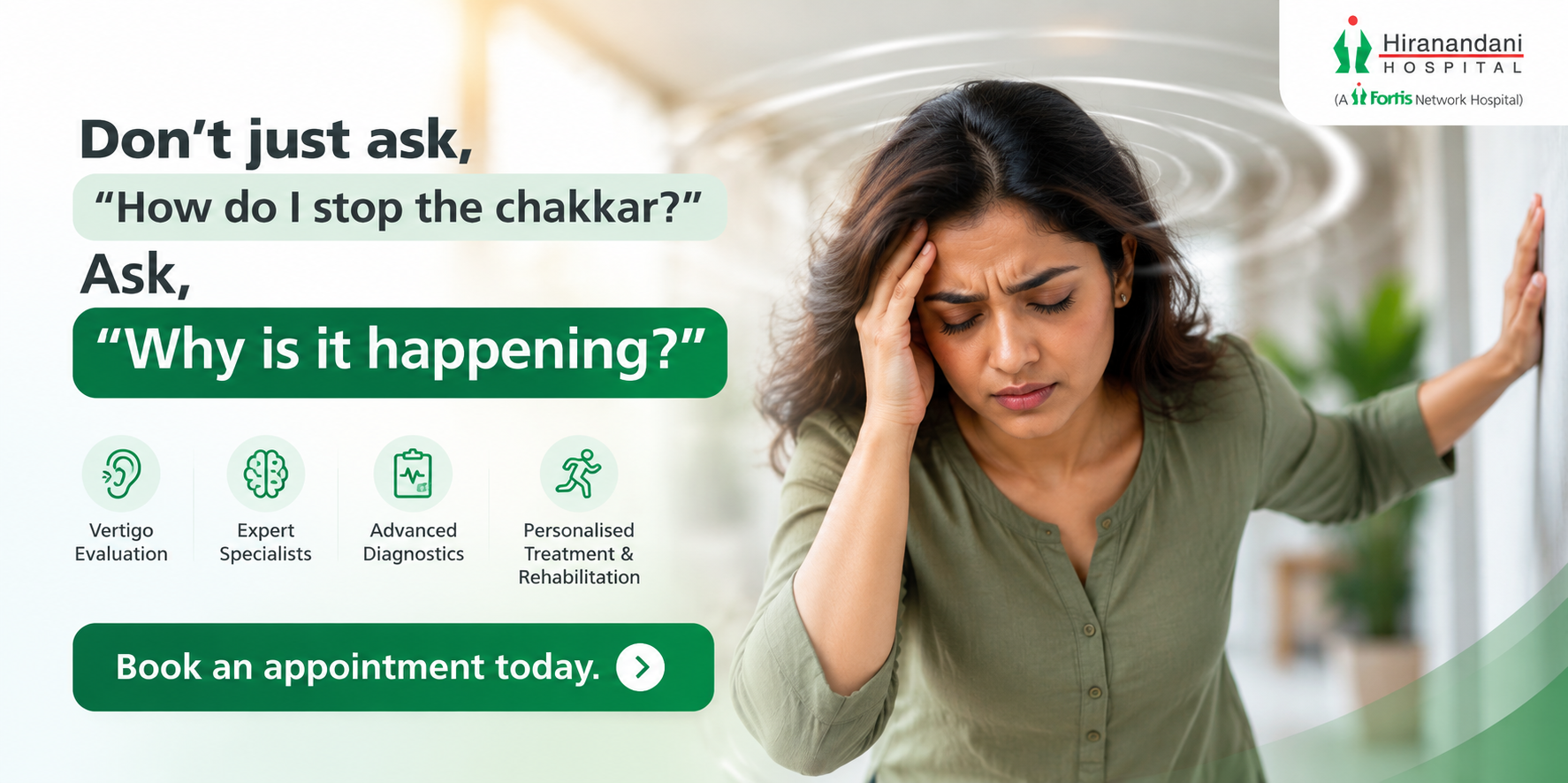
Why does vertigo happen?
There isn't one single cause. Vertigo can be related to conditions affecting the inner ear, vestibular system, brain or other parts of the body's balance system.
Conditions such as BPPV, inner-ear disorders, vestibular migraine and neurological conditions can cause different types of dizziness or vertigo.
The same “chakkar” can have different causes. That is why the right clinical assessment matters.
When should you get evaluated?
Don't ignore dizziness or imbalance if it:
- Keeps coming back
- Happens when turning in bed or moving your head
- Affects your walking or balance
- Is becoming more frequent
- Interferes with your daily activities
- Makes you afraid of falling
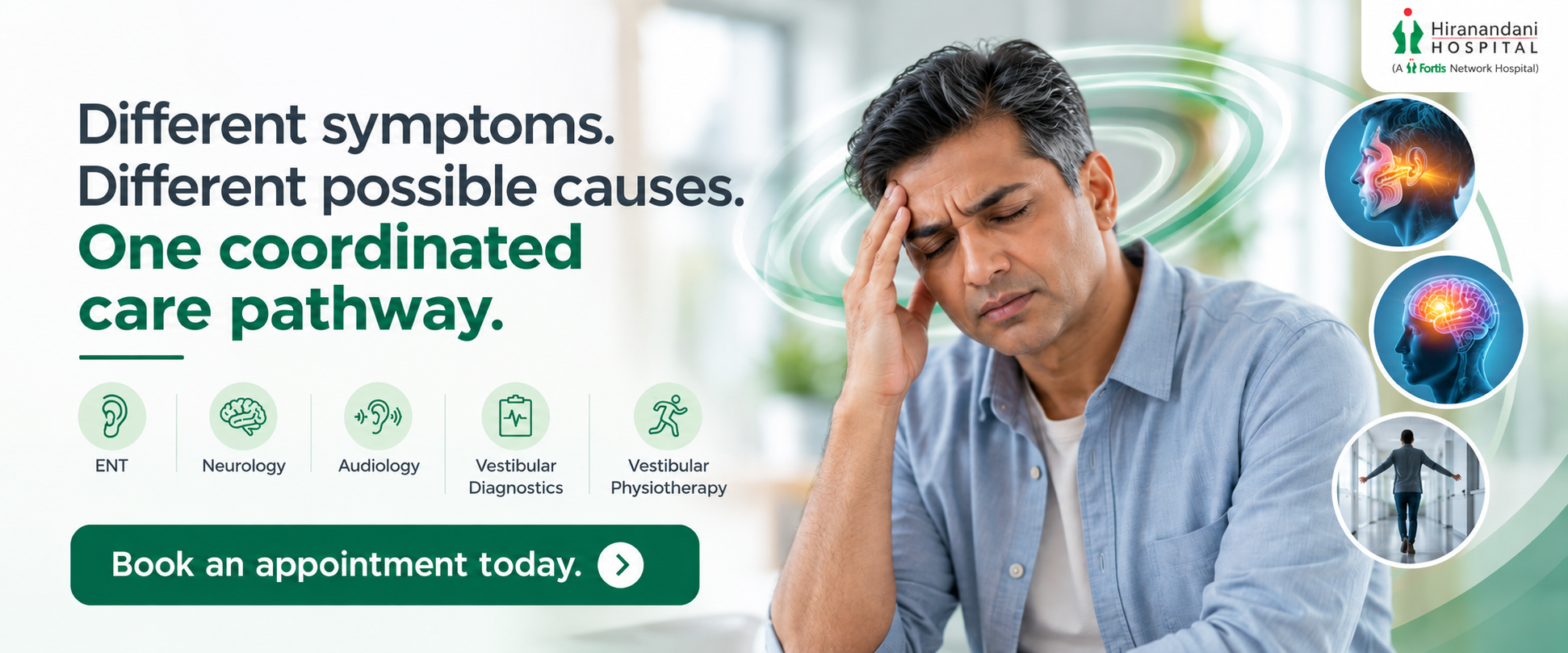
One coordinated care pathway
At Vertigo Clinic, Fortis Hiranandani Hospital, Vashi, the assessment begins with understanding your symptoms, their triggers and how they affect your daily life.
Depending on your clinical needs, care may involve:
ENT | Neurology | Audiology | Vestibular Diagnostics | Vestibular Physiotherapy
The aim is to understand the possible cause and guide you towards the appropriate evaluation, treatment or rehabilitation.
Looking beyond the symptoms
Depending on your symptoms and clinical findings, specialised assessment may be recommended.
- VNG: Videonystagmography evaluates eye movements to provide information about the vestibular or balance system.
- Audiometry: Assesses hearing function as part of the evaluation of ear-related symptoms.
- Vestibular Rehabilitation: Individualised exercises designed to support balance, stability and functional recovery.
Not every patient needs every test. The evaluation is based on individual clinical needs.
Can Vertigo be treated?
Treatment depends on the underlying cause. Depending on the diagnosis, management may include medical treatment, specific repositioning manoeuvres, vestibular rehabilitation and balance-focused exercises.
The goal is to understand the cause and choose the appropriate treatment for you.
Our Team of Experts
FAQs
-
Why do I feel dizzy when I turn in bed?Certain balance-related conditions can trigger vertigo with changes in head position. Clinical assessment can help identify the cause.
-
Can vertigo come from the ear?Yes. The inner ear plays an important role in maintaining balance, although dizziness can have other causes as well.
-
Why do I feel off-balance even when the room isn't spinning?Balance depends on multiple systems working together. Problems affecting these systems can cause unsteadiness without a typical spinning sensation.
-
When should I get evaluated?If dizziness or imbalance is recurring, worsening, affecting your walking or interfering with everyday activities, seek medical evaluation.
Fortis In The News Aug and Sept 2026
Dear Fortisians,
We are delighted to share with you the latest edition of ‘Fortis in The News’ for the period Aug-Sept‘2026.
We hope that you will enjoy the bulletin. Do continue to share your thoughts and feedback with us.
With best regards,
Team Corporate Communications