Top-Ranked GI & General Surgeon at Fortis
Committed to Patient's Dedicated Care & Surgical Excellence.

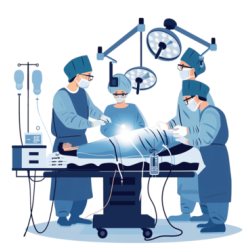
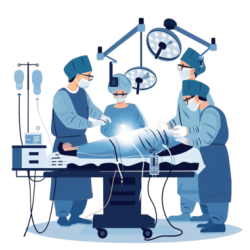
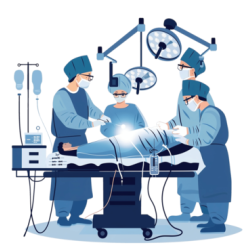
06 Ultra Modern Operation Theaters & Highly Skilled Surgeons & OT Staff
Dedicated Surgical ICU Precision Monitoring and Support in the Surgical Intensive Care Unit
Patient-Centered Approach
Top GI Surgeon and General Surgeon at Fortis Hospital, Vasant Kunj, Delhi NCR

The Department of GI Surgery & General Surgery is a specialized medical department that focuses on surgical procedures related to the abdominal area and the digestive tract. Surgeons at Fortis Hospital, Vasant Kunj are highly skilled and trained to perform a wide range of surgical procedures, both traditional and minimally invasive techniques like laparoscopy.

Abdominal Surgeries: The doctors at Fortis Hospital, Vasant Kunj. The department specializes in surgeries involving various organs within the abdominal cavity. This includes procedures related to the esophagus, gallbladder, stomach, intestines, anus, and more. These surgeries may be required to treat conditions such as gallstones, hernias, tumors, and digestive disorders.

Minimally Invasive Techniques: Surgeons at Fortis Hospital, Vasant Kunj use minimally invasive techniques like laparoscopy. This approach involves making small incisions, which results in shorter hospital stays, reduced pain, and quicker recovery for of patients.


Comprehensive Care: GI, GI Oncology, General surgeons and Gastroenterologists at Fortis Hospital are well-equipped and trained to manage the complete spectrum of medical and surgical issues associated with the digestive system. This ensures that patients receive holistic care that includes both medical management and surgical intervention when necessary.

Why Choose Us

  • Expert Our Board Certified Surgeons
  • Patient-Centered Nursing Care
  • Ultra Modern Robotics Surgery and Advanced Technology
  • Minimally Invasive Techniques
  • Personalized Treatment Plans
  • NABH Certified Nursing Excellence
  • Green Certified Operation Theaters

24X7 Emergency Services

  • 24X7 Surgical Care Services
  • 24X7 Blood Bank Services
  • 24X7 Surgical Expert Care and Nursing Care

Treatment and Procedures

Our Team of Experts

FAQs

  • What types of procedures do general surgeons perform?
    Appendectomy (removal of the appendix) Cholecystectomy (gallbladder removal) Hernia repair Breast surgery (lumpectomy, mastectomy) Bariatric surgery (weight loss surgery) Surgery for colorectal diseases (e.g., bowel resection) Trauma surgeries Endoscopic procedures
  • What are the risks of general surgery?
    Infection Bleeding Blood clots Anesthesia complications Delayed healing or scarring Specific risks related to the type of surgery performed
  • What lifestyle changes should I consider after surgery?
    Depending on the type of surgery, you may need to: Follow a specific diet Gradually increase activity levels Attend physical therapy sessions Avoid certain activities until cleared by your surgeon
  • Is general surgery covered by health insurance?
    Most health insurance plans cover necessary surgical procedures. It is advised to check with your insurance provider regarding specific coverage, pre-authorization requirements, and out-of-pocket costs. If you have additional questions or concerns, please consult with your healthcare provider or reach out to the surgical office directly for personalized information.
  • Will I need follow-up appointments?
    Most patients will require follow-up appointments to monitor healing and assess recovery. Your surgeon will schedule these appointments and advice on your specific needs.
Form Fields
Top-Ranked GI & General Surgeon at Fortis
Committed to Patient's Dedicated Care & Surgical Excellence.

06 Ultra Modern Operation Theaters & Highly Skilled Surgeons & OT Staff
Dedicated Surgical ICU Precision Monitoring and Support in the Surgical Intensive Care Unit
Patient-Centered Approach
Top GI Surgeon and General Surgeon at Fortis Hospital, Vasant Kunj, Delhi NCR

The Department of GI Surgery & General Surgery is a specialized medical department that focuses on surgical procedures related to the abdominal area and the digestive tract. Surgeons at Fortis Hospital, Vasant Kunj are highly skilled and trained to perform a wide range of surgical procedures, both traditional and minimally invasive techniques like laparoscopy.

Abdominal Surgeries: The doctors at Fortis Hospital, Vasant Kunj. The department specializes in surgeries involving various organs within the abdominal cavity. This includes procedures related to the esophagus, gallbladder, stomach, intestines, anus, and more. These surgeries may be required to treat conditions such as gallstones, hernias, tumors, and digestive disorders.

Minimally Invasive Techniques: Surgeons at Fortis Hospital, Vasant Kunj use minimally invasive techniques like laparoscopy. This approach involves making small incisions, which results in shorter hospital stays, reduced pain, and quicker recovery for of patients.


Comprehensive Care: GI, GI Oncology, General surgeons and Gastroenterologists at Fortis Hospital are well-equipped and trained to manage the complete spectrum of medical and surgical issues associated with the digestive system. This ensures that patients receive holistic care that includes both medical management and surgical intervention when necessary.


Why Choose Us

  • Expert Our Board Certified Surgeons
  • Patient-Centered Nursing Care
  • Ultra Modern Robotics Surgery and Advanced Technology
  • Minimally Invasive Techniques
  • Personalized Treatment Plans
  • NABH Certified Nursing Excellence
  • Green Certified Operation Theaters

24X7 Emergency Services

  • 24X7 Surgical Care Services
  • 24X7 Blood Bank Services
  • 24X7 Surgical Expert Care and Nursing Care

Treatment and Procedures

Our Team of Experts

FAQs

  • What types of procedures do general surgeons perform?
    Appendectomy (removal of the appendix) Cholecystectomy (gallbladder removal) Hernia repair Breast surgery (lumpectomy, mastectomy) Bariatric surgery (weight loss surgery) Surgery for colorectal diseases (e.g., bowel resection) Trauma surgeries Endoscopic procedures
  • What are the risks of general surgery?
    Infection Bleeding Blood clots Anesthesia complications Delayed healing or scarring Specific risks related to the type of surgery performed
  • What lifestyle changes should I consider after surgery?
    Depending on the type of surgery, you may need to: Follow a specific diet Gradually increase activity levels Attend physical therapy sessions Avoid certain activities until cleared by your surgeon
  • Is general surgery covered by health insurance?
    Most health insurance plans cover necessary surgical procedures. It is advised to check with your insurance provider regarding specific coverage, pre-authorization requirements, and out-of-pocket costs. If you have additional questions or concerns, please consult with your healthcare provider or reach out to the surgical office directly for personalized information.
  • Will I need follow-up appointments?
    Most patients will require follow-up appointments to monitor healing and assess recovery. Your surgeon will schedule these appointments and advice on your specific needs.
Form Fields
Blood Donation Guide
  • WHO CAN DONATE BLOOD

    • Any healthy person above 18 years
      (Upper age limit is 60 years for first-time donors & 65 years for regular donors)
    • Body weight ≥ 45 kg
    • Blood Pressure: Systolic 100–140 mmHg, Diastolic 60–90 mmHg
    • Pulse: 60–100 beats/minute
    • Temperature: ≤ 37°C / 98.4°F
    • Haemoglobin: ≥ 12.5 g/dl

  • HOW MUCH TIME IT TAKES TO DONATE BLOOD?

    • Total time: 30–40 minutes
    • Actual blood collection time: 8–10 minutes

  • HOW DO I DONATE BLOOD?

    Check Eligibility

    • You should be at least 18 years old, weigh at least 45 kg, and be generally healthy. Inform the blood bank of any health concerns.

    Steps:

    • Registration
    • Get your vitals and haemoglobin checked
    • Blood collection:
      • 350 ml if < 55 kg
      • 450 ml if ≥ 55 kg

Common Misconceptions about Metabolic and Bariatric Surgery
  • IT’S AN EASY FIX

    You will lose weight quickly after bariatric surgery, but surgery is only one component of a multipronged treatment for obesity. Bariatric surgery is an “aid” or “catalyst” for achieving weight loss. But it requires a life-long commitment towards lifestyle changes. The end goal of bariatric surgery is to help patients develop healthier habits and lifestyle changes over the long haul.

  • BARIATRIC SURGERY IS ALL COSMETIC

    Bariatric surgery is not a cosmetic procedure. While losing weight can dramatically change and enhance your appearance, the real benefits of obesity surgery are health and longevity. Obesity is linked to more than 20 chronic health conditions, including cancer risk and weight loss helps you to minimize the impact on almost all of them.

  • BARIATRIC SURGERY IS ONLY FOR PEOPLE WHO HAVE HUNDREDS OF KILOGRAMS TO LOSE

    Most people think that weight loss surgery is only for people who are very severely obese and not for them. In fact, the people who benefit the most from surgery are not only obese, but they also have other associated medical conditions that can impact their health and affect their quality of life. So, if you have a BMI of 32.5 or more and are taking medications for type 2 diabetes, raised cholesterol, raised blood pressure, have sleep apnoea, or are having chronic low back pain/knee joint pain, infertility, fatty liver etc., you are probably a candidate for bariatric surgery.

  • IT IS DANGEROUS AND LIFE-THREATENING SURGERY

    The risk of death from bariatric surgery is lower than for people with severe obesity who don’t have the surgery. Today, the risk of death from bariatric surgery is considered equivalent to or lower than other surgeries, such as gallbladder surgeries or hip replacements. In fact, bariatric surgery can also significantly lower the risk of death from other causes such as heart disease, stroke, and some cancers. Overall, people who don’t have bariatric surgery for severe obesity are often the ones at risk from having a shorter lifespan.

Liver Transplant at Fortis Hospital, Mulund
  • Liver Transplant

    Patients of liver cirrhosis with end stage liver failure require a liver transplant. The other condition requiring a liver transplant include acute or fulminant liver failure and liver cancer (Hepatocellular Carcinoma).

    Liver transplant involves replacement of a patient's diseased liver by a new liver which is derived either from a brain-dead but heart-beating donor (i.e., a cadaverCadaveric or Deceased-Donor Liver Transplant or DDLT) or from a living donor (Living Donor Liver Transplant or LDLT). Liver from a cadaver is a complete liver, while that from the living donor is a half or hemiliver. Liver is a unique organ in the human body as it has a special capacity of regeneration.

    It has been seen that even 70% of a liver can be safely removed without any long-term consequences because of this regenerative capacity. The remaining liver rapidly grows and restores full functional capacity needed for normal functioning. Due to this unique property, a part of the healthy liver can be safely removed from a voluntary donor and used to replace a diseased liver in a patient, without causing harm to either the donor or the patient. The remaining half of the liver in both donor and recipient grows back to achieve full functional recovery within 3–4 weeks.

    Fortis is among the very few hospitals offering Small Incision Donor Hepatectomy (SIDH) for donors. SIDH minimizes time for recovery and significantly reduces complications related to surgical wounds and scarring by using a smaller and more cosmetically acceptable scar compared to conventional incisions used at other centers. In the pursuit of improving donor safety and outcomes, the department also envisions introducing laparoscopy and robotic-assisted donor hepatectomy.

Breast Reconstruction at Fortis Hospital Mulund
  • Breast Reconstruction at Fortis Hospital Mulund

    Breast reconstruction is a surgery to create a new breast shape. It may be done after cancer surgery to remove your whole breast which is mastectomy or part of the breast which is lumpectomy or breast-conserving surgery.

Gynaecological Cancers: Know the Signs, Save a Life
  • Don’t Ignore the Signs: Be Aware of Gynae Cancers

    Gynaecological cancers are cancers that begin in a woman’s reproductive organs. These include the cervix, ovaries, uterus (womb), vagina, and vulva. Like many other cancers, early detection greatly increases the chances of successful treatment.

    Types of Gynaecological Cancers

    1. Cervical Cancer:
      Develops in the cervix, often caused by persistent infection with the Human Papillomavirus (HPV). It can often be prevented with regular Pap smears and the HPV vaccine.
    2. Ovarian Cancer:
      Starts in the ovaries and is often called the “silent killer” because it may not show symptoms in early stages. Common signs include abdominal bloating, pelvic pain, or feeling full quickly.
    3. Uterine (Endometrial) Cancer:
      Begins in the lining of the uterus. It is most common in women after menopause. The most common symptom is abnormal vaginal bleeding.
    4. Vaginal and Vulvar Cancer:
      Less common, but still important to be aware of. Look out for itching, pain, lumps, or sores in the vaginal or vulvar area.

    Signs & Symptoms to Watch For

    • Unusual vaginal bleeding or discharge
    • Pain during intercourse
    • Pelvic or abdominal pain
    • Frequent bloating
    • Unexplained weight loss
    • Itching or sores in the vaginal/vulvar area

    If you notice any of these symptoms, especially if they are persistent, talk to your doctor without delay.

    What You Can Do

    • Get regular screenings (such as Pap tests and pelvic exams)
    • Take the HPV vaccine if eligible
    • Be aware of family history of cancer
    • Maintain a healthy lifestyle — exercise, eat a balanced diet, avoid tobacco
    • Report any unusual symptoms early

    When to See a Doctor

    Don't ignore small signs. Many gynaecological cancers can be treated effectively if caught early. If you are over 30, postmenopausal, or have a family history of cancer, regular check-ups are crucial.

    Protect Yourself with Knowledge

    Being informed is your first step toward staying healthy. Gynaecological cancers are serious, but you can reduce your risk with awareness, screening, and preventive care.

    Your health is in your hands — take charge today.

Neurosurgery
  • Neurosurgery

    What is Neurosurgery?

    Neurosurgery is a medical specialty focused on the diagnosis and surgical treatment of disorders of the brain, spine, and nervous system. Neurosurgeons manage both emergency and planned cases, often involving delicate and life-saving procedures.

    When Should You See a Neurosurgeon?

    • Persistent headache or seizures
    • Sudden loss of balance or weakness
    • Unexplained back or neck pain
    • Numbness, tingling, or radiating pain in limbs
    • Difficulty walking or controlling bladder/bowel
    • Head injury with vomiting or unconsciousness

Nephrology – Patient Information Leaflet
  • Nephrology – Patient Information Leaflet

    Nephrology – Patient Information Leaflet

    What is Nephrology?

    Nephrology is a medical specialty that focuses on the diagnosis and treatment of kidney-related diseases. A nephrologist is a doctor trained to manage conditions that affect how your kidneys function.

    What Do Kidneys Do?

    Your kidneys are two bean-shaped organs that:

    • Filter waste and excess fluid from your blood
    • Help control blood pressure
    • Balance minerals like sodium, potassium, and calcium
    • Produce hormones that help make red blood cells and keep your bones strong

     Common Kidney Conditions We Treat:

    • Chronic Kidney Disease (CKD)
    • Acute Kidney Injury (AKI)
    • Kidney stones
    • Urinary tract infections (UTIs)
    • Glomerulonephritis (inflammation of kidney filters)
    • Polycystic Kidney Disease (PKD)
    • Diabetic and hypertension-related kidney problems
    • End-stage renal disease (ESRD) requiring dialysis or transplant

    Treatment Services Offered:

    • Comprehensive kidney disease evaluation
    • Dialysis (Hemodialysis & Peritoneal Dialysis)
    • Kidney transplant support and follow-up
    • Hypertension management
    • Electrolyte and fluid balance correction
    • Preventive care for diabetic and high blood pressure patients

    When to See a Nephrologist:

    • Swelling in your legs, feet, or face
    • Fatigue or weakness
    • Changes in urination (too much, too little, foamy, or bloody)
    • High blood pressure that is hard to control
    • Family history of kidney disease
    • Abnormal kidney test results (e.g., high creatinine, low GFR)

     Our Team Approach:

    Our nephrology team works closely with specialists in urology, endocrinology, and nutrition to offer coordinated, personalized care. We focus on both medical and lifestyle management to help you live better with kidney disease.

    Follow-Up & Lifestyle Tips:

    • Stay hydrated
    • Limit salt and processed foods
    • Monitor your blood pressure and sugar regularly
    • Take medications as prescribed
    • Attend regular check-ups to track kidney function

Subscribe to
Request callback International Request callback Get an Estimate